

What are Micro-Cap Stocks?
Micro-cap stocks are companies listed on the ASX with relatively small market capitalisations, typically under $20 million. However, definitions can vary depending on who you ask.
They’re the smallest fish in the public market pond, often early in their growth journey. These companies can be newly listed, long-time explorers in sectors like mining or biotech, or former larger companies that have dropped down in value.
While they may not yet be household names, micro-caps are often where new ideas, discoveries, and technologies first appear on the public market radar.
Because they’re small, micro-caps tend to fly under the radar of institutional investors and large brokers. Many institutional investors and large brokers will have a mandate that they cannot invest in companies with a market cap below a specific figure that is also doing daily trading volumes in excess of a certain dollar figure.
This is where opportunities open up for retail investors who are willing to do the work, researching the fundamentals, reading between the lines of announcements, and identifying value before the crowd catches on.
In short, micro-caps are higher-risk, higher-reward territory. They offer exposure to emerging trends and companies in their infancy, but they also demand patience, critical thinking, and a healthy appetite for risk.
What’s the Difference Between Small-Cap and Micro-Cap?
The difference between small-cap and micro-cap stocks comes purely from valuation.
Small-cap companies on the ASX usually have market capitalisations between $20 million and $100 million. They’re often further along in their development, have made mineral discovery, are generating revenue, or attracting broker coverage.
Daily trading volumes are generally healthier, which makes it easier to get in and out of positions without moving the price too much.
Micro-caps, on the other hand, are typically capped under $20 million. These companies are earlier stage, less liquid, and more likely to be pre-revenue. They might still be about to drill a target, chasing regulatory approval, or trying to break through with a new product. Some are on their way up, while others are in survival mode.
With less attention, there’s more chance of finding a mispriced stock. But there’s also a much greater need for discipline. Research matters.
Understanding the capital structure matters, such as knowing how many shares are on issue, knowing who holds shares in the company from research into the companies annual reports, and how much cash is left in the bank, are all factors that matter.
In simple terms, small-caps might be fighting for growth while Micro-caps are often fighting for relevance. If you can separate the potential from the noise, this end of the market can be where serious upside lives.

Where do Micro-Cap Stocks Fit in the Market?
Micro-cap stocks sit at the far end of the ASX, away from the headlines of the blue chip stocks like commonwealth bank and BHP.
They tend to operate in the quiet corners of the market; they are often thinly traded and frequently misunderstood. The beauty of them is they also represent the starting point for the next generation of high-growth stories, especially in sectors like mining and biotech.
Because of their smaller size and lack of liquidity, most micro-caps aren’t held by institutions. Many fall short of the minimum thresholds required by large funds or broker portfolios.
That means you won’t find them in ETFs or major indices, but this is a positive for retail investors: less competition, less noise, and more inefficiency; there’s room to move early if you’ve done the work.
Micro-caps also play a structural role in the ASX ecosystem, for example household names like Pilbara Minerals or Northern Star Resources all started out as micro-caps.
The mining and energy space are often breeding grounds for the next big success story. Micro-caps usually fund exploration, chasing discoveries, and de-risking early-stage projects that later get taken over or moved up the value chain.
For most investors, micro-caps sit in the higher-risk, higher-reward bucket of their portfolio. You don’t need to bet the house to benefit, but you do need to understand the game you’re playing.
Capital raisings are common, volatility is daily and when news flow is patchy liquidity can dry up fast as sentiment turns.
That’s why research, timing, and conviction matter in this part of the market.
Why Should you Consider Investing in Micro-Cap Stocks?
The appeal of micro-cap stocks comes down to one thing: upside.
As these companies are so early in their journey, the potential for growth is often far greater than what you’ll find in more established names.
A micro-cap can double or triple in value on a single discovery, contract win, or shift in sentiment, especially when the market wasn’t paying attention in the first place.
Unlike large-cap or even mid-cap stocks, micro-caps don’t tend to be priced with future earnings baked in. They trade on potential, sentiment, and narrative. That can be dangerous if you get it wrong, but highly rewarding if you get in early and the company delivers.
This is where retail investors can have a genuine edge, the space where institutions aren’t playing and where there’s little broker coverage, the playing field is more level.

If you’re willing to read ASX announcements, follow the money, and understand the story behind the business, you can form an edge of your own.
Micro-cap investing also suits those who want a more active role in their portfolio. You won’t just be buying and holding; you’ll be tracking news, weighing risk, and responding to market moves. For some, that’s a downside. For others, it’s precisely what makes this corner of the ASX so exciting.
There’s also the personal satisfaction that comes from backing a little-known company before the broader market catches on. If you’ve done the work, trusted your research, and watched a $10 million company grow into a $100 million company, you’ll not only be happy with your return but validated by your approach.
What are the Potential Risks Associated With Micro-Cap Investing?
For all the upsides that micro-cap investing comes with serious risks, and it’s crucial to understand them before investing.
Micro-cap stocks can move 20%, 30%, or even 50% in a day off the back of an announcement, a rumour, or simply a shift in sentiment. Thin trading volumes mean the bid-ask spread is often wide, and a few large trades can swing the price dramatically in either direction.
Liquidity is another major factor, just because a company is listed doesn’t mean you can easily buy or sell your shares. On quiet days, there may be barely any buying, even zero.
That means when you want to exit a position, especially in a downturn, you may be forced to take a lower price than you’d like.
Most micro-caps aren’t generating any cash flow; they regularly raise capital by issuing new shares, diluting existing shareholders. You want to find micro-caps with management who are financially responsible; after all, if you’re not across the company’s funding strategy and cash burn, your slice of the pie can shrink fast.
Micro-caps with experienced management teams with skin in the game and a clear strategy are what everyone should look for. Other micro-caps may be shell companies, chasing the next deal in whatever sector that may be.

One of the hardest things about investing in micro-caps is the psychological challenge, which requires patience, conviction, and a high tolerance for uncertainty. Not every stock will move quickly, and plenty will go nowhere, even down. The key is learning when to hold on, when to cut, and how to manage risk along the way.
If you’re going to play in this end of the market, you need to remember that research is not only your best friend but the best defence, and discipline is your edge.
At this end of the market, anything can happen; your investment might rocket, it might do nothing, and it might even go to zero; understanding the risk this end of the market carries is imperative.
Our Tips for Finding the Best Micro-Cap Stocks on The ASX
Finding the right micro-cap stocks isn’t about luck but more about process.
Start with the basics: what does the company do, who’s running it, what’s the goal of the company and what’s your own personal goal when investing?
A micro-cap without a clear direction or a reason to exist is one you can skip straight away. Look for companies with a story that makes sense, management with track records, and a business model or project with real upside.
We can’t talk micro-caps without talking cash and cash burn. You want to know how much cash they have before the next raise; if you’re buying shares in a company that is about to raise, then that is usually not a good thing as most raises are done at a discount, dragging the share price lower.
The company’s capital structure is also crucial, understanding a company’s value is share price multiplied by shares on issue is crucial. A company that is 10c may actually be worth less than a 1c company because they have fewer shares on issue.
The valuation is very important, is this a $16 million company with $2 million cash, or a $4 million company with $2 million cash. Same cash position but very different economics to get a return on your invest.
The smaller the valuation the better chance you have of those large, 20, 30, even 50% gains. Using the example above it’s a lot easier for a company to go from $4 million valuation to $8 million compared to $16 million to $32 million. Remember it’s all about trying to stack the odds in your favour with good research.

Not only the amount of shares on issue, but who owns them? What percentage is tightly held? If you find a company with too many shares on an issue or large blocks in unfriendly hands, for example, disgruntled ex-directors, the path to price movement can be harder.
It’s pretty simple: the more work you do upfront, the fewer surprises you’ll face down the track. Financial markets reward preparation and punish hype, so research that may take some time to do could prove very valuable in the long run.
Tools & Screening
Unfortunately there’s no magic tool when it comes to finding quality micro-caps. It’s more about knowing where to look, and how to sort through the countless companies.
The ASX website is where every company announcement sits, it’s not flashy, but it’s a good place to start. You’re able to set up alerts on companies you’re tracking, read their announcements, and investor presentations. Over time, you’ll start to see which companies are serious, and which are spinning tyres.
The next spot, HotCopper, can be a cesspool at times, but it’s where sentiment lives. If you can filter out the hype/ pumpers and the trolls, there are often useful nuggets buried in the threads. You’ll get real insight into what retail sentiment looks like. Our biggest warning is, just don’t take anything as gospel.

We also track live market data using platforms like MarketIndex or TradingView. Market cap, volume, 52-week highs/lows, and price movements are all helpful filters. A sudden spike in volume or a price breakout can be your signal to dig deeper into a company.
X is also another place that has sentiment and several knowledgable posters, along with an army full of pumpers as well. Suppose a company has just raised cash at a discount, and you want to know who was involved, how many shares were issued, and whether they’re free to trade right away. In that case, X is usually a good spot.
If a company’s story is starting to catch gain momentum on hotcopper or X, it often shows up in the price action not long after. But again, keep your scepticism high, plenty of pumpers, not many disclaimers.
Lastly, use YouTube, Google, and other platforms that have videos and research articles. If you don’t know any of the above terms, jump into Google and search them on YouTube. The more you research, the better decisions you’ll make.
Industries to Watch
Not all sectors are created equal when it comes to micro-caps and investing. Some are more likely to have an explosive upside. Others are more likely to chew up cash and deliver little. Knowing where to focus your time makes all the difference.
Mining and exploration are the obvious ones, and for a good reason: there is a deep history of small-cap resource success stories.
Whether it’s lithium, copper, gold, uranium, or rare earths, the path from a $5 million explorer to a $5 billion company isn’t a fantasy but a reality. Discovery holes, assays, and off-take agreements are all leverage points that can help re-rate a stock fast.
Biotech is another sector where micro-caps can thrive, with early-stage drug developers, medical device companies, and diagnostics startups all delivering potentially massive returns if they hit a regulatory milestone or attract a global partner. The flipside is binary with long timelines, so you’ve got to know your risk.
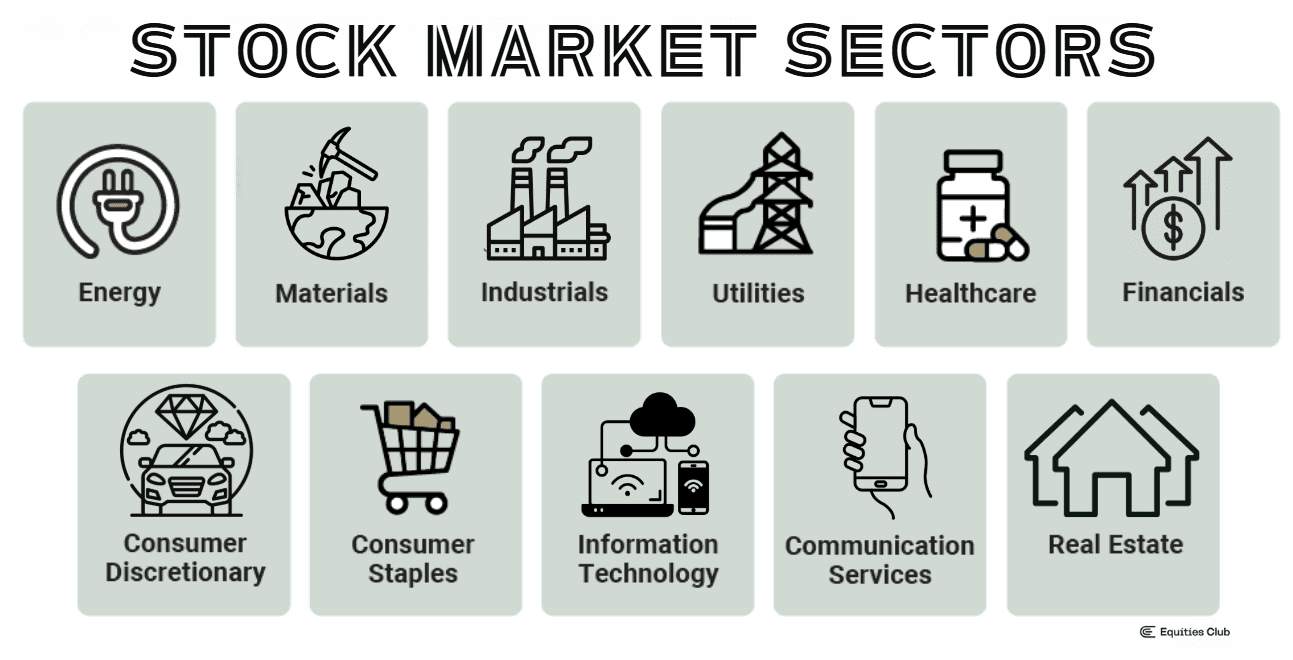
Small-cap tech is a tougher sector, but it’s still worth keeping on the radar with software, cybersecurity, and niche SaaS platforms. Find one with traction, recurring revenue, and low shareholder turnover. It doesn’t take much for the valuation to move. Just be wary of the ones burning cash without any prospect of return.
From battery materials to hydrogen, Australian micro-cap investors are increasingly looking for exposure to the energy transition. From government grants, pilot projects, and ESG mandates, these can all act as price catalysts.
Don’t forget niche industries that may provide huge returns, such as natural hydrogen, helium, carbon capture, and defence tech. These sectors don’t always trend, but when they do, they can become hot fast.
The key is to find sectors where news flow can be material, and value can be created quickly. Think about government support, supply shortages, and upcoming demand. That’s what drives interest, volume, and, in turn, price movement.
Our tip is to set up individual watchlists to watch companies from each sector.
A few Micro-Cap Stocks we are Watching
We can’t tell you what to buy, but we do watch a lot of names closely and thought we’d share a few.
Here are a few micro-caps we think are worth keeping an eye on and why:
Bubalus Resources (ASX: BUS)
Exploring for gold near Fosterville in Victoria, with four active project areas and drilling with three to be drilled in 2025. It’s capped at under $10 million and has about $4 million in cash, and with it’s targets sitting near one of Australia’s highest-grade gold mines, BUS has serious micro-cap potential.
Asian Battery Metals (ASX: AZ9)
AZ9 is going after copper, nickel and PGE targets in Mongolia. Drilling throughout 2025 at its Oval project and has flagged signs of a potential feeder system, with further drilling to confirm. At around $15 million market cap and strong social tailwinds around copper, it’s one that’s gathering attention.
FMR Resources (ASX: FMR)
FMR is a shell company with $4 million in cash and a company valuation of only $4 million. What this means is that if the company is to put in an asset or drill their copper targets any further and make a discovery, the likelihood of a share price increase is high.
KingsRose Mining (ASX: KRM)
Valued at $22 million, with $22 million in cash, you would think this is a shell company, but it isn’t. KRM is chasing a drilling permit to drill a known high-grade PGE deposit in Finland. Not only does it have a partnership with BHP, but BHP also pays KRM to explore. A discovery by KRM could lead to the company’s valuation increasing significantly.
Uvre Limited (ASX: UVA)
This micro-cap is valued at just $6 million and is nearing the completion of a gold asset in New Zealand. The gold asset is next to $4.25 billion OceanaGold’s producing mine, not bad for a $6 million company. With gold at record highs we believe that UVA has all the potential to multiple from current levels.
Top End Energy (ASX: TEE)
TEE is trying to position itself in the natural hydrogen space. This sector is still emerging but will have a serious upside if it becomes commercially viable. They’ve amassed a 30,000+ acre position in Kansas, sitting on what’s considered a ‘proven fairway’ for natural hydrogen seeps. Valued at only $17 million, it’s still early days.
MEC Resources (ASX: MEC)
MMR is a $7.4 million micro-cap with a 37.95% stake in Advent Energy, which holds 85% of the PEP-11 permit off the NSW coast. The permit is currently under judicial review, with a hearing scheduled for September 2025. MEC holds $2.9 million in cash and no debt, offering investors speculative exposure to a potential offshore gas development near Sydney, with material upside if the review outcome is favourable.
Locksley Resources Ltd (ASX: LKY)
An $11.7 million explorer focused on copper-gold in NSW and rare earths-antimony in California. Its Mojave Project hosts high-grade targets, including 12.1% Rare Earth and 46% Antinomy, with drilling funded and pending permits. A recent capital raise supports upcoming RC drilling. With just 146 million shares on issue, Locksley offers exposure to US critical minerals and early-stage discovery upside.
Tasman Resources Ltd (ASX: TAS)
A $4.6 million explorer with key projects in South Australia, including the Lake Torrens IOCG project near Olympic Dam, now 51% owned and funded by Fortescue. TAS also holds 100% of the Parkinson Dam gold-silver-lead-zinc project, where drilling is planned. In addition, it owns a major stake in Eden Innovations (ASX: EDE). TAS appeal lies in funded exploration near tier-1 assets and leveraged exposure to a commercial tech play.
TrivarX Ltd (ASX: TRI)
An $8 million mental health tech company developing AI-based tools to screen for depression using sleep and heart rate data. Its lead product has shown 87% sensitivity and is entering a US clinical trial with the Department of Veterans Affairs. The 60-patient trial is the final step before FDA submission. With $1.5 million cash and recent funding secured, TrivarX is positioned to progress toward commercialisation.
UNITH Ltd (ASX: UNT)
An $11 million AI tech company creating digital humans for real-time interaction across websites and apps. Its platform serves both B2B and B2C markets, with clients and users in 36 countries. Features include multilingual avatars, Zapier integration, and secure embedding. Positioned in a fast-growing sector, UNT offers scalable AI engagement tools with strong commercial traction.

Last Thing to Note
Remember, this is not financial advice, just examples of how we think about micro-cap opportunities. Small market caps, clear storylines, upcoming catalysts, decent cash positions, and not already flooded with retail attention. That’s the kind of mix we like to keep an eye on.
General advice warning
The contents of this document are intended to provide general securities advice only and have been prepared without taking account of your objectives, financial situation or needs. Because of that you should, before taking any action to acquire or deal in, or follow a recommendation (if any) in respect of any of the financial products or information mentioned in this document, consulting your own investment advisor to consider whether that is appropriate having regard to your own objectives, financial situation and needs. If applicable, you should obtain the Product Disclosure Statement relating to the relevant financial product mentioned in this document (which contains full details of the terms and conditions of the relevant financial product) and consider it before making any decision about whether to acquire the financial product. Whilst the Equities Club Pty Ltd (“Equities Club”) believes information contained in this document is based on information which is believed to be reliable, its accuracy and completeness are not guaranteed and no warranty of accuracy or reliability is given or implied and no responsibility for any loss or damage arising in any way for any representation, act or omission is accepted by Equities Club or any officer, agent or employee of Equities Club or any related company.
Neither Equities Club, nor any of its directors, authorised representatives, employees, or agents, makes any representation or warranty as to the reliability, accuracy, or completeness, of this document or any advice. Nor do they accept any liability or responsibility arising in any way (including negligence) for errors in, or omissions from, this document or advice.
Disclosure
The directors, authorised representatives, employees and associated persons of Equities Club may have an interest in the financial products discussed in this document and they may earn brokerage, commissions, fees and advantages, pecuniary or otherwise, in connection with the making of a recommendation or dealing by a client in such financial products. Equities Club owns 750,000 AZ9 shares, 600,000 TEE shares and 330,000 of BUS at the time of publishing this article. Equities Club has been engaged by AZ9, TEE and BUS at the time of writing.
Confidentiality notice
The information contained in and accompanying this communication is strictly confidential and intended solely for the use of the intended recipient/s. The copyright in this communication belongs to Equities Club. If you are not the intended recipient of this communication please delete and destroy all copies immediately.
Equities Club Ltd (CAR No. 001308139) is a corporate authorised representative of ShareX Pty Ltd, Australian Financial Services License (AFSL) No. 519872.