

A drone that slips past radar, hits a target, and gets home without anyone seeing it leave.
Every serious military on the planet is chasing that same goal right now.
The material that makes that drone possible is also the material at the heart of NVIDIA’s next generation of AI chips.
Every one of those chips runs into the same physical wall. The copper wires that have carried electricity through every computer chip for 40 years are running out of room.
The semiconductor industry has spent more than a decade trying to manufacture the replacement.
Meet Adisyn (ASX: AI1), our latest portfolio addition, which just cleared the milestone the multi-billion dollar industry’s been stuck on.
What Adisyn (ASX: AI1) Just Grew in the Lab
AI1 spent six years building a process to grow graphene, a sheet of carbon just one atom thick, inside the same equipment already running in every major chip factory on the planet.
Today it confirmed the result the industry has been chasing. Full-coverage graphene on a 1cm by 1cm coupon, grown at a temperature low enough for a real chip factory to use.
No one has done this before. It’s a world first.
Graphene has been the known answer to the copper problem for over a decade. The catch was always how to make it. Growing graphene normally takes around 1000 degrees Celsius, hot enough to melt any chip you’d want to put it on.
Most of the industry’s decade of effort has gone into growing graphene cold using the same tool – a machine called a CVD, or Chemical Vapour Deposition reactor. Enormous sums have been spent on that path without a commercial result.
AI1 took a different path. They didn’t try to fix CVD. They switched to a completely different tool – an Atomic Layer Deposition machine, known as ALD – and built their own chemistry for it.
AI1 is the only company we can find using ALD for graphene at fab-compatible temperatures, and both the process and the chemistry are patented.
That’s what got grown today. Continuous graphene, deposited via ALD, well below 450 degrees Celsius, which is the thermal ceiling any material has to sit under to make it inside a commercial chip fab.
The result opens the door to the conversation AI1 has been waiting six years to have. Engagement with the TSMCs, the Samsungs, the Intels, and the equipment giants that build for them.
At 6.8 cents and a $57 million market cap, we think the ceiling on this one is a long way up.
The Chip Industry’s Trillion-Dollar Problem
The chip industry has never faced demand like this.
Last month, NVIDIA CEO Jensen Huang told investors the company now has “high confidence visibility” of US$1 trillion in orders for its Blackwell and Rubin chips alone through 2027.
Just those two product lines. That’s before the CPUs, the networking gear, or anything else NVIDIA sells.
The World Semiconductor Trade Statistics body, the industry’s main market tracker, forecasts the global chip market will hit US$975.5 billion in 2026, up 26% on this year.
One NVIDIA Blackwell server rack sells for around US$3 million. NVIDIA is shipping a thousand of them every week, and six million Blackwell GPUs have shipped in the past year. That’s the scale of what the chip industry is trying to build.
The US government is putting real dollars behind bringing advanced manufacturing back onshore. The CHIPS Act has already committed US$6.6 billion to TSMC’s Arizona fabs, US$6.17 billion to Micron, and US$4.75 billion to Samsung.
Every chip built inside that wave hits the same bottleneck.
For decades, copper has been the interconnect material – the wiring that moves electricity between billions of transistors inside every chip.
It’s been getting thinner with each new generation, and it’s now so thin it’s behaving like a bottleneck rather than a bridge.
This means resistance rises, heat builds up, and signals start to stall inside the chip itself.
At the scale of an AI data centre, that inefficiency shows up in the power bill of an entire country.

Imec, the Belgian research hub where TSMC, Intel, Samsung and most of the world’s major chipmakers develop their next-generation processes, has publicly named graphene as the most promising replacement.
Graphene conducts electricity more efficiently than copper and keeps working at dimensions where copper physically breaks down. It also handles heat better, which matters when billions of transistors are firing at once.
The physics has been settled for over a decade. The obstacle has always been making it inside a real chip factory.
AI1 just cleared the first real step.
Graphene and the Stealth Drone Race
We opened on drones for a reason.
The drones in operation right now are easy to see and easy to track. Almost every radar on the planet picks them up.
The real race is for the next generation: a drone that slips past radar, sits thousands of metres above a target undetected, drops in on a mission no human could survive, and comes home without anyone knowing it was there.
That drone doesn’t exist yet. The materials to build it are what every defence program in the world is now chasing.
Capital is pouring into drone tech broadly. A few recent prints:
- Anduril is raising US$4 billion at a US$60 billion valuation
- Helsing, the German AI drone maker, hit a €12 billion valuation this year
- AEVEX Aerospace listed in New York on Friday at US$2.7 billion on debut
- Stark, a German drone startup founded fifteen months ago, is already sitting on a US$500 million valuation after raising US$100 million from Peter Thiel and the CIA
Governments have opened the taps for drone tech too:
- Germany has committed €10 billion specifically to military drones, part of the biggest defence buildup since the Cold War
- The United Kingdom put up £6.5 billion under its latest Strategic Defence Review
- NATO members have collectively agreed to lift defence spending to 5% of GDP
- The Pentagon’s FY27 budget request includes US$54.6 billion for its newly formed Defense Autonomous Warfare Group, up from US$225 million the prior year
- Australia committed $5 billion to drones last week
Inside that race is a materials problem that’s proven hard to crack: making a drone the radar can’t see. That’s where AI1 sits.
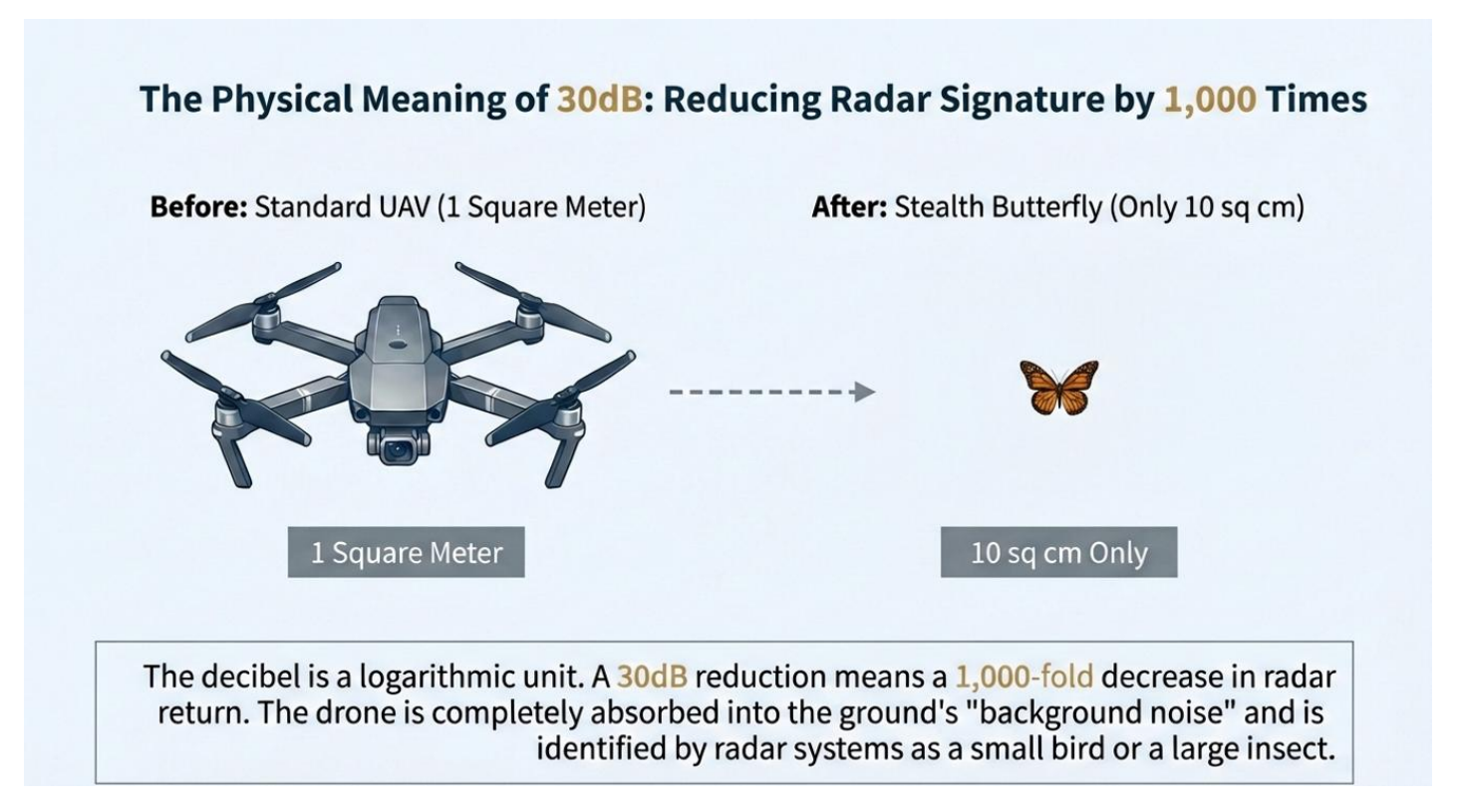
In lab testing, its graphene coating has already cut the radar return from a drone to one hundredth of its size. A full-size attack drone appearing on a radar screen at roughly the size of a bird.
The next target takes that to one thousandth. AI1 is working on the material that makes it possible.
AI1’s radar-signature work is based in Israel, built around a partnership with Tel Aviv University.
Israel has been a testing ground for drone and defence tech for decades, and with every major military now writing cheques, that’s a useful place for this work to sit.
Adisyn’s Two Markets: AI Chips and Military Drones
Let’s take stock and pull back for a second, and look at what AI1 is actually selling into.
The global chip market is on track to hit US$975 billion next year, with most forecasts pointing to US$1.2 trillion by 2030.
Every device running a modern chip sits inside that number. That’s the processor in your phone, the chips driving your car, the AI accelerators inside every data centre.
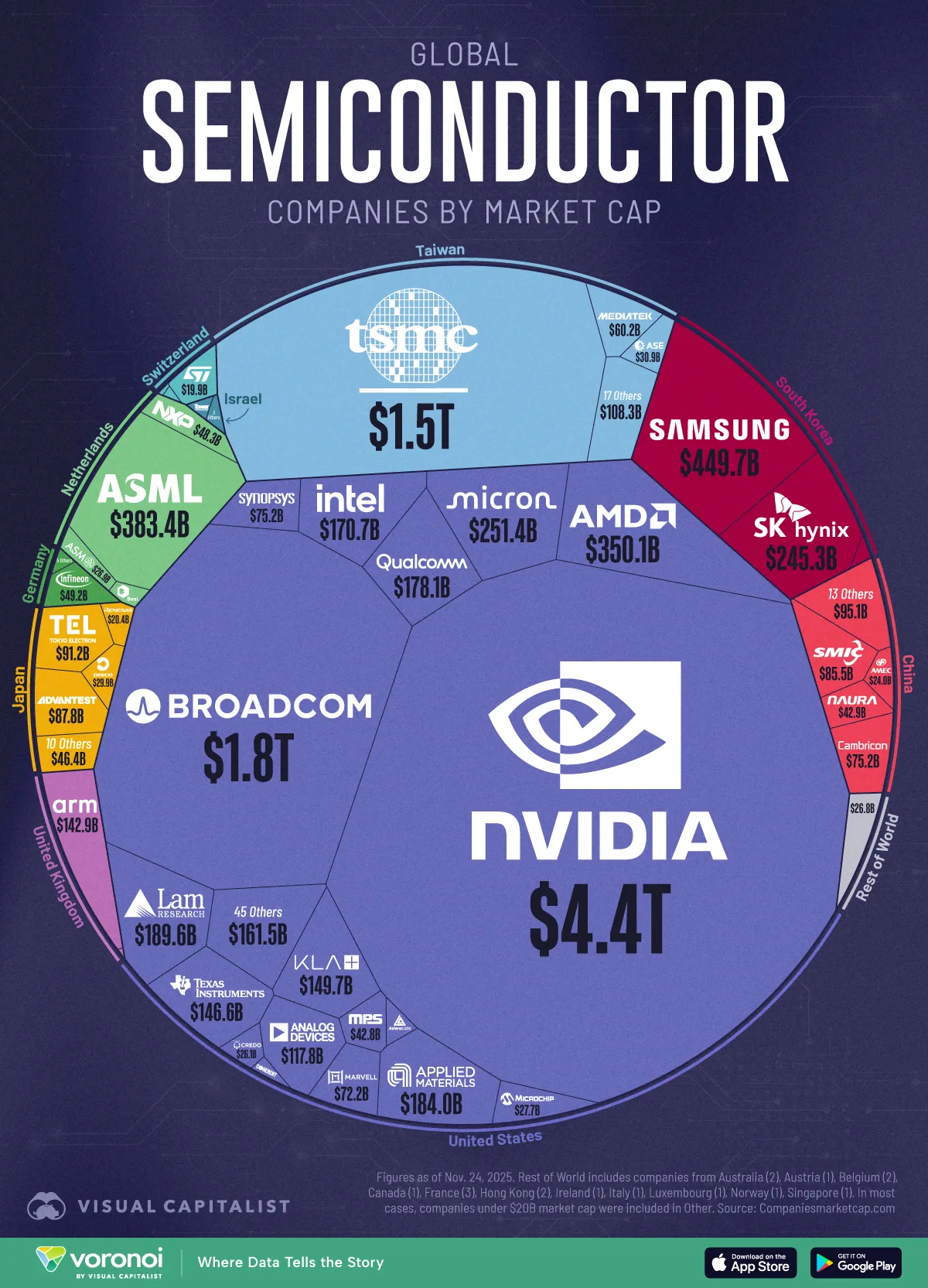
All of them hit the same interconnect wall, which is the one AI1 just cleared the first real step on.
That means the total addressable market for a working low-temperature graphene process is every high-performance chip built over the next 20 years.
Drones are the smaller market, but growing faster.
Military drone spending alone is forecast to triple from US$20.7 billion in 2026 to US$66.5 billion by 2035.
US investment bank Oppenheimer recently put the total addressable drone market at US$400 billion within a decade. The anxiety-inducing drone warfare videos coming out of the Ukraine-Russia war make it easy to see why.
And those figures are before you factor in what a working stealth material would be worth to any defence program chasing the next-generation drone.
Two massive markets, one materials breakthrough, and the same team behind both sides of it.
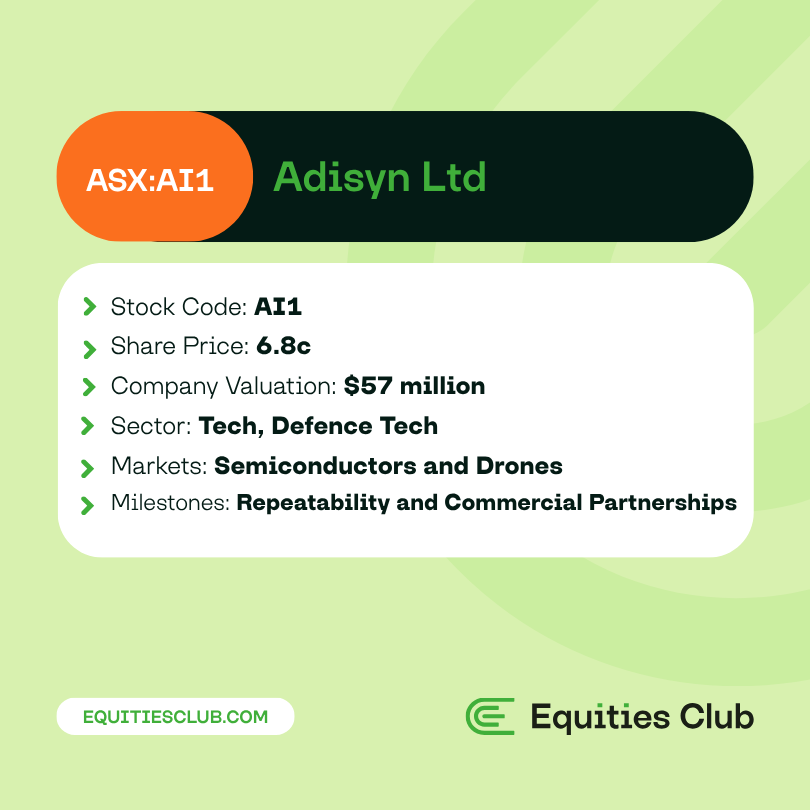
AI1’s market cap is $57 million.
Five Reasons We’re Backing Adisyn (ASX: AI1)

1. Six Years of Graphene R&D Behind Adisyn
Graphene has been the obvious answer to chipmaking’s biggest problem for over a decade, and for just as long, nobody has been able to use it.
The reason was always temperature. Traditional graphene growth melts the chip. Every major chipmaker has known graphene was the material that extends the industry past copper’s limits, and every one of them has been stuck at the same wall.
Adisyn started working on the problem in 2020.
The graphene tech came into Adisyn through the January 2025 acquisition of 2D Generation. The team, the patents and the R&D all came with it.
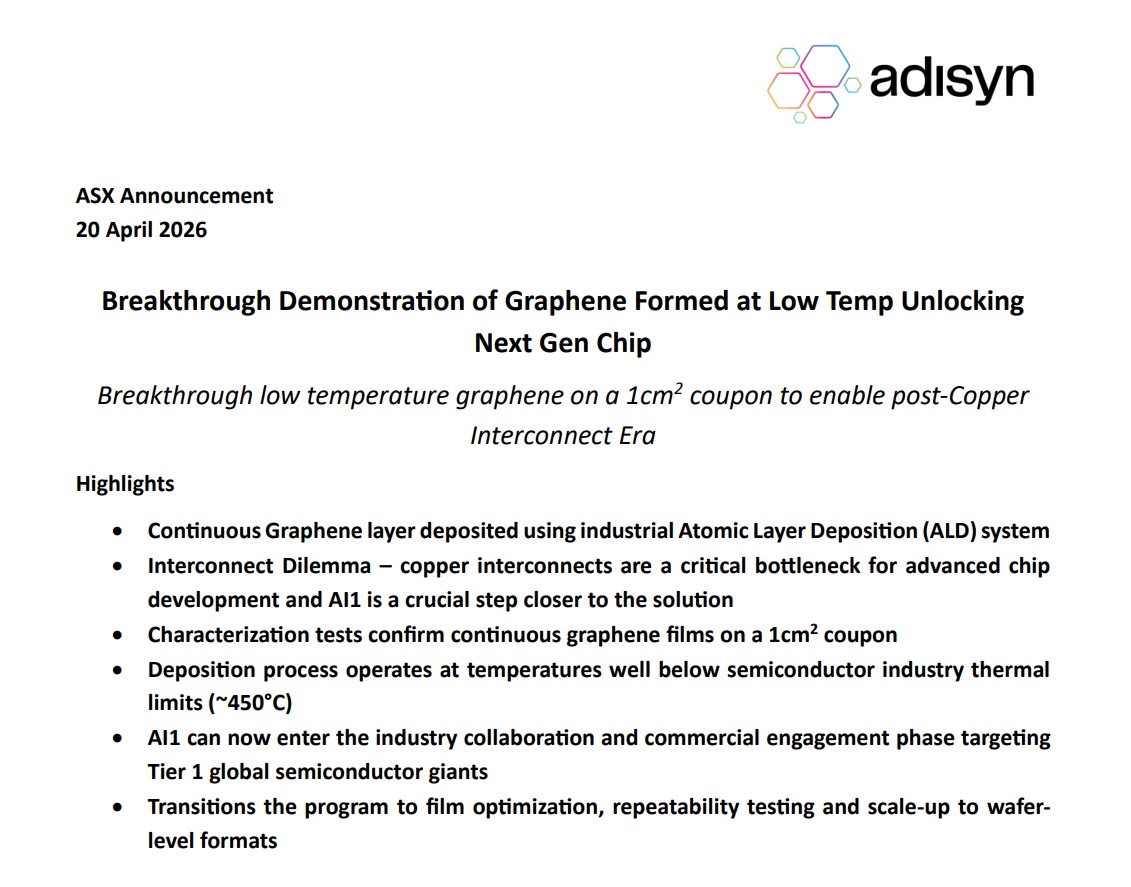
Six years, more than 20 specialists across three continents, and a research roadmap published in mid-2025 that set out three milestones in order:
- First (completed in January): a graphene-like carbon layer deposited below 300 degrees Celsius, independently verified by Professor Yoram Selzer of Tel Aviv University
- Second (landed today): A full 1cm by 1cm coupon, covered in continuous graphene, at a temperature a commercial chip factory can actually use.
- Third (in progress): repeatability across hundreds of samples under factory conditions, and scaling from coupon to full wafer
AI1 is the only company on the planet with a demonstrated process to grow continuous graphene at fab-compatible temperatures using an industrial ALD system. Both the process and the chemistry are patented.

Chairman Kevin Crofton spent 30 years running semiconductor businesses that sold into TSMC, Samsung and Intel. He knows exactly what happens next.
Crofton has told us that when he’s asked chip companies what solving this would mean to them, the response has been blunt: “It’s worth more than my company.”
A working low-temperature graphene process is the kind of asset a chipmaker buys. It’s not licensed out in small pieces to competitors. It’s acquired, wholesale, by the first company that wants to own the interconnect layer of every advanced chip built for the next 20 years.
2. Solving the AI Chip Interconnect Bottleneck
Every new generation of AI chip is harder to build than the one before it.
The transistors shrink. The wires that connect them shrink with them. At the scale of modern AI models, those tiny copper wires are moving so much data, so fast, that they’re wasting enormous amounts of electricity just pushing electrons through resistance.
Every bit of electricity lost to heat is electricity not spent on computation.
NVIDIA’s Jensen Huang has called AI infrastructure the next electricity. He’s forecast US$1 trillion in chip orders through 2027 alone.
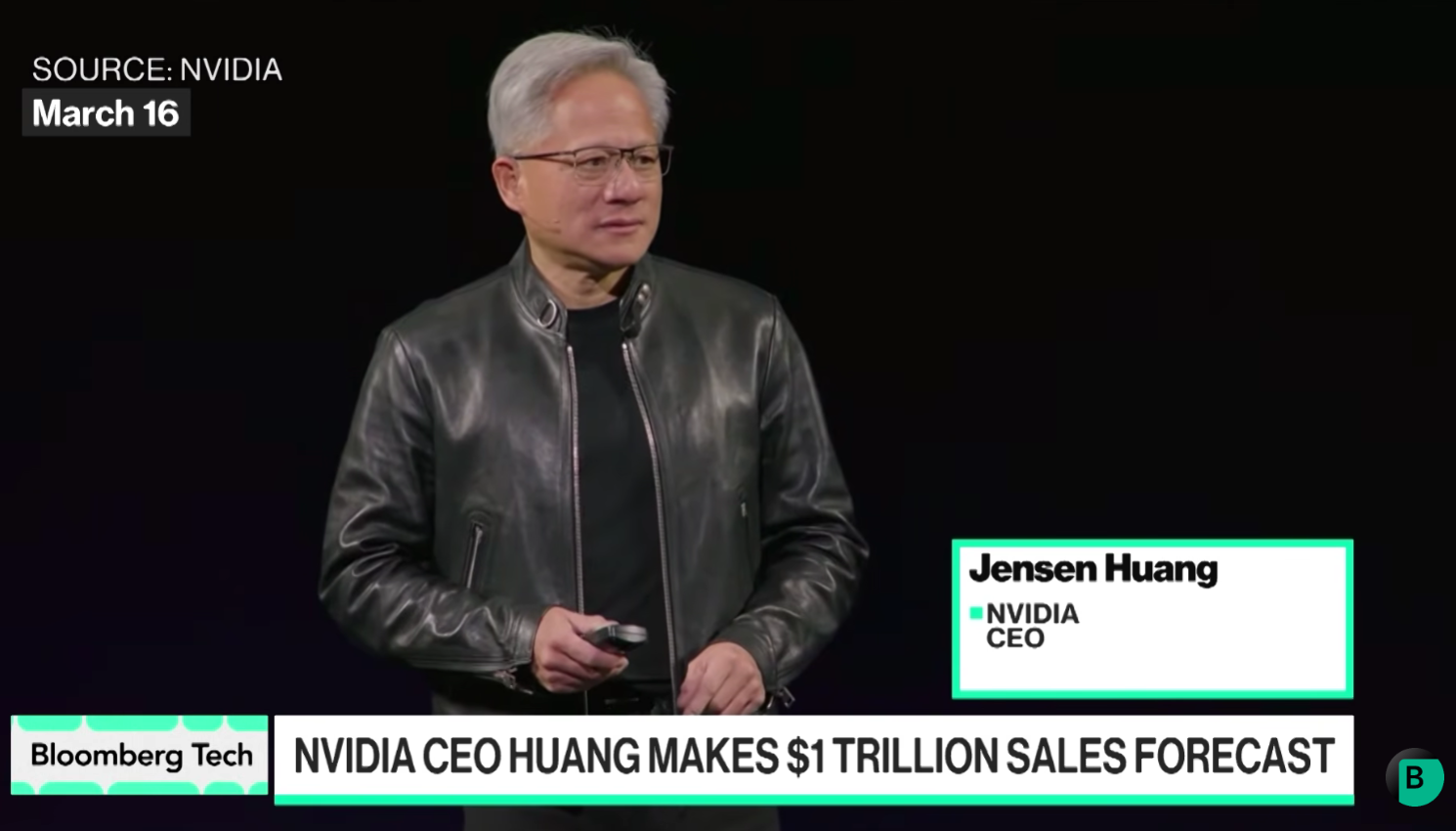
Every one of those chips runs into the same wall. TSMC, Samsung, Intel, Amazon, Microsoft, Google and every government trying to build its own AI capability needs a solution to the copper problem, and they needed it yesterday.
Graphene keeps working at dimensions where copper physically breaks down. It conducts more efficiently, runs cooler, and holds up under loads that melt conventional wiring.
The physics argument between graphene and copper has been settled for over a decade. The problem was always how to grow it inside a real chip factory.
AI1 has just shown a process that does exactly that.
The chips built for AI in the next 20 years are going to need a replacement for copper interconnects. AI1 is the only company we can find that has cleared the first real step on the industrial path to one.
3. A Second Market: Graphene for Stealth Drones
Earlier this year, AI1 released early results on something the global defence industry has been chasing for decades.
Working with the commercial arm of Tel Aviv University, the company coated a drone in a graphene-based material and put it in front of a radar. The radar saw one hundredth of what it should have.
Management’s next target takes that to one thousandth, the point where a full-size attack drone shows up on a radar screen at roughly the size of a butterfly.
It’s worth flagging what that means and what it doesn’t. The one-hundredth figure is radar return – what the radar sees – not the drone’s physical size. And the one-thousandth target is where the company’s aiming, not where it’s got to yet.
It’s still the kind of result that turns heads in defence.
The program is led by Pavel Ginzburg, a professor of electrical engineering at Tel Aviv University and a globally recognised radar physicist. In February he was awarded a European Research Council Proof of Concept grant, one of only 150 handed out worldwide.
He’s a serious operator, and the technical lead AI1 is building the drone program around.
The drone program is the same graphene platform pointed at a different problem, with its own addressable market and its own customer set. This kind of second shot on goal isn’t a small one, it’s big and the addressable market is only growing.
Potential customers are already spending. Germany has committed €10 billion to drones and counter-drone systems. The United Kingdom is putting up £6.5 billion. The Pentagon is asking Congress for US$54.6 billion.
The country that owns the invisible drone owns the next decade of airborne warfare, and AI1’s materials work is aimed squarely at that problem.
4. A Chip Industry Management Team
AI1 is chaired by Kevin Crofton, a semiconductor industry operator with more than 30 years running the businesses that build chips for the world’s biggest fabs.
He has held senior roles at Lam Research and KLA, two of the four biggest chip equipment companies on the planet, both of which supply TSMC, Samsung and Intel directly.
Crofton then led the management buyout that created SPTS Technologies, a UK manufacturer of the machines that deposit and etch layers onto semiconductor wafers. Under his leadership, SPTS was sold to Orbotech for US$370 million in 2014, and Orbotech was then acquired by KLA for US$3.4 billion.
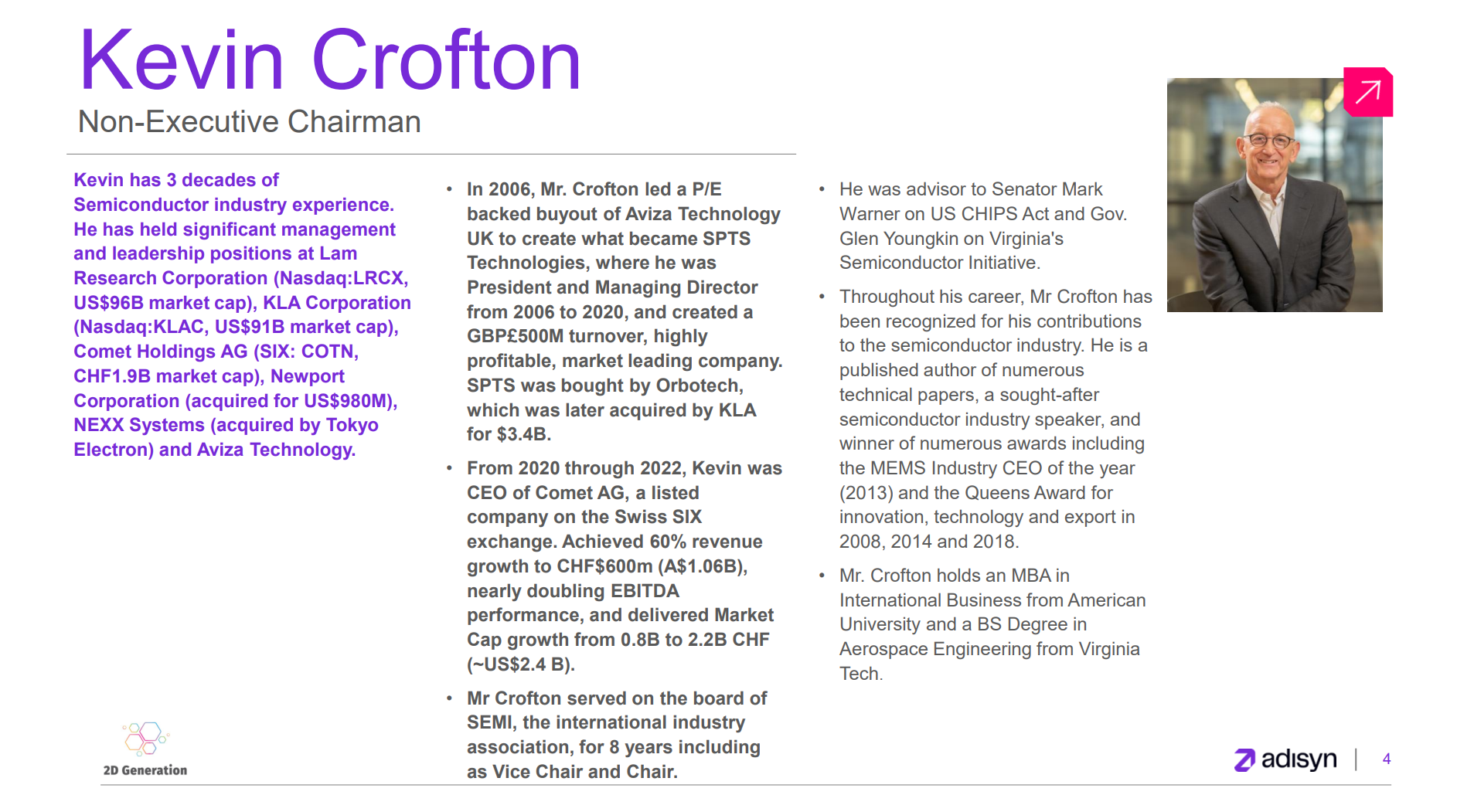
After SPTS, Crofton ran Comet AG, a Swiss-listed technology company, where he took the market capitalisation from CHF0.8 billion to CHF2.2 billion during his tenure.
He spent eight years on the board of SEMI, the global industry body for chip equipment makers, including a term as chairman. He has also advised the US government on semiconductor policy.
Crofton has spent three decades inside the rooms where the world’s biggest chipmakers decide which new technologies they adopt. He now chairs a company that has just cleared the exact kind of milestone those rooms are watching for.
Managing director Arye Kohavi runs the graphene program day to day, and he’s a serial entrepreneur having built a world-class technology company before.
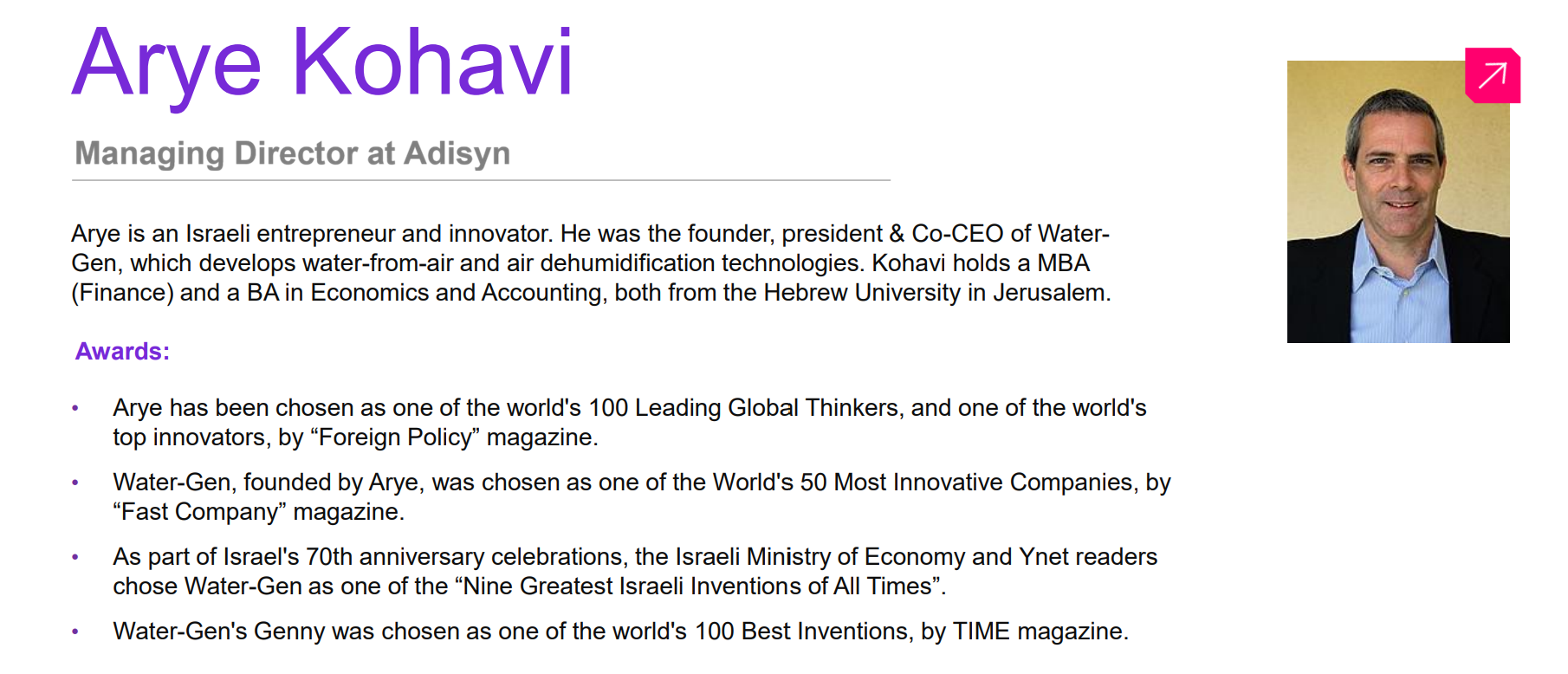
In 2009, Kohavi co-founded Watergen, an Israeli company that built machines to pull drinking water straight out of the air.
The technology has been deployed in more than 65 countries, and is used for point-of-use drinking water in disaster relief, remote sites, clinics and military field settings.
Watergen was one of TIME magazine’s 100 best inventions of 2019, named one of Fast Company’s 50 most innovative companies, and was picked by the Israeli Ministry of Economy as one of the nine greatest Israeli inventions of all time. The company was acquired in 2016.
Foreign Policy magazine named Kohavi one of its 100 leading global thinkers in 2014.
A year later, Kohavi started work on the graphene program AI1 owns today.
VP of R&D Miri Kish Dagan spent decades running research and development in Israeli semiconductor and laser systems before joining the program.
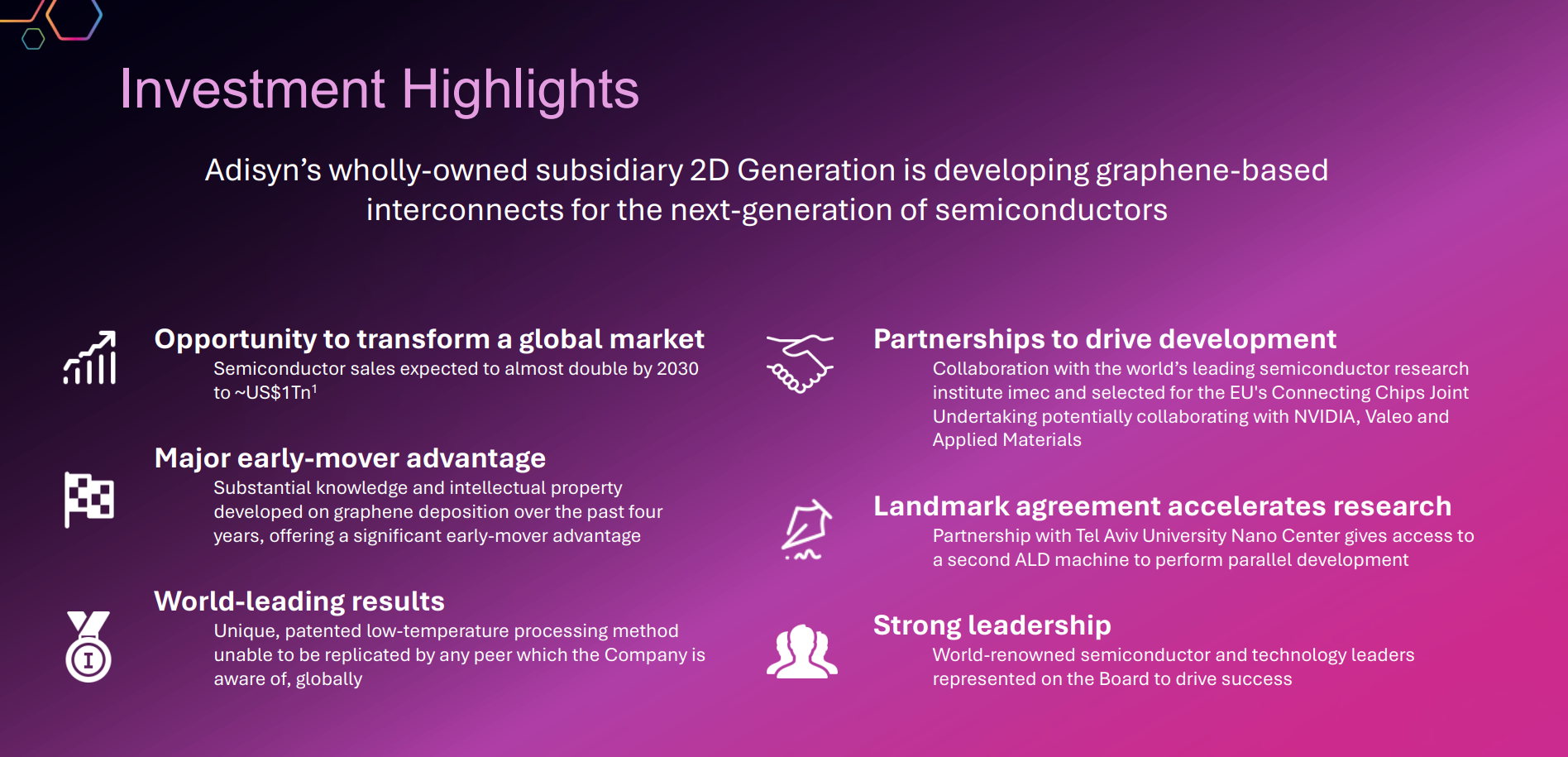
Behind them sits a team of more than 20 specialists across three continents, with research partnerships at imec and an EU chip consortium that includes NVIDIA, Applied Materials and NXP.
No other ASX company at this market cap has a team with this kind of track record. In deep tech, who’s running the company is half the answer to whether the science ever gets out of the lab. AI1 has the other half already.
5. The Valuation Gap at a $57M Market Cap
$57 million at 6.8 cents a share.
With that you get:
- A patented low-temperature graphene process that has just cleared the milestone the chip industry has been working on for a decade
- A drone radar absorption program with a grant application going to the Israeli Ministry of Defence
- A management team that has already built and exited multibillion-dollar businesses in the same industry, and
- A legacy IT services business that still generates revenue.
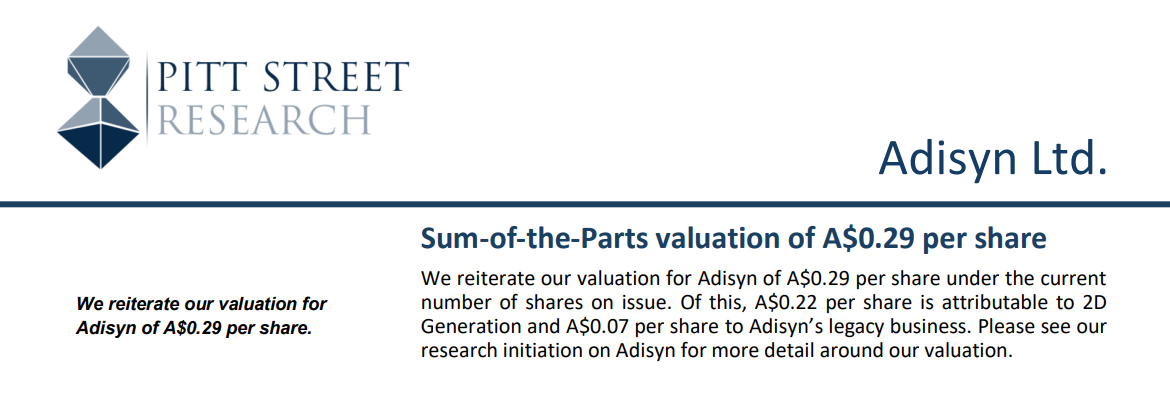
Pitt Street Research, an Australian equity research firm, valued AI1 at 29 cents per share on a sum-of-the-parts basis covering the chip technology, the drone program and Adisyn Services. That’s roughly four times today’s close.
Our framing is simpler.
The global chip market is heading toward US$1 trillion next year. NVIDIA alone has forecast a trillion dollars of chip orders through 2027, and every one of those chips has the same copper interconnect problem AI1 is working on.
The military drone market is on track to triple by 2035, and NATO governments have just committed hundreds of billions to the autonomous systems AI1’s radar work sits in front of.
AI1 doesn’t need to own a big piece of either market to justify a much larger valuation than today’s. It just needs to keep clearing milestones.
Our View on Adisyn (ASX: AI1) From Here
Today’s announcement is a technical one, and the market may take a beat to work out what it means. Here’s our read:
The next 12 months are a straight line to commercial conversations. Repeatability testing across hundreds of samples, scaling to a full production wafer, and first partnership announcements.
On the drone side, management has set a target of hitting 30 dB radar signature reduction by the end of 2026. That’s the milestone that takes the drone story from proof of concept to the doorstep of commercial interest.
Each one is a potential share price catalyst, and they are all sequenced inside the next 12 to 18 months.
This is the kind of company that gets bought. Applied Materials, Lam Research, KLA, ASML and Tokyo Electron have spent the past decade acquiring smaller businesses to lock in the materials and processes their customers need.
A low-temperature graphene process is exactly the kind of asset they pay for. Crofton himself built SPTS into a business that KLA eventually owned inside a US$3.4 billion deal.
He understands how this movie ends.
The six years of research, the specialist team, the IP position and the institutional partnerships with imec, Tel Aviv University and the EU chip consortium put AI1 well ahead of anyone else chasing the same problem.
A well-funded competitor starting today would be years behind, and the chip industry doesn’t wait.
None of this is currently priced in to the 6.8 cent share price, and that’s why we are in.
We’re backing AI1 from here.
General advice warning, disclosure and confidentiality notice
General advice warning
The contents of this document are intended to provide general securities advice only and have been prepared without taking account of your objectives, financial situation or needs. Because of that you should, before taking any action to acquire or deal in, or follow a recommendation (if any) in respect of any of the financial products or information mentioned in this document, consulting your own investment advisor to consider whether that is appropriate having regard to your own objectives, financial situation and needs. If applicable, you should obtain the Product Disclosure Statement relating to the relevant financial product mentioned in this document (which contains full details of the terms and conditions of the relevant financial product) and consider it before making any decision about whether to acquire the financial product. Whilst the Equities Club Pty Ltd (“Equities Club”) believes information contained in this document is based on information which is believed to be reliable, its accuracy and completeness are not guaranteed and no warranty of accuracy or reliability is given or implied and no responsibility for any loss or damage arising in any way for any representation, act or omission is accepted by Equities Club or any officer, agent or employee of Equities Club or any related company.
Neither Equities Club, nor any of its directors, authorised representatives, employees, or agents, makes any representation or warranty as to the reliability, accuracy, or completeness, of this document or any advice. Nor do they accept any liability or responsibility arising in any way (including negligence) for errors in, or omissions from, this document or advice.
Disclosure
The directors, authorised representatives, employees and associated persons of Equities Club may have an interest in the financial products discussed in this document and they may earn brokerage, commissions, fees and advantages, pecuniary or otherwise, in connection with the making of a recommendation or dealing by a client in such financial products. Equities Club owns 900,000 performance rights at the time of publishing this article. Equities Club has been engaged by AI1 at the time of writing.
Confidentiality notice
The information contained in and accompanying this communication is strictly confidential and intended solely for the use of the intended recipient/s. The copyright in this communication belongs to Equities Club. If you are not the intended recipient of this communication please delete and destroy all copies immediately.
Equities Club Ltd (CAR No. 001308139) is a corporate authorised representative of ShareX Pty Ltd, Australian Financial Services License (AFSL) No 519872.