
The World Cup kicked off this week, and for the next month the most expensive workforce on the planet plays for employers who aren’t paying them. Some of the clubs they go home to are worth a fortune as well.
Only a few dozen pro football clubs trade publicly on exchanges overseas. The biggest is Manchester United at around A$5.9 billion, bigger than plenty of ASX 200 names.
You can also pick up shares in Juventus, Borussia Dortmund, Ajax, Celtic and Benfica.
A derby loss, a sacked manager, a marquee signing or a cup exit can all move the price. And every star in this tournament is a club asset on loan to his country for the month. If he comes home with a hamstring, his club wears it.
Share prices moving on a single piece of news. We know that game well.
Back in small-cap land, the news was dropping everywhere. A chip-industry milestone a decade in the making, a drone supplier planting a flag in Los Angeles right as Washington puts more than $50 billion behind drone production, thick copper out of Mongolia, and a maiden resource taking shape in Malawi.
A scandium resource grew off samples that had been sitting in storage for years. And in Canada, a tiny copper hunter pulled grades that sent us back through years of announcements looking for a precedent. We came up empty.
What caught our eye this week:
- AI1 cracks graphene below 300°C, the chip industry’s white whale
- KTK signs lease in US as Washington opens chequebook on drones
- MRD doubles its scandium grades off old drill pulps, no rig required
- AZ9 hits thick, high-grade copper in Mongolia
- FUN advances Mkanda on every front after landing a SpaceX-calibre backer
- WCN drills copper grades we can’t say we’ve seen before
- SpaceX lists and Elon becomes a trillionaire
Adisyn (AI1) Lands the Graphene Whale
Graphene grows at around 1,000°C. A finished chip starts cooking past about 450°C.
That gap has held up the chip industry’s most wanted breakthrough for a decade.
Every advanced chip, from the processor in your phone to the ones filling AI data centres around the world, runs on copper wiring.
That copper has hit its physical limits as the chips keep shrinking, and graphene is the material everyone agrees should replace it.
But the one material that could save the chip could only be grown at a temperature that destroys it.
Until now.
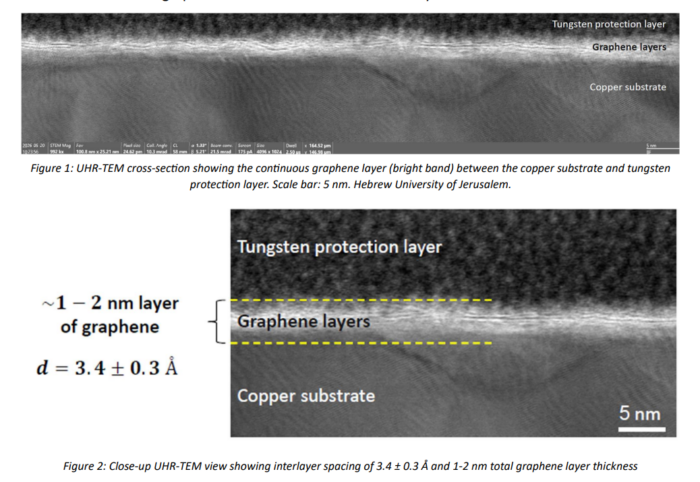
Adisyn (ASX: AI1) ran its process three times on three separate days, and grew graphene below 300°C every time. No chipmaker will build a billion-dollar production line around a coating that worked one Tuesday and never again.
Then AI1 did the thing most small-caps avoid. It handed the raw data to an outsider and invited him to pull it apart.
That outsider was UNSW’s Associate Professor Rakesh Joshi, who learned graphene working alongside the bloke who won the Nobel Prize for discovering it. Joshi checked every run and dozens of measurement points across each sample, and confirmed the process does what Adisyn says it does.
The machine AI1 uses to lay the graphene down is an ALD system, which is the standard tool inside every leading-edge chip factory on earth. AI1’s invention is the chemistry that makes graphene form at low temperature inside that machine, and it’s patented.
Owning the pizza oven doesn’t mean you can make the pizza. TSMC, Samsung and Intel own the ovens. AI1 owns the recipe.
This is a swing at an industry heading toward US$1 trillion a year.
We first wrote AI1 up for readers in April at 6.8c, and it’s up more than 150% since then. The stated next milestone is a binding deal with one of the giants.
You can read our full breakdown here.
KTEK (KTK) Plants Its Flag in US Drones
There’s a new flag flying in Los Angeles this week, and an Aussie small-cap put it there.
KTEK Aerosystems (ASX: KTK) signed a lease on a production and engineering facility in the city and took immediate possession of the warehouse and office space. The US build-out is already underway.
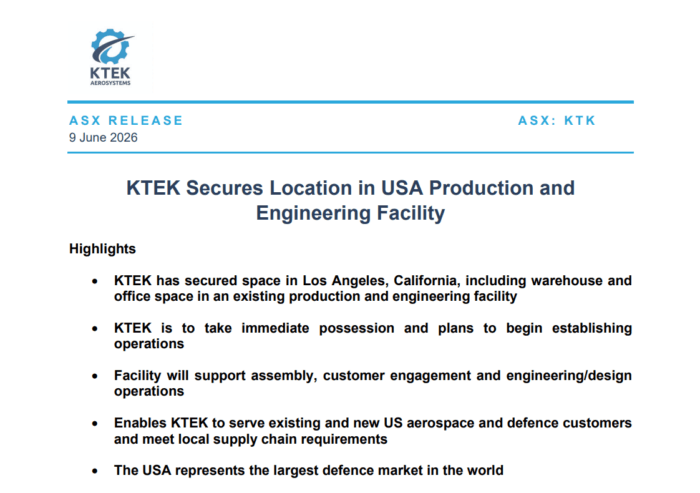
KTEK makes composite airframes and electromechanical assemblies for military and commercial drones, running an asset-light model that keeps the design and engineering in-house and farms out the manufacturing.
It’s one of our portfolio companies, and it already supplies into tier-one defence programs. The LA site is about turning that foothold into a much bigger book of US customers.
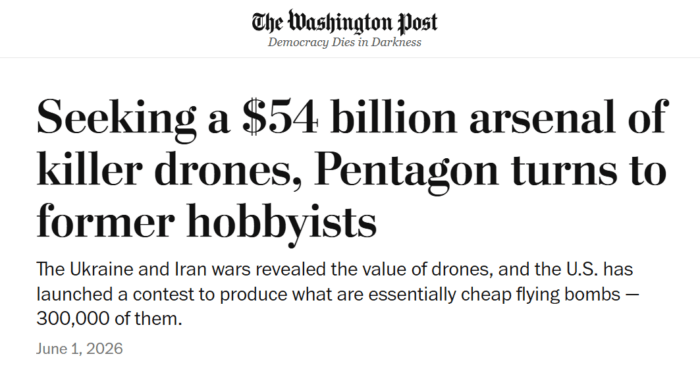
The US has lined up around $54 billion to scale up drone production, the biggest push of its kind the country has run. And a lot of American customers want a supplier with production on home soil before they’ll hand over an order.
Plenty of US defence work also carries domestic sourcing rules a foreign-only supplier can’t meet. The LA facility clears both hurdles and gives KTEK a second production hub alongside its existing operations in Europe and Israel.
KTEK has been growing its revenue quickly since listing late last year. A base inside the world’s largest defence market, right as that market opens the chequebook on drones, is how a junior supplier turns a few tier-one relationships into many.
Mount Ridley (MRD): Old Holes, New Scandium
Years ago, explorers drilled a few thousand holes into a stretch of ground 25km north of the port at Esperance, hunting nickel and copper. The samples went into storage, and the world moved on.
Nobody tested them for scandium, because back then scandium wasn’t worth the lab fee. It was a niche metal almost nobody chased.
Then China put it under export controls last year, and every aerospace and chip buyer in the West suddenly needed a new supplier for a metal the whole world produces about 25 tonnes of a year.
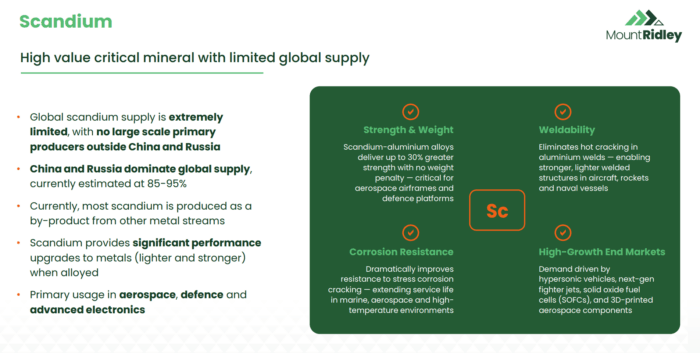
So Mount Ridley Mines (ASX: MRD), which now holds that ground as its Grass Patch Project, pulled 3,271 of the old samples out of storage and asked them a new question.
This week the answers came back. The current resource centres on a zone called Block 1, averaging 91.8ppm scandium oxide, and the reassays beat it comfortably, with near-surface hits of 9m at 152.89ppm and 20m at 116.39ppm.
The strongest grades sat about 13km southwest of the resource, on ground it doesn’t cover, and they improved the further out the samples came from. The system keeps going past the last hole.
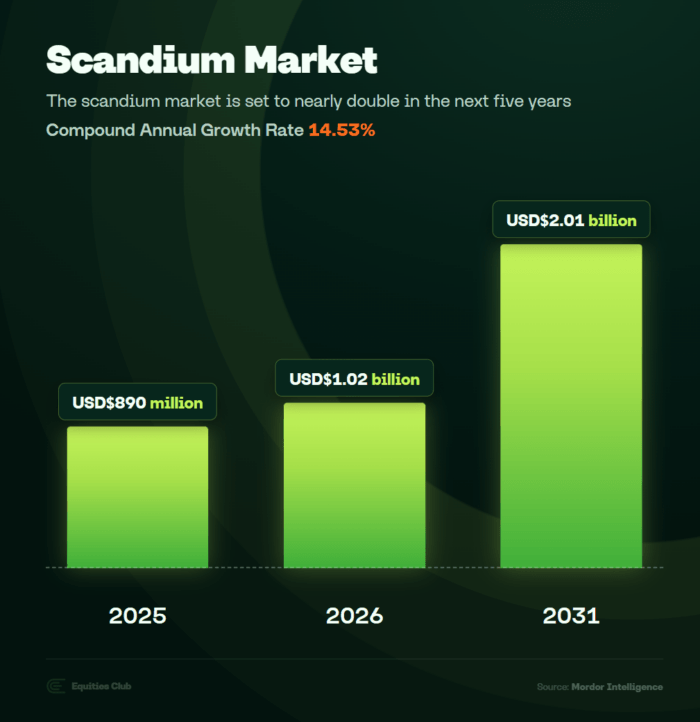
Scandium sells for around US$3,350 a kilogram, and demand already runs at four times world supply.
These are aircore results, so they need proper drilling before anyone banks them. Phase 1 now rolls into the resource model, and Phase 2 is being scoped along that 13km corridor, with roughly 14,000 samples still sitting in storage.
Growing a resource off samples you already own, with no rig and no raise, is about as cheap as exploration gets. It’s one of a few reasons why MRD sits in our portfolio.
We broke down the announcement here.
Azzuro (AZ9) Strikes Copper in Mongolia
A 13-metre copper hit at over 2% is a strong result for any explorer, and this week it came from Azzuro Resources (ASX: AZ9), the portfolio company formerly known as Asian Battery Metals.
The assays landed from its Red Hill project in Mongolia.
Drillhole MU2601 returned 13.1m at 2.58% copper, with 0.96 g/t gold, 22.4 g/t silver and 0.76% zinc on top.
A hit like that at any size gets attention, and for a company carrying a sub-$20 million market cap it’s a result that can rerate a register.
The silver came in well above the earlier holes, adding metal credits to a system already throwing off four payable metals.
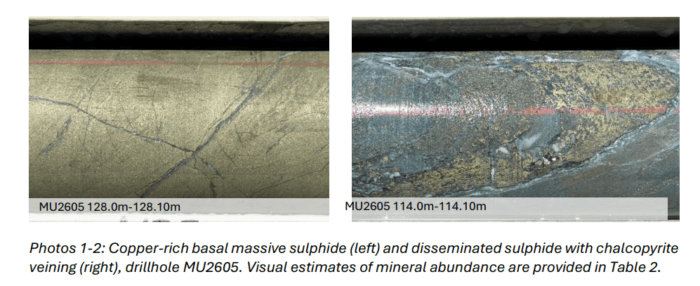
Red Hill is a volcanogenic massive sulphide system, which means the metal sits in dense pods of ore, and the pods come in clusters. Find one and the odds are good there’s another nearby.
A second hole, MU2605, extended the massive sulphide another 124 metres along strike to the west-northwest, where the copper looks to be getting richer.
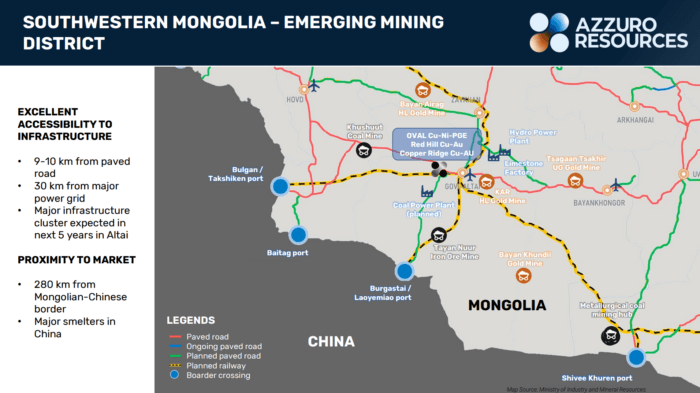
AZ9 has now traced the zone over roughly 272 metres of strike, and it’s open at depth and in both directions.
Assays are still pending on six diamond holes and three RC holes, due over the coming weeks, with a 3D gravity survey being modelled to sharpen the next targets.
The first two holes set the bar. Now the lab decides whether the rest clear it. Fingers crossed.
Fortuna (FUN) Puts Rutile in the Bag
Exploration companies mostly deal in paper. Assay results, targets, estimates of what might be down there.
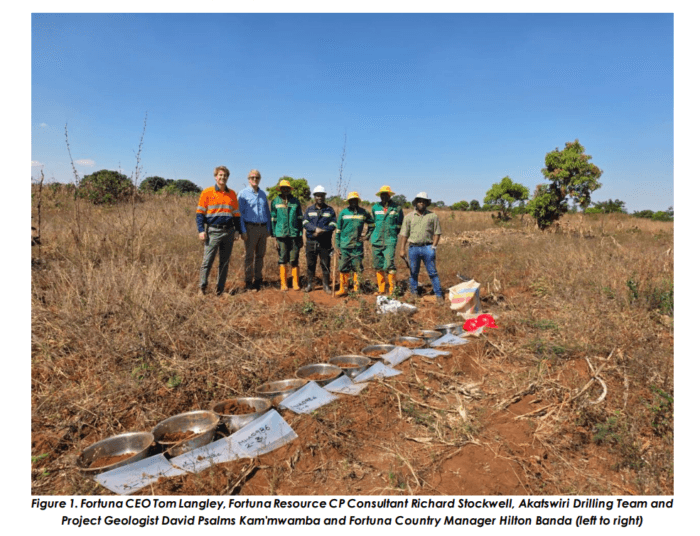
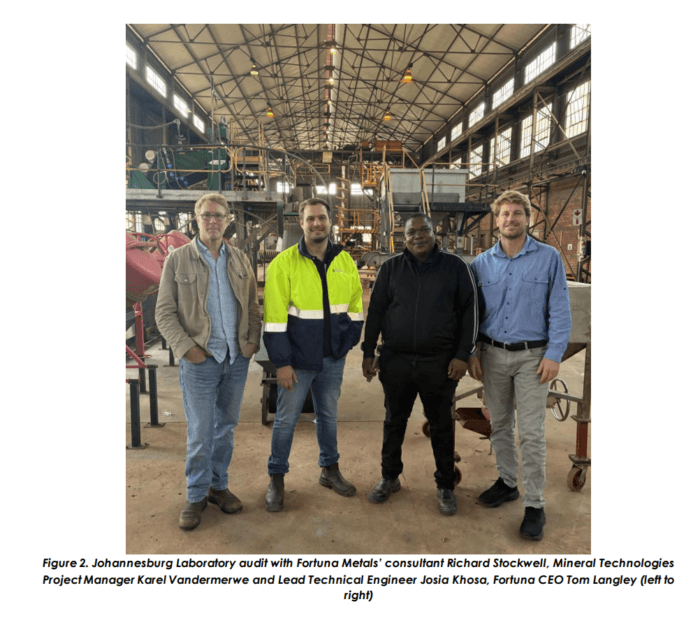
This week, Fortuna Metals (ASX: FUN), our rutile explorer in Malawi, produced something you can hold. A lab in Johannesburg took a 5.4 tonne bulk sample of dirt from FUN’s Mkanda project and turned it into 66kg of rutile concentrate.
The grade came in at 1.22% and the ore processes cleanly. Once the final results land later this month, that concentrate becomes the product Fortuna puts in front of downstream buyers.
For anyone new to the story, rutile is the feedstock titanium makers prize most, and titanium goes into everything from jet engines to humanoid robots.
The reason this corner of Malawi first turned heads sits 20km to the north. Sovereign Metals’ Kasiya is the largest rutile deposit in the world, and FUN’s ground shares its geology.
The next step is isolating a premium spec above 95% TiO₂, the standard Kasiya set. Sovereign has already proven its rutile good enough for high-end aerospace work, and Fortuna wants to show it can do the same.
FUN’s drills kept moving all the while. Their 6,000m hand auger program is about 40% done and the 5,000m aircore program kicks off late June.
The maiden Inferred Resource Estimate, the company’s first formal count of what’s actually in the ground, is pencilled in for late June or early July.
All of this comes a week after WndrCo, an early backer of SpaceX and Figma, tipped $8.6 million into FUN for close to a fifth of the company, leaving around $15 million in the bank and keeping them cashed up for a long stretch.
We’ve held FUN since it was a 4c stock, and a backer of that calibre turning up is the strongest sign yet that we read it right.
White Cliff (WCN): Copper We’ve Not Seen Before
White Cliff Minerals (ASX: WCN) is a $50 million small-cap that caught our eye this week on the back of one impressive drill hole.
The standout: 19.81m at 6.64% copper, and inside that sat 3.05m at 17.68% and 1.52m at 21.1% copper. That last one is basically a fifth pure copper down the hole.
We’ve looked at plenty of copper drilling over the years, and grades like that over a near 20-metre interval are not something we can say we’ve seen before.
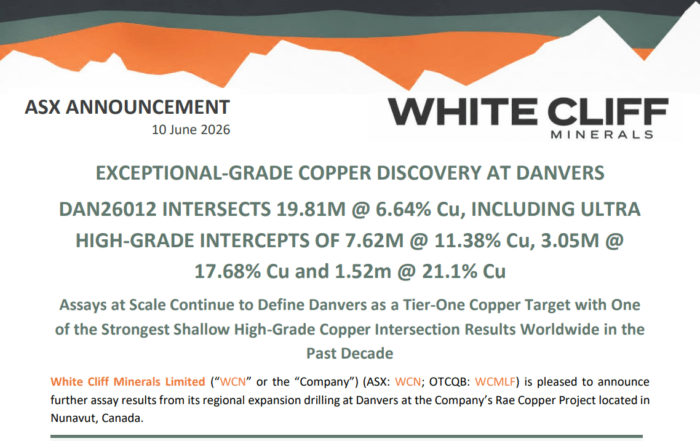
It’s part of the Danvers prospect at WCN’s Rae copper project up in Nunavut, Canada.
Danvers already carries a historic (non-JORC) resource of 4.16Mt at 2.96% copper, and it sits on the Teshierpi Fault Zone, where the company says there’s around 12km of strike still to test and copper already logged over 4km of it.
The plan is an early direct-ship open pit, meaning ore gets dug and shipped straight to buyers without building a processing plant first. Met work showing copper recoveries above 95% on a simple flotation flowsheet makes that case easier.
A second diamond rig lands this week, with assays running through to July.
SpaceX IPO and the Trillionaire
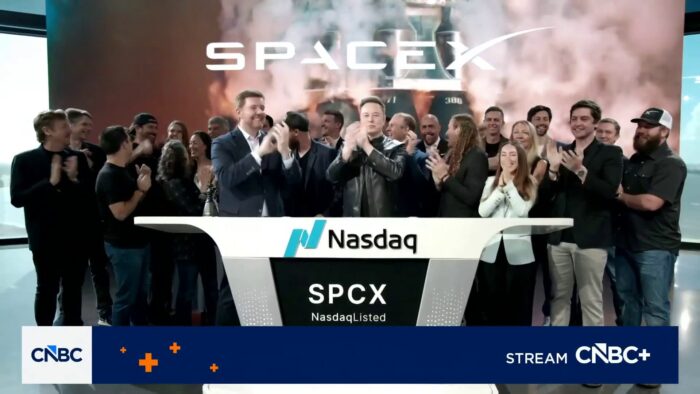
Elon Musk became the world’s first trillionaire on Friday, the day SpaceX went public.
The rocket maker floated on the Nasdaq under SPCX, the biggest sharemarket debut the world has ever seen. It pulled in US$75 billion, close to three times the US$25.6 billion Saudi Aramco raised in 2019, the record that had stood since.
Around 20% of the offer went to retail, far more than you’d normally see, with some punters celebrating an allocation of a single share. For once, the little guy could actually get a look in.
SpaceX is rockets and the Starlink satellite network, plus a slice of Musk’s AI outfit xAI. It’s flown around 650 launches and is the one that turned landing a rocket and reflying it into routine.
The stock was priced at US$135, opened at US$150, ran as high as US$176 intraday, then closed at US$160.95, up roughly 19%.
That handed SpaceX a market cap of US$2.1 trillion, bigger than Musk’s own Tesla.
Convert that to Aussie dollars and it comes to about A$3 trillion for one company. Every business listed on the ASX put together is worth about the same.
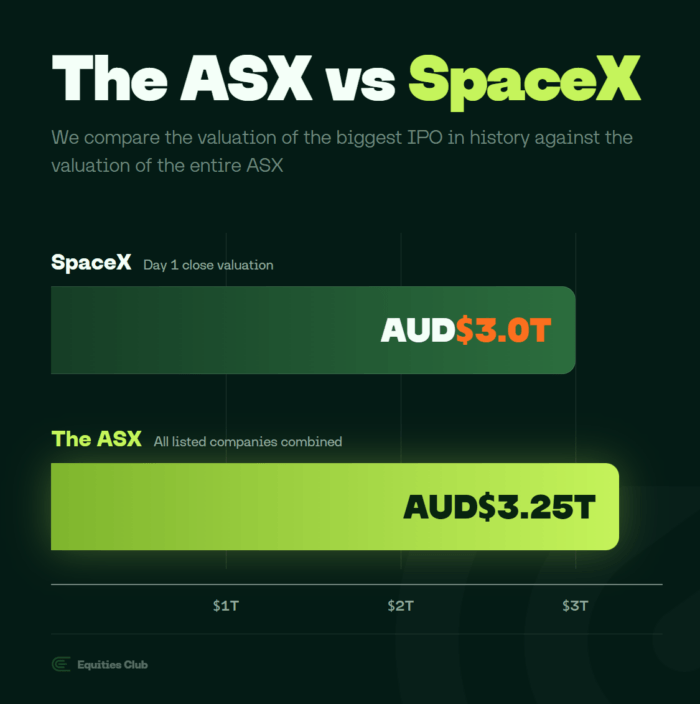
Which is how Musk became the world’s first trillionaire. Between his SpaceX and Tesla holdings, he’s worth around US$1.1 trillion on paper.
Strip it back and SpaceX is really three businesses. Starlink, the satellite network, turns a real profit and grows fast, with the rockets doing alright behind it. xAI, his AI arm, is still burning cash to get going.
Musk built the float around xAI anyway. It’s his shot at OpenAI and Anthropic, with data centres orbiting the planet and a potential market of nearly US$27 trillion.
SpaceX did around US$18 billion in revenue last year and lost almost US$5 billion doing it. But it takes a brave man to bet against Elon, and reusable rockets looked every bit as unlikely right up until they worked.
The talk now is whether he folds SpaceX and Tesla together. Dan Ives at Wedbush thinks they could combine inside a year, and the two are already building a chip plant together in Texas.
Musk has said any tie-up would be a brute to pull off, with both boards needing to sign it off.
The Week Ahead
WCN’s second diamond rig lands in the coming days, with assays running to July.
AZ9 has nine more holes at the lab, and MRD is scoping Phase 2 along that 13km scandium corridor.
FUN puts a number on Mkanda for the first time in late June or early July, and AI1’s next move is a binding deal with one of the chip giants.
That can all keep till Monday, though. This afternoon the Socceroos walk out against Turkey, twenty years on from the golden generation we saw in Germany in 2006.
Aloisiiii, the shirt whipped over the head, Guus working his magic, and half the country up past midnight for Cahill.
Nobody’s giving this lot much of a chance, but nobody gave that mob one either. Get around them.
Till next week.
General advice, disclosure and confidentiality
General advice warning
The contents of this document are intended to provide general securities advice only and have been prepared without taking account of your objectives, financial situation or needs. Because of that you should, before taking any action to acquire or deal in, or follow a recommendation (if any) in respect of any of the financial products or information mentioned in this document, consult your own investment adviser to consider whether that is appropriate having regard to your own objectives, financial situation and needs. If applicable, you should obtain the Product Disclosure Statement relating to the relevant financial product mentioned in this document (which contains full details of the terms and conditions of the relevant financial product) and consider it before making any decision about whether to acquire the financial product. Whilst the Equities Club Pty Ltd (“Equities Club”) believes information contained in this document is based on information which is believed to be reliable, its accuracy and completeness are not guaranteed and no warranty of accuracy or reliability is given or implied and no responsibility for any loss or damage arising in any way for any representation, act or omission is accepted by Equities Club or any officer, agent or employee of Equities Club or any related company.
Neither Equities Club, nor any of its directors, authorised representatives, employees, or agents, makes any representation or warranty as to the reliability, accuracy, or completeness, of this document or any advice. Nor do they accept any liability or responsibility arising in any way (including negligence) for errors in, or omissions from, this document or advice.
Disclosure
The directors, authorised representatives, employees and associated persons of Equities Club may have an interest in the financial products discussed in this document and they may earn brokerage, commissions, fees and advantages, pecuniary or otherwise, in connection with the making of a recommendation or dealing by a client in such financial products. Equities Club owns 500,000 KTK shares, 1,544,000 FUN shares, 900,000 AI1 performance rights, 2,083,333 EVG shares, and 1,150,000 AZ9 shares at the time of publishing this article. Equities Club has been engaged by KTK, AI1, FUN, MRD and AZ9 at the time of writing.
Confidentiality notice
The information contained in and accompanying this communication is strictly confidential and intended solely for the use of the intended recipient/s. The copyright in this communication belongs to Equities Club. If you are not the intended recipient of this communication please delete and destroy all copies immediately.
Equities Club Ltd (CAR No. 001308139) is a corporate authorised representative of ShareX Pty Ltd, Australian Financial Services License (AFSL) No 519872.