
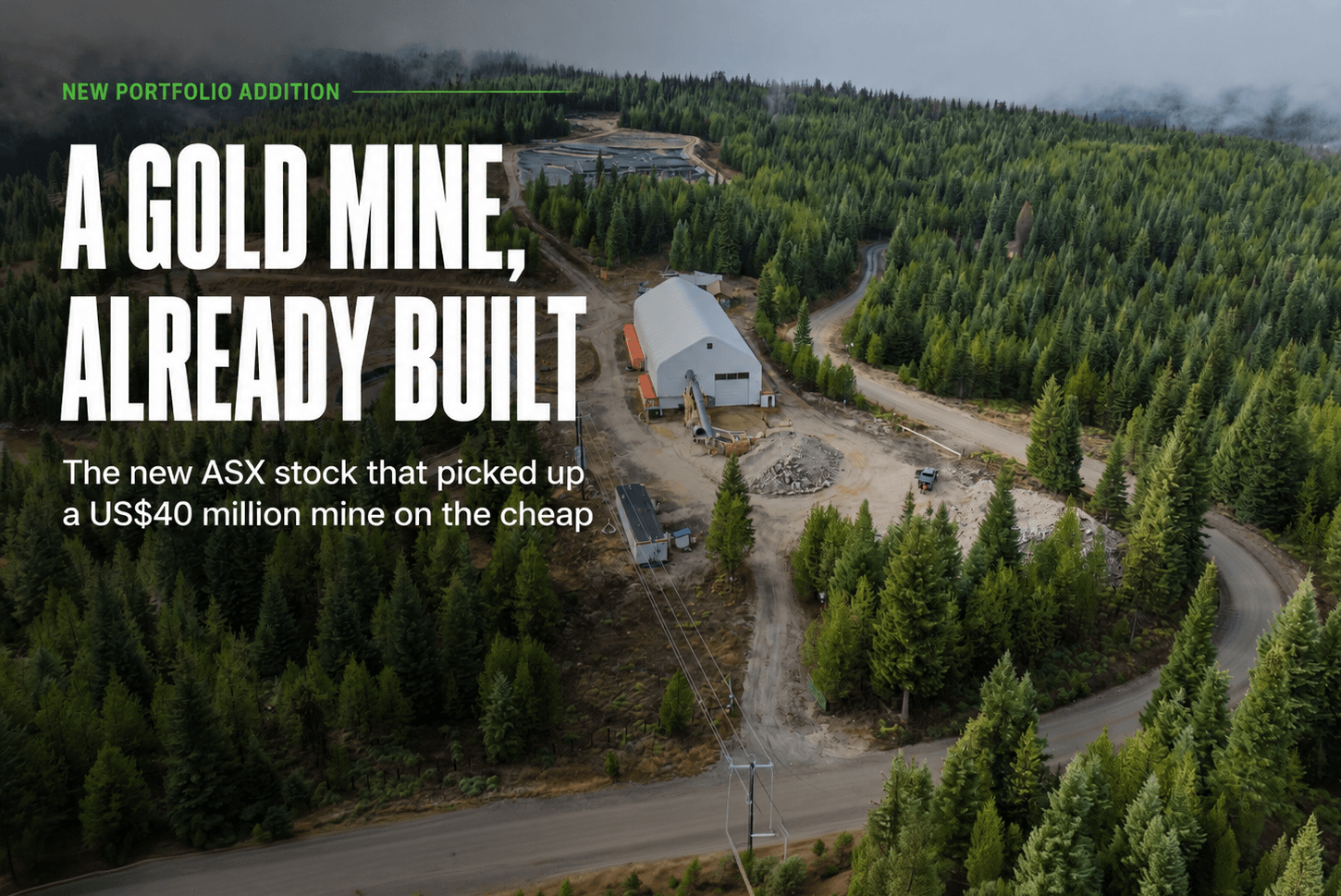
In the hills of central Idaho sits a gold mine that cost more than US$40 million to build.
The mine is permitted, roads are in, its opening is cut into the hillside, and there’s an assay lab on site. (handy, when you’re about to drill 6,000 metres)
One historical drill hole from beneath it ran at more than five grams of gold a tonne over 110 metres, with the grade still climbing when the drill bit stopped.
Whatever sits below it has never been tested.
The company that now owns all of the above lists on the ASX today. And strip out its cash and the market is pricing the Idaho Gold Project at about $15 million.
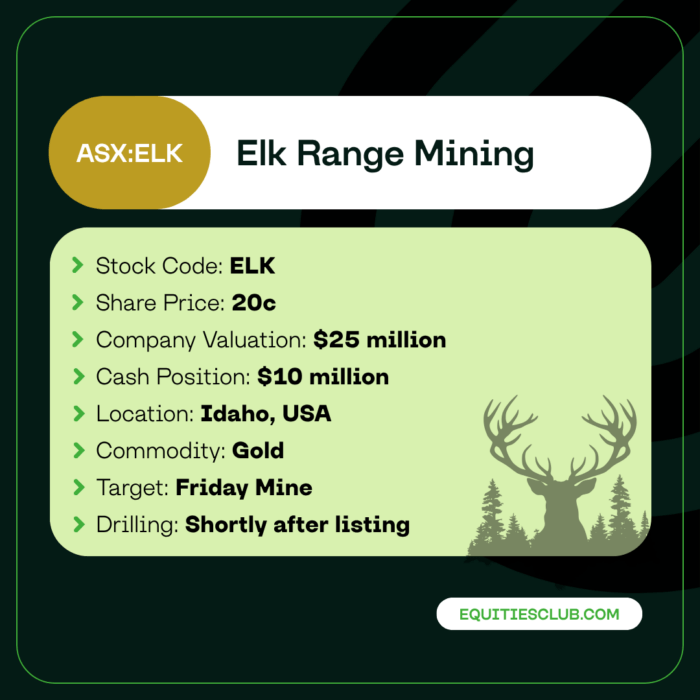
Meet our latest portfolio addition: Elk Range Mining (ASX: ELK).
Elk lists today at 20 cents with a market cap near $25 million and $10 million in the tin. Nearly all of that money is earmarked for drilling, because the last owner already paid for everything else.
We sat down with CEO Edward Keys before backing this one, and he didn’t ease into the pitch: “We like gold, we like the US, and we’re going to use our technical expertise to unlock a district-scale opportunity.”
Keys is a geologist with more than 20 years hunting gold, and he’s helped take small explorers all the way to serious companies, some running from $20 million valuations to $500 million while he was there. Elk’s hired him to do it again.
Behind him sits a board of mining engineers and known company builders. And on the grades sitting in the old drill logs, Keys didn’t hold back: “Had this asset existed in WA, it would have been hammered and carpet bombed years ago.”
Elk hits the ASX just as the gold price kicks back into gear after a generational run.
The gold’s already found at Elk Range, and it’s high-grade. The job now is working out how much of it there is.
Let’s dig in.
Idaho Gold: 160 Years of Mining and Counting
There’s a woman named Robin on Elk’s site crew in Idaho. She’s a fourth-generation Idahoan, she knows every bolt under the shed of the old mill, and she often shares photos from the gold rush days, when everyone built their own cabin and dug their own ground.
When Keys spent four weeks on site before the float, she was his welcome party.
Gold built Idaho. The 1860s rushes pulled tens of thousands of prospectors into hills that weren’t even a state yet. The Boise Basin alone (a patch of hills north-east of the capital) gave up close to three million ounces, about $20 billion of gold at today’s price.
To underline how much mining runs through the veins of Idaho, they’ve got a miner on the state flag, and above his head the motto: Esto Perpetua. Let it be perpetual. After 160 years of gold, seems a fair call.
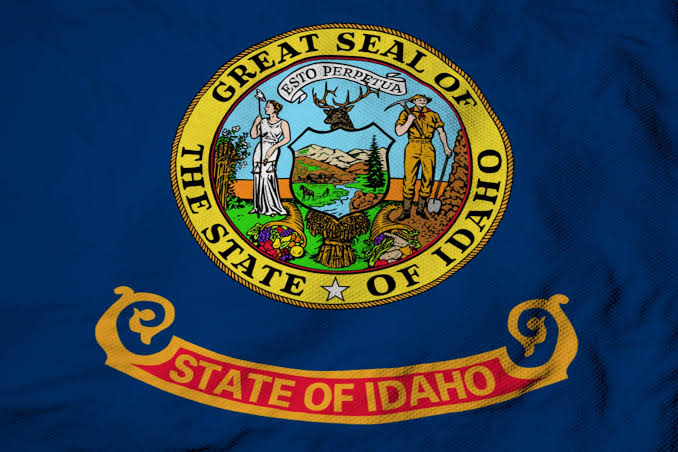
Idaho’s state flag
Hecla Mining, America’s oldest precious-metals producer, has worked Idaho ground since 1891. A company stays put in one state for 130 years only when the ground and the rules both work, and both state and federal permitting tracks here are well worn.
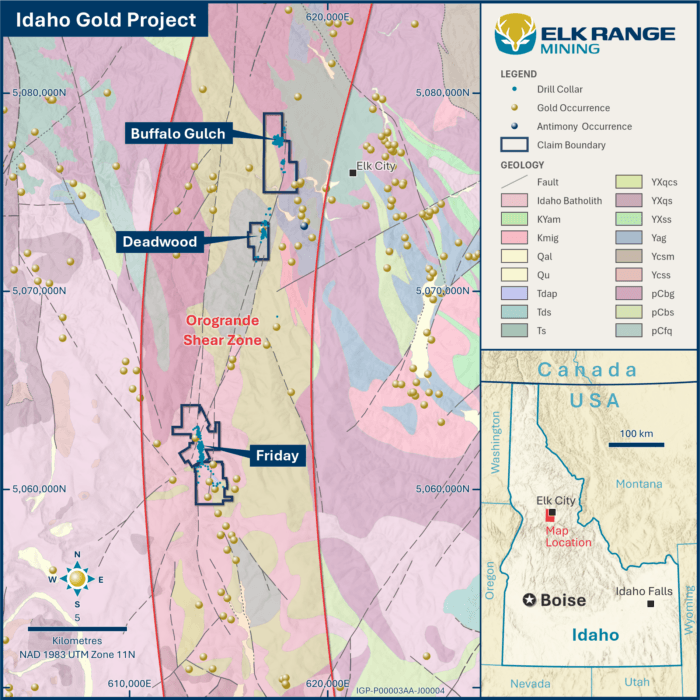
Elk’s ground sits on a deep crack in the earth’s crust called the Orogrande Shear Zone, which once worked a bit like plumbing. Hot fluid carrying gold rose up through the crack and cooled on the way. The gold dropped out wherever it found a weak spot to settle.
What’s left is a string of deposits along the crack like beads on a wire, and Elk holds kilometres of the wire.
Miners were on the ground at what became the Friday Gold Mine by 1903, and the gold here has been mined for more than a century. But it has always been mined the way Robin’s people mined it: family claims, small crews, following the vein you can see and digging as you go.
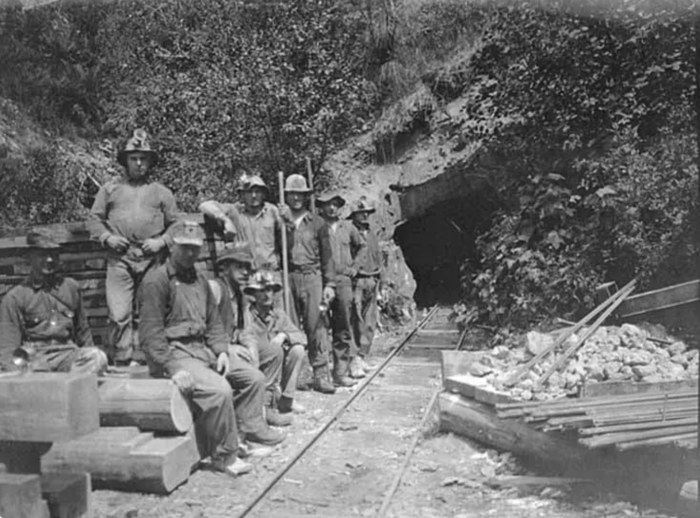
A group of miners outside of a mine in Idaho circa 1920.
Australian juniors are built back to front from that. Drill first, drill hard, map the whole system to a resource, and only then talk about mining it.
In 160 years, nobody has worked this ground that way. Elk is the first, and it’s why a hole running five grams over 110 metres could sit in a filing cabinet for decades with no hole drilled beneath it.
Gold Price Outlook: The Money Printers Keep Buying
Nobody on earth understands paper money like a central bank. They’re the ones printing it, and for two years now they’ve been swapping it for the one thing nobody can print.
That’s what carried gold above US$4,300 an ounce, up nearly 70% in two years. Anyone predicting that price two years ago would have been laughed at.
You might remember the queues. For weeks last year, ordinary Aussies lined up for hours outside ABC Bullion on Sydney’s Martin Place to buy bars and coins. All of it, ironically, a short walk from the Reserve Bank and its money printer.
The price has cooled since, and the queue thinned with it. The Iran war pushed oil and inflation back up and traders started betting the Fed’s next move is a hike. Bonds pay interest and gold doesn’t, so plenty of punters understandably took the interest and went home.
Our view on the US debt hasn’t changed. Washington has added US$1.3 trillion in the first seven months of the year and the debt pile is closing on US$40 trillion.
The interest on it alone costs more each year than the entire US military.
People have been saying America’s bill has to come due for years, and every year it gets bigger and dearer to carry. The war isn’t helping, because as long as oil keeps inflation up, the interest rates on all that borrowing stay up with it.
That borrowing is what pushed gold up in the first place, and it’s only worsened since the price pulled back a bit.
The banks that trade gold for a living have published where they think it goes next. Against a spot price near US$4,340/oz, their targets look like this:
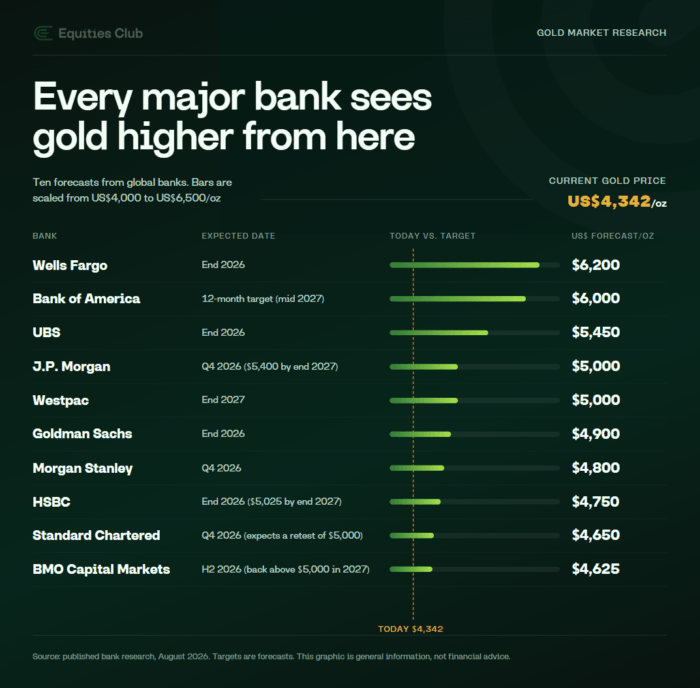
Every number in that table sits above today’s price. And a few of the calls were made before the recent bounce, so treat them as a rough guide.
And through the whole pullback the central banks kept buying, with this year’s haul on track to match last year’s. Gold has just overtaken US Treasuries as the world’s number-one reserve asset, and nearly nine in 10 central banks say they plan to buy more.
So while the queues on Martin Place came and went, the people printing the money keep choosing gold over their own product. (We’re with the printers)
All of this is the backdrop Elk arrives on the ASX into, with a built gold mine, in the metal the steadiest buyers on the planet won’t stop accumulating.
Five Reasons We’re Backing Elk Range Mining (ASX: ELK)
1. 110 Metres of High-Grade Gold at the Friday Mine
Around 386 holes have been drilled at the Friday Gold Mine over the past 100 years, and the core from them adds up to more than 44km of rock (longer than a marathon), and all of it pulled from one hillside.
A previous owner even tallied the lot into a resource estimate more than a decade ago. It was done to an overseas code, and nobody ever brought it up to the JORC standard used on the ASX.
So the homework is done, and some of the numbers sitting in it are outrageous.
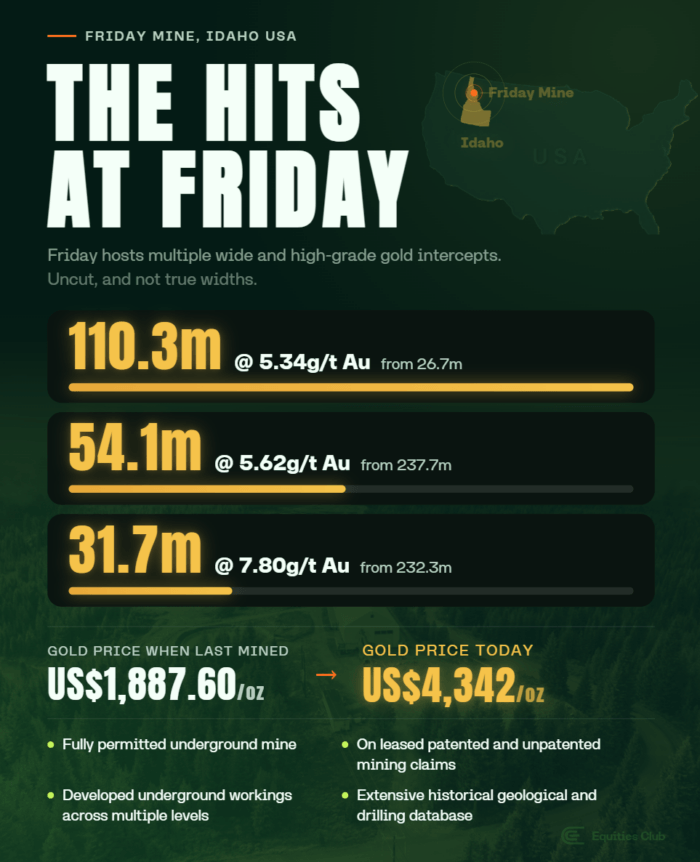
One hole ran better than five grams of gold a tonne over 110 metres and ended still in mineralisation, so the drillers ran out of steel before they ran out of gold. The last two-and-a-half feet of that hole graded 133 grams per tonne, and Elk’s going straight back to it with its first drilling.
Another averaged nearly three grams over 151 metres, and inside that sat a 54-metre stretch above five grams.
The richest assays in the old records run into the hundreds of grams.
For anyone new to gold grades, plenty of mines around the world make good money on a couple of grams a tonne. Friday’s better hits carry two and three times that.
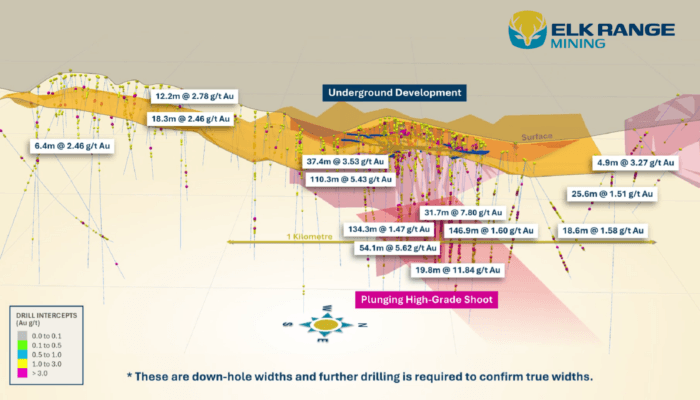
Friday Mine is a large high-grade gold system
Those figures are lengths measured down the hole rather than the true width of the gold, and were reported under that overseas code, so need validating before any of them count as a resource here.
Validating them is the first job of Elk’s drill program. Drilling where the old holes never reached is the second.
2. Drilling Starts Within Weeks of the ASX Listing
Elk’s drillers are “chomping at the bit” to get started, Keys said, and many have history with the project. They worked at Friday when it last ran, and a few of them mined it.
The first 3,000 metres go in from surface soon after listing aimed at the high-grade zones. They’ll confirm the old numbers and chase the gold below them.
The second 3,000 metres get drilled from inside the mine, using the underground development the last owner spent all that money on.
That program runs through the Idaho winter, which would normally shut an explorer down for months. But to Keys’ point, “it doesn’t snow very often underground.”
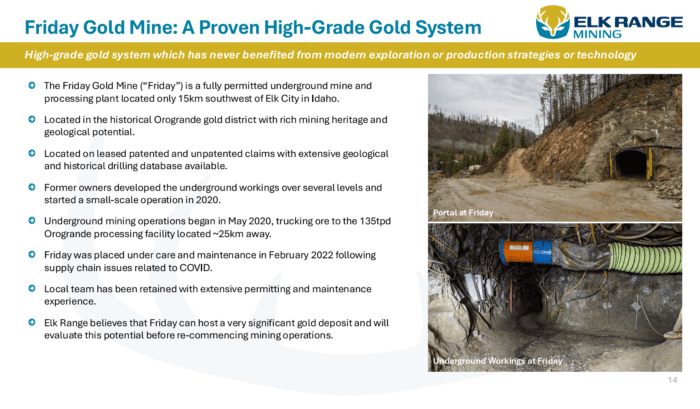
Part of Friday sits on what the Americans call patented leases, which is effectively private ground, so Elk can drill there without waiting on further permits.
Exploration takes the biggest slice of the money raised, and the cash is in the bank to fund all of it.
The gold structure drilled at Friday runs about a kilometre and stays open in both directions, meaning nobody has found where it ends. Surface work traces the wider system along a 3km trend, and soil sampling and magnetic surveys have thrown up drill-ready targets that have never had a hole put in them.
After a century of mining, the district is remarkably still only half-explored. Now Elk walks in with modern methods and $10 million to spend.
3. Three Gold Deposits on the Orogrande Shear Zone
Elk holds more than just Friday. Along the same shear zone sit the Buffalo Gulch and Deadwood prospects, where previous owners also found and recorded gold.
Buffalo Gulch is the standout of the pair. The old timers outlined gold sitting in the weathered rock at surface, and in all the years since, nobody has drilled underneath it to find the structure that fed that gold up from below.
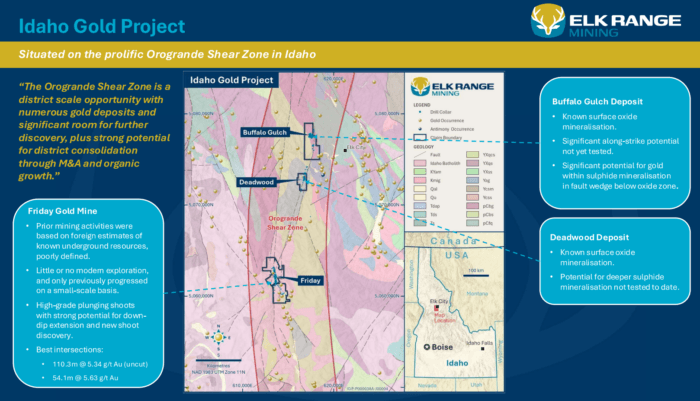
Gold camps grow along structures like the Orogrande. The miners at Friday in 1903 were standing on the same crack that runs under Buffalo Gulch and Deadwood, which Elk owns kilometres of.
Friday will get drilled first, and the rigs move up the belt to the other two targets in spring.
By then the crew will have logged 6,000 metres of Friday core, so they’ll know what this system’s gold looks like before they go hunting for more of it. And because the camp and crew are already sitting at Friday, drilling the next target is just a matter of moving the rig up the road, with no new camp to build or team to hire.
There are still old family claims dotted along the structure too, and Elk wants to consolidate more of the district over time.
4. The Friday Mine Was Producing Gold Five Years Ago
This mine was producing gold as recently as five years ago, when the price was US$1,887/oz. (it’s US$4,342/oz today)
Friday ran through Covid, with crews underground pulling ore and the on-site mill processing it, and everything they used is now part of what Elk just bought.
That’s the part that’s hardest for a junior to replicate. The last owner’s US$40 million bought a permitted mine with a mine entrance and decline already driven into the hillside. It also bought roads in, a camp and workshops, and an assay lab on site.
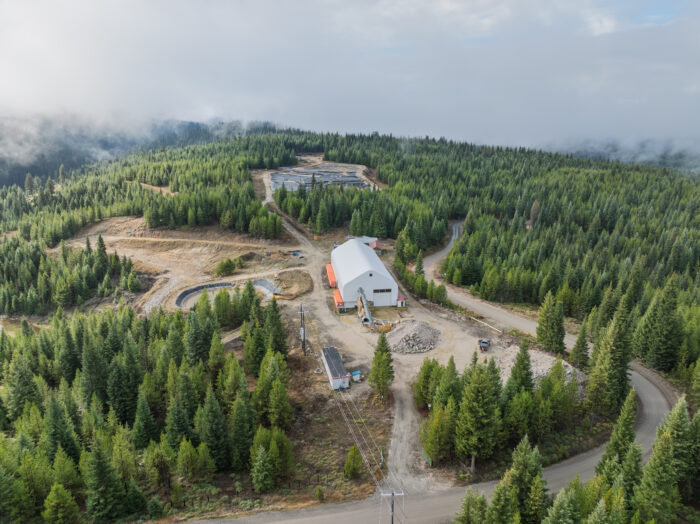
The Mill and operation at Friday Mine
It bought an experienced crew as well, because the care and maintenance team stayed on through the quiet years.
That mill is small and near new, running 135 tonnes a day, and while Elk has no plans to restart it, it sits there as a working asset that could one day earn its keep treating ore for others in the district.
The state around all of this is about as friendly as mining gets. Idaho is a Tier 1 jurisdiction and one of the safest places in America to pull gold out of the ground.
In May the US Export-Import Bank, the federal government’s own lender, wrote a US$2.9 billion loan for Perpetua Resources’ Stibnite gold project in the same state.
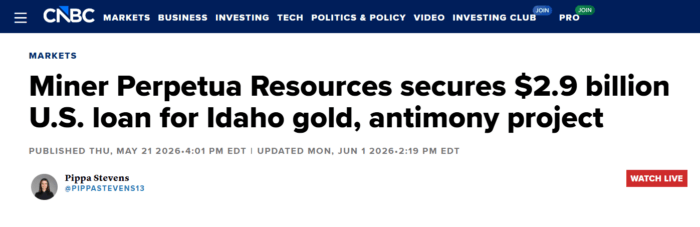
It’s the biggest loan the bank has ever written under its Make More in America program, proving Washington now helps pay for the gold mines it wants built.
Elk is nowhere near that scale yet, but it shares the address and the tailwind.
So the money Elk raised skips the years a junior normally spends building roads and driving tunnels, and goes straight into drilling a mine that was working recently enough that the people who ran it are still on the payroll.
5. A Gold Mining Board That’s Done It Before
Gold projects live and die on the people running them, and the people are the reason we’re writing this article at all. We sat down with the team behind Elk before backing them, and their skill set is what tipped us over the line.
Keys you’ve already met. He’s spent 20 years hunting gold across Canada, Australia and the United States, and the explorers he did his senior work at, Brightstar Resources and Prodigy Gold, both grew into serious gold names while he was there.
His chairman, Campbell Baird, is a mining engineer who ran Focus Minerals while its gold production grew from 5,000 ounces a year to 175,000. These days he’s running Asante Gold’s two producing mines in Ghana, with a stint as acting COO of Bellevue Gold in between. Busy man.
Executive director Leanne Kite spent 13 years at Woodside, then led investor relations at $3.5 billion Liontown Resources while its share price nearly doubled.
Dr Frazer Tabeart has 30-odd years of geology across five continents, 16 of them at Western Mining running exploration teams everywhere from the Philippines to Mongolia.
And the board’s other engineer, Rafael Moreno, runs Brazilian rare earths company Viridis Mining, up from $1.50 a share to more than $4.30 on his watch.
A junior explorer usually lists with one or two of those skills and spends years hiring the rest. Elk’s got the lot on day one.
What Could Go Wrong
None of the past drilling counts here until Elk’s own drilling confirms it (its first port of call), but the early story rests heavily on the first holes at Friday.
The other risks are standard small-cap terrain. The project came with milestone obligations still to be met, and building a resource and eventually a mine will take more capital down the track, so there are raises in Elk’s future like there are in every small-cap.
We’ve weighed all of the above up and backed it with conviction, but this section is in every article we write for a reason.
The Bottom Line: ELK’s Drill Rig Isn’t Far Off
Sometime in the next few weeks, a drill rig will start turning on a hillside near Elk City, and be aimed at the bottom of a hole where the grade was still climbing when the last crew went home many years ago.
What’s still down that hole is the whole reason we own Elk at 20 cents. The mine above that hole is already built and paid for, in a state that wants the industry there. The last owner spent more than US$40 million on this project, and the market is now pricing the whole thing at about $15 million AUD.
Many juniors list and ask you to wait a year or more for the drills to start. Elk listed this morning and the rig is only weeks away.
A century of Americans proved the gold is there, and now a team of Australians gets to find out how much.
Esto Perpetua, as the locals would say. We like our chances here.
General advice warning, disclosure and confidentiality notice
The contents of this document are intended to provide general securities advice only and have been prepared without taking account of your objectives, financial situation or needs. Because of that you should, before taking any action to acquire or deal in, or follow a recommendation (if any) in respect of any of the financial products or information mentioned in this document, consulting your own investment advisor to consider whether that is appropriate having regard to your own objectives, financial situation and needs. If applicable, you should obtain the Product Disclosure Statement relating to the relevant financial product mentioned in this document (which contains full details of the terms and conditions of the relevant financial product) and consider it before making any decision about whether to acquire the financial product. Whilst the Equities Club Pty Ltd (“Equities Club”) believes information contained in this document is based on information which is believed to be reliable, its accuracy and completeness are not guaranteed and no warranty of accuracy or reliability is given or implied and no responsibility for any loss or damage arising in any way for any representation, act or omission is accepted by Equities Club or any officer, agent or employee of Equities Club or any related company.
Neither Equities Club, nor any of its directors, authorised representatives, employees, or agents, makes any representation or warranty as to the reliability, accuracy, or completeness, of this document or any advice. Nor do they accept any liability or responsibility arising in any way (including negligence) for errors in, or omissions from, this document or advice.
Disclosure
The directors, authorised representatives, employees and associated persons of Equities Club may have an interest in the financial products discussed in this document and they may earn brokerage, commissions, fees and advantages, pecuniary or otherwise, in connection with the making of a recommendation or dealing by a client in such financial products. Equities Club owns 625,000 ELK shares at the time of publishing this article. Equities Club has been engaged by ELK at the time of writing.
Confidentiality notice
The information contained in and accompanying this communication is strictly confidential and intended solely for the use of the intended recipient/s. The copyright in this communication belongs to Equities Club. If you are not the intended recipient of this communication please delete and destroy all copies immediately.
Equities Club Ltd (CAR No. 001308139) is a corporate authorised representative of ShareX Pty Ltd, Australian Financial Services License (AFSL) No 519872.