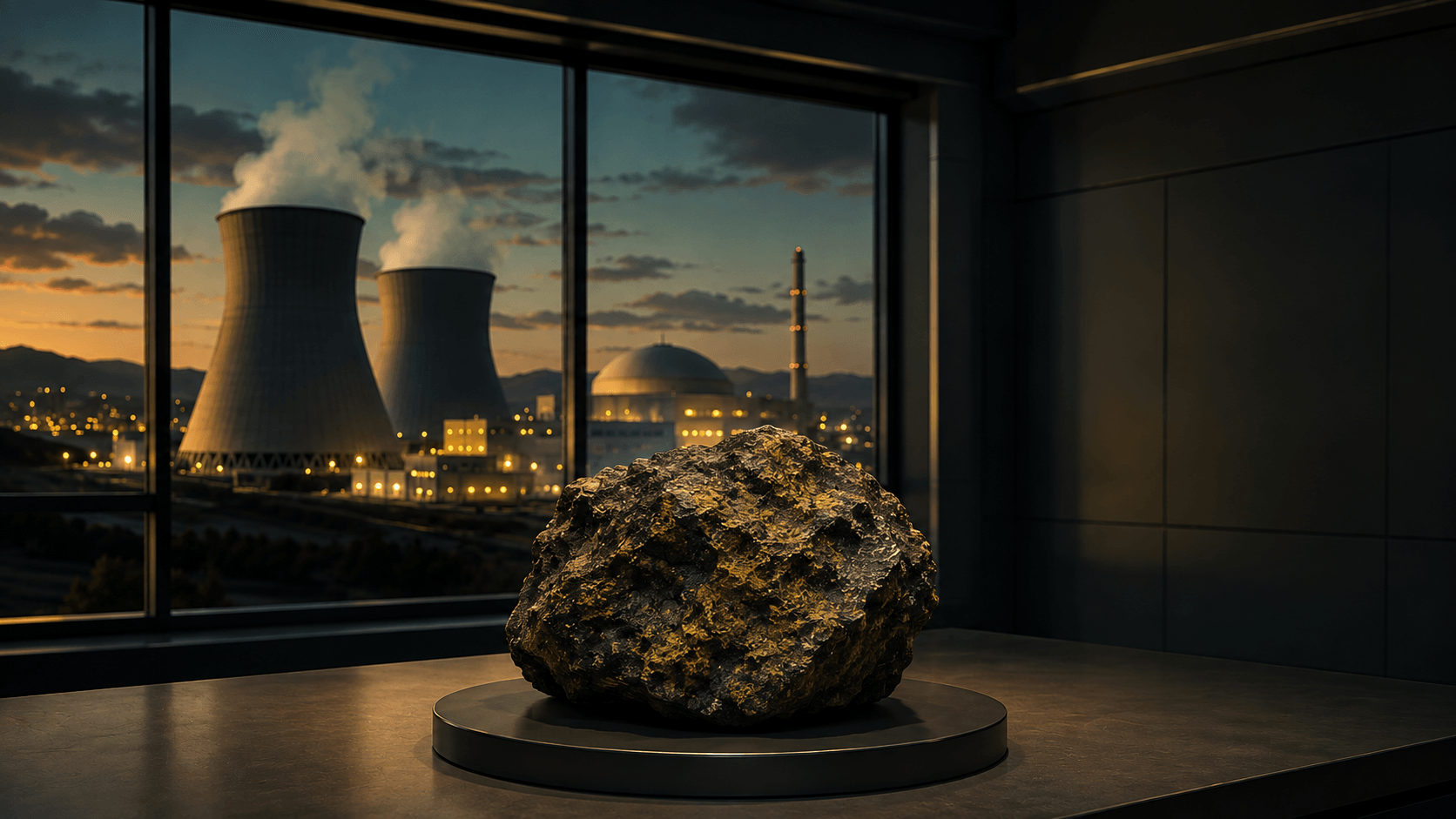
The world spent two decades walking away from nuclear and has spent the past two years sprinting back. China is approving reactors by the dozen. The US wants to quadruple its fleet by 2050. India is aiming for 100 gigawatts by 2047, off a base of less than nine. Even Germany, which switched off its last three reactors in 2023, spent the following year buying French nuclear power across the border.
Then came the tech giants. Microsoft is paying to switch Three Mile Island back on so its data centres never lose power, and Amazon, Meta and Google have all signed reactor deals of their own. Close to 10 gigawatts of nuclear locked up since 2024, all of it to feed AI.
The catch is that nobody spent the past decade looking for uranium.
Prices were too low to justify exploration, so the discoveries dried up. Mines produced roughly 132 million pounds in 2024 while the base case for 2040 sits around 390 million. New uranium mines take 10 years or more to permit and build, and the two biggest producers on earth are both holding production flat while the term price sits at an 18-year high. Utilities have only locked in about half their future needs and are all coming back to the market at once.
This supply crunch creates opportunities for investors who do their homework. Uranium explorers move hard when the drills hit, and being early to a discovery can be life-changing for an investor.
Our uranium coverage below helps you separate the genuine opportunities from the rest.
The Latest Uranium ASX News







Investing in Uranium on the ASX
Why Uranium Matters
Uranium is the fuel behind nuclear power, and nuclear is the only source that runs flat out 24 hours a day without burning anything. A single reactor needs fresh fuel every year for decades once it’s switched on, so the buyers here sign contracts years in advance rather than shopping around.
The world spent 20 years walking away from nuclear and has now turned around. China waved through eight new reactors worth about US$25 billion in one hit. The US has set itself the job of quadrupling its fleet to 400 gigawatts by 2050. India runs less than 9 gigawatts today and wants 100 by 2047. And the tech giants have joined in, with Microsoft, Amazon, Meta and Google signing 13 nuclear deals for close to 10 gigawatts of power since 2024, all of it to keep data centres running. Every one of those reactors needs a whole lot of uranium.
Where Supply Falls Short
Mines dug up roughly 132 million pounds in 2024. The World Nuclear Association has demand hitting around 390 million pounds a year by 2040 as its base case, and 520 million if things run hot. That’s three to four times current supply needed inside two decades.
The industry spent a decade barely exploring and barely discovering, because the price was too low to bother. A uranium mine takes 10 years or more to permit and build, so the gap can’t close quickly no matter what the price does. Supply is concentrated too. Kazakhstan produces close to 40% of the world’s uranium, Canada’s Athabasca Basin covers the high-grade end, and Namibia holds two big open pits. Past that short list, the world has leaned on stockpiles that are running down. Add the ban on Russian uranium entering the US from 2028 and a slab of Western supply disappears on a known date.
It’s about the most lopsided supply and demand setup on the ASX.
How Uranium is Priced
Uranium gets bought differently to copper or gold. There’s no exchange where you can trade it like a normal commodity, because you can’t just buy a parcel of uranium and put it in a warehouse.
Power utilities sign fuel deals years ahead, locking in five to 10 years of supply at a time at what’s called the term price. That sits around US$97 a pound, its highest since 2008. The spot price covers one-off parcels and sits lower, near US$88.
The term price is the one that counts, because that’s where reactors actually buy their fuel. During the cheap years the utilities got slack and stopped locking in supply. By 2025 they’d only secured 48% of their future needs, down from 56% the year before. Now they’re all scrambling back at once, into a market that can’t fill them fast.
What to Watch in the Uranium Market
When uncovered requirements climb and utilities come back to the table together, term prices move.
Watch the producers as closely as the buyers. Kazatomprom’s cost of production jumped 37% in six months on the back of a sulphuric acid shortage, and it’s keeping production flat until at least late 2027 even with uranium at an 18-year high. Cameco shut mining at Cigar Lake for two weeks in July when the mill it feeds ran out of the same acid. When the two biggest producers on earth can’t lift supply, that leaves the door open for whoever finds the next deposit.
Also watch the policy side, because this market moves on government decisions more than most. Reactor approvals, restart announcements, enrichment funding and import bans all feed straight back into how much uranium gets bought and when.
How to Research Uranium Stocks on the ASX
Grade matters, but the mining method matters more. In-situ recovery drills wells into porous sandstone, pumps a mild solution down to dissolve the uranium out, and pumps the loaded liquid back to surface. Barely any rock gets moved, which is why it’s the cheapest way to produce uranium anywhere on earth. Kazakhstan mined it for US$18 a pound last year. A lower-grade ISR deposit can beat a higher-grade one that needs a pit.
Check depth and host rock, since ISR needs soft, permeable ground and shallow mineralisation. Check jurisdiction hard, because uranium carries permitting rules that other metals don’t. Some Australian states still won’t allow uranium mining at all, and provinces overseas ban open pits or cyanide, which decides the mining method for you before you drill a hole.
Then track the drilling. Grab samples and rock chips are hand-picked from the best-looking material a geologist can find at surface. They tell you uranium is there and where to drill. Only the drill program tells you how much.
The best stories combine a method that works at the deposit type, a government that wants the mine built, and management who’ve taken a uranium company from first hole to takeover before. If you’re lacking any of these you may run into issues quickly.