
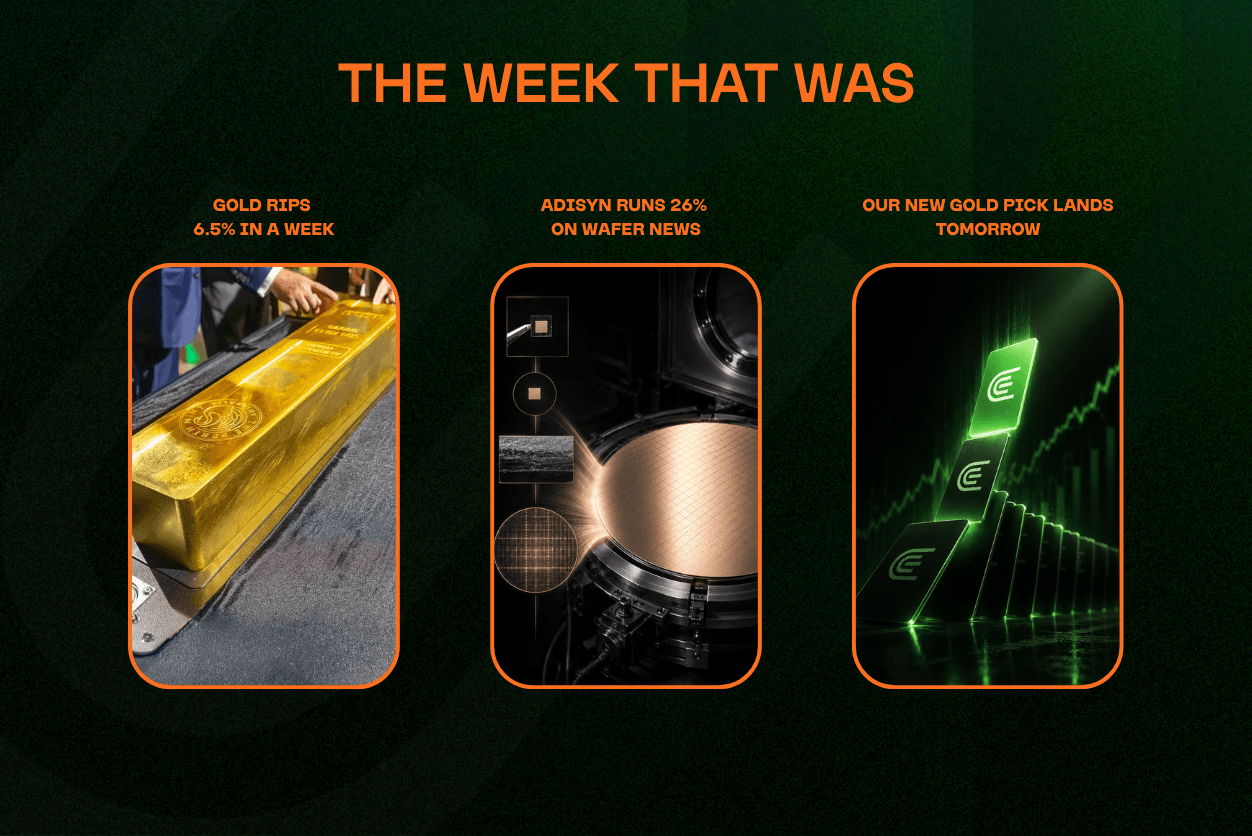
A few thousand pairs of RM Williams boots walked past $100 million in Kalgoorlie this week.
It sat in the open at Diggers & Dealers on the Perth Mint stand. A single gold bar that Guinness certified as largest ever made. It’s refined to 99.999 per cent purity and weighed over half a tonne. Spare a thought for the moving company.
Gold responded to the garish display in kind, jumping 6.5 per cent this week and having its biggest run since January. It meant the bar was worth a few million more by Friday than when they wheeled (or helicoptered) it in.
Gold has also just overtaken coal as Australia’s number two export behind iron ore in value. It’s tipped to bring in roughly $68 billion this financial year.
Twenty years ago you’d have been laughed out of the room for suggesting that.
Down our end of town this week, gold ran hard, copper hit all-time highs, Elon Musk bet on himself (again) with a Texas chip city, and Bank of America turned uranium bull.
Here’s what caught our eye:
- Our newest portfolio addition lands tomorrow
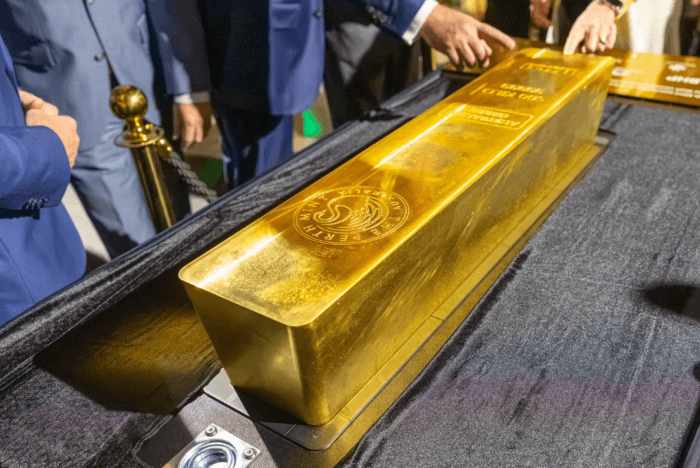
- Diggers & Dealers 2026, our week in Kalgoorlie
- The ASX notches multiple record highs in a week
- Gold charges 6.5% on US jobs news and central bank buying
- Adisyn runs 26% as graphene covers a full 200mm wafer
- Musk unveils Terafab, a US$16.8 billion chip plant in Texas
- Bank of America turns uranium bull
- Copper hits new all-time highs on US stockpiling and a Congolese export ban
- Mount Ridley confirms rare earths in phosphates, flotation next
- The US throws scandium cash at a NSW mine
Let’s get to it.
Deja Vu: Our New Portfolio Addition Tomorrow
Our newest portfolio addition lands tomorrow.
Regular readers might be claiming deja vu, because we wrote that same line last week, and a few of you emailed asking what happened. Nothing on our end, the ASX had some final boxes to tick and the listing got pushed.
The paperwork’s all done now and tomorrow at 10am WST it hits the boards.
We keep the list of our portfolio companies deliberately tight and this gold junior has us as excited as anything we’ve added in a long while.
The full write-up will be in your inbox in the morning, covering what they own and why we bought in, risks included. Gold’s ripping, and tomorrow morning you’ll see how we’re playing it.

Diggers & Dealers 2026: Our Week in Kalgoorlie
We spent the week in Kal for Diggers & Dealers, now in its 35th year. Our three days there were presentations and laps of the exhibition halls, with a steak sandwich and a beer or two to break up the day, as tradition demands.
Numbers seemed down on previous years, and you could feel a bit of fatigue around the place, which took some doing with copper at all-time highs and lithium finding its feet again.
Diggers is a gold show at heart, and gold stocks had been sold off hard after the big run earlier in the year. The mood in the halls echoed the recent pull-back in gold, half-tonne bar or not.
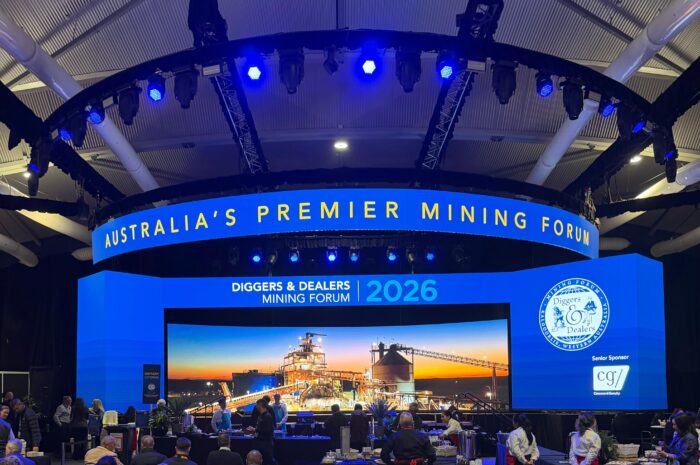
Joe Hockey opened the event with the keynote, and the former treasurer was better value than we expected. He was big on AI, firmly behind the resource sector, and on China he told the room “you can’t allow yourself to be bullied”, from a bloke who spent years dealing with Washington at its wildest.
His predictions carry some form too. He called Trump winning 2016 while most of Washington (and the world) still saw him as a reality show host.
And he had a crack at flogging his book on the way through. Joe once famously declared the age of entitlement was over. The age of the ex-pollie book deal, it seems, has no end date.
Then everyone flew home, and gold put on its best week since January. Diggers 2026 may have run a week early. Put the same conference on next week and every booth would be up and about.
ASX 200 Hits Record Highs
The ASX 200 notched multiple record closes mid-week, with most of it flowing straight from the petrol bowser.
The ‘he says, she says’ spat between US and Iran spent the week a little less icy than the week before, and oil fell on the chance there could be a thaw. Cheaper oil naturally works its way into inflation numbers, and makes it easier for the RBA to do nothing with rates when it meets on Tuesday, which most economists expect.
A central bank sitting on its hands is the dullest news going, but the market loves it. Boring beats surprises every time.
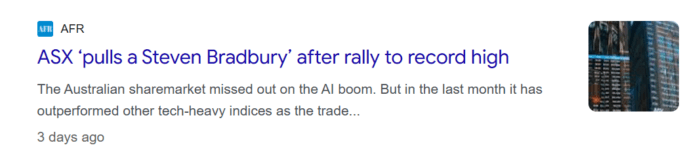
Following that, copper set an all-time high and gold surged. BHP and Rio Tinto are such a big slab of the index that when they catch a bid, the whole board follows them up, and our screens spent the back half of the week green.
You only get a handful of weeks like this in a cycle.
Gold’s Best Week Since January
On Friday, we found out 23,000 Americans lost their jobs in July, a month the economists had pencilled in for 85,000 new ones.
Money flees to gold when there’s bad news and bad predictions like that. Within the hour, bets on a US Federal Reserve rate rise had faded, and gold rose 3% in a single session to finish above US$4,350/oz, capping its biggest week (up 6.5%) since January.
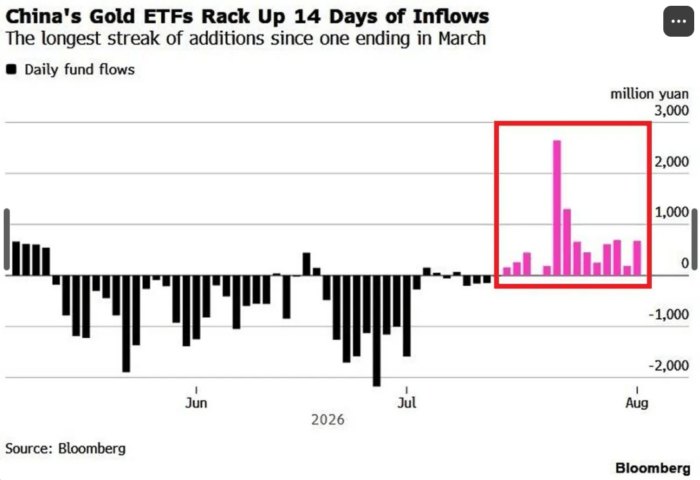
China’s central bank also bought gold for a 21st straight month in July, its biggest monthly purchase since October 2023. Central banks worldwide took a record 289 tonnes in the June quarter, about 1.6 times the pace of a year earlier (whatever China’s planning for, it involves a lot of gold).
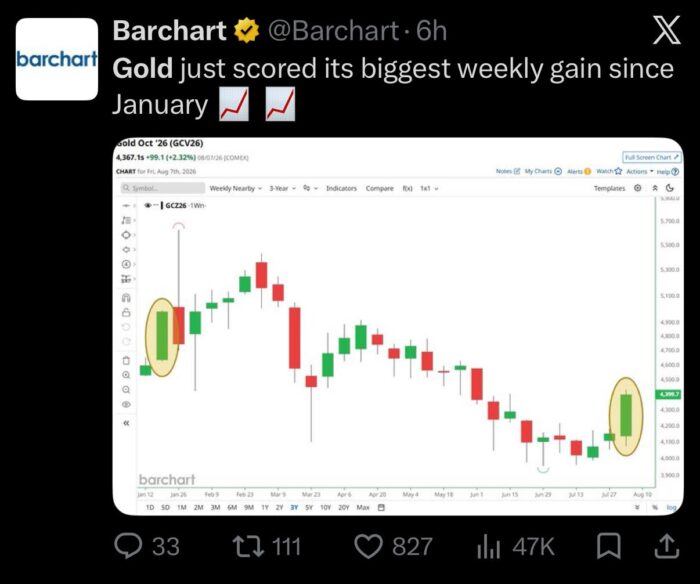
A bunch of ASX gold names had themselves a week:
- Brightstar Resources (ASX: BTR) led the pack up 33%
- Minerals 260 (ASX: MI6) climbed 29%
- Capricorn Metals (ASX: CMM) added 22%
- Regis Resources (ASX: RRL) shot up 20%
- Ramelius Resources (ASX: RMS) rose 19%
- Alkane (ASX: ALK) put on 15%
Some very handy one week gains for shareholders.
A good week to be holding gold exposure, and a very good week for our timing for a new gold addition to the portfolio.
Adisyn Runs 26% on its 200mm Wafer
There’s a disc the size of your dinner plate sitting in a lab that half the chip industry is going to want a look at.
Adisyn (ASX: AI1) pulled it out of the deposition chamber this week. It’s a full 200mm industrial wafer covered edge to edge in graphene, and 200mm is the format chip factories from Texas to Taiwan feed into their lines every day. We broke it down here.
The short version of why anyone cares is that the wiring inside advanced chips is copper, and as chips keep shrinking that copper is running out of road. The industry settled on graphene as the fix years ago, and the catch has always been that making it meant temperatures no chip could survive.
Adisyn cracked that in June, on a piece of copper the size of your thumbnail, and said the job from there was scaling it up.
Well, consider it scaled.
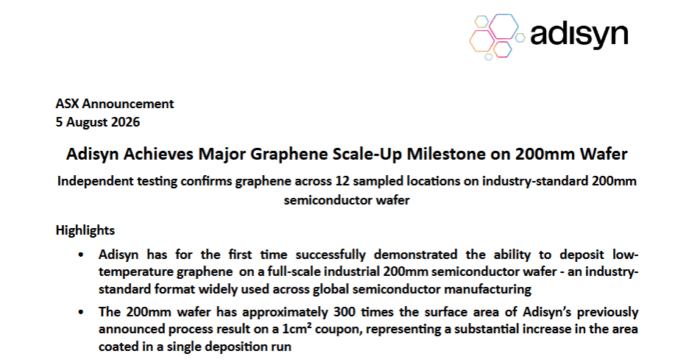
Eight weeks later, all 12 test points across the surface came back confirmed as graphene by independent analysis at the Hebrew University of Jerusalem.
A chipmaker can pick this wafer up and run it through machines they already own, and Adisyn’s target is still a binding deal with one of them. That conversation gets easier when you can slide the wafer across the table.
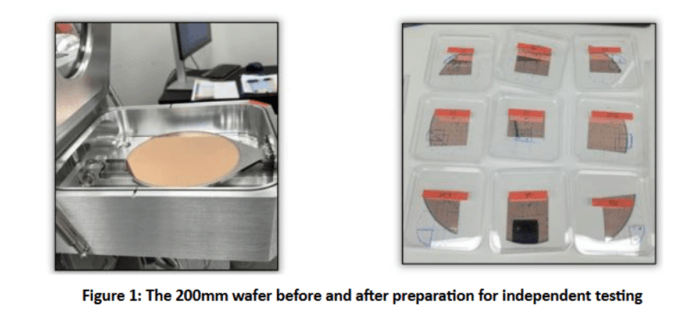
The company keeps delivering on its promises (we’ve been keeping score). They told us they’d grow it cold, and did. They told us they’d scale it, and the wafer turned up.
Next on the list is the larger 300mm format, the one TSMC and Samsung run for the newest AI chips.
The market liked the news too, with AI1 finishing the week up 26%. We added them to the portfolio in April at 6.8c. They’re trading at 17c today.
Terafab: Musk’s US$16.8 Billion Chip City
Samsung’s Pyeongtaek campus in South Korea is one of the biggest chip complexes on the planet, all 31 million square feet of it. This week Elon Musk proved everything really is bigger in Texas, unveiling plans to build one three times the size of Samsung’s.
Tesla and SpaceX are calling it Terafab, a semiconductor plant with an initial US$16.8 billion going in and more than 100 million square feet of manufacturing space planned.
Elon humbly calls it “the largest and most valuable building on Earth by far”, and the full multi-phase build could run to US$119 billion, which puts it in the company of the Great Mosque of Mecca on the all-time construction bill. Elon’s faithful would say the comparison holds up.
Elon believes chip demand between his companies will soon pass one terawatt of compute a year, which is more than today’s entire global supply. The chips are earmarked for Optimus robots and Cybercab robotaxis, with SpaceX’s orbital data centres also in the mix.
Today those companies queue at TSMC for their chips, alongside Nvidia, Apple and just about everyone else. Elon’s decided he’d rather own the factory than be in line holding a number.
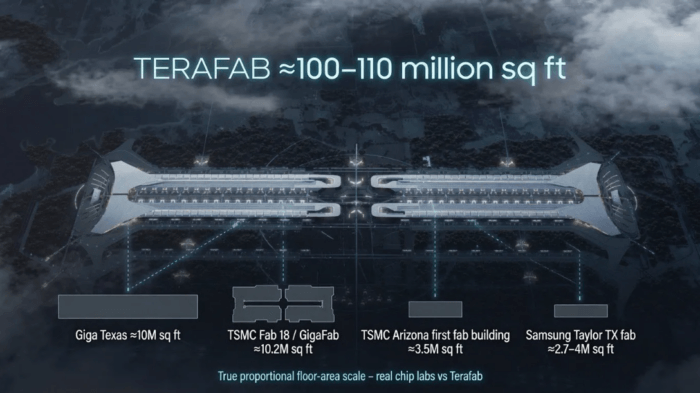
A chip normally gets made in one country, packaged in a second and tested in a third. Terafab plans to do the lot in Texas, which is American chip onshoring at a scale no government program has attempted.
A build-out this size drags the whole semiconductor supply chain along with it, ASX names included. As we mentioned, our portfolio company Adisyn (ASX: AI1) is developing graphene for the chips themselves, while Pathkey.AI (ASX: PKY) owns Chipforge, an AI platform built to shorten chip design cycles that normally run 12 to 24 months.
When the world’s first trillionaire (now a lowly 800-and-something times billionaire) is pouring US$100 billion-plus into chip manufacturing, the small end of the supply chain gets looked at with fresh eyes.
Uranium: Bank of America Calls US$130 a Pound
Bank of America gave the uranium bulls something for their WhatsApp chats this week, calling US$130 a pound by 2027. Spot sits at US$85 today, so they’re tipping a 52% run.
Their case is the one behind everything now, AI. The data centres need power around the clock, so everyone wants reactors. Washington has ordered a quadrupling of US nuclear capacity to 400GW by 2050 and put US$80 billion behind 10 new reactors, and tech giants are signing nuclear deals to keep their data centres fed.
The American power companies that run the reactors have only bought about half the uranium they’ll need over the next decade, and they had more covered this time last year. From 2028 the Russian aisle closes for good when the full import ban kicks in, so the big uranium shop is coming whether they like it or not.
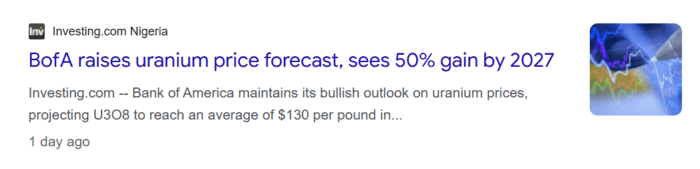
If you’re sitting on uranium in the ground, US$130 is a much nicer number to be valued against than US$85, and uranium juniors have a history of running hard when spot does.
The one place sitting this out is Western Australia. The state’s newly sworn-in mines minister used his first Diggers & Dealers appearance to rule out lifting WA’s uranium mining ban, with the state holding some of the country’s largest untapped deposits and the price where it is.
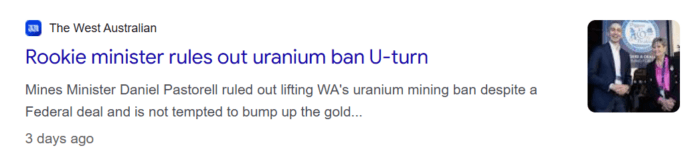
India’s high commissioner said he’d welcome WA uranium, but the state government wasn’t moved.
Plenty of people in Kalgoorlie were shaking their heads at that, and we were among them. WA will dig up just about anything else on the periodic table, and it’s increasingly bizarre to hold the line here while tech giants pay for new reactors to power AI.
Copper Hits All-Time High
More copper landed at American ports in July than any month since records began, as importers race against a tariff. Washington’s about to do its own version of LeBron’s The Decision™ and every trader with metal on the water wants it through the gates before the door shuts.
Over 200,000 tonnes made it in last month, and every tonne that lands in a US warehouse is a tonne the rest of the world can’t touch.
No wonder copper set another all-time high in New York this week, with the Comex contract touching US$6.73 a pound, now up about 19% for the year.
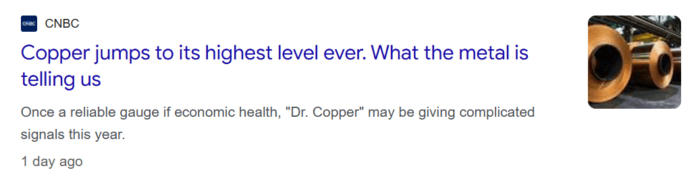
While the metal piles up in America, supply keeps going backwards. Winter storms have knocked the Chilean mines around and Codelco has shelved its El Teniente expansion. The sulphuric acid shortage we flagged last week keeps biting too (the input nobody thought about until it went missing).
Then on Thursday the Democratic Republic of the Congo dropped its own bomb on the market. No copper concentrate leaves the country unless it’s refined on Congolese soil. London copper jumped to within striking distance of January’s record after word filtered out.
Goldman Sachs now has US$13,735 a tonne pencilled in for the end of 2026, and Citi went and topped them with a US$15,000 prediction within a year. As we’ve said before, new copper mines take a decade or more to build and demand keeps climbing.
Small-caps with good copper projects will keep getting rewarded, and we’re on the lookout for the right one.
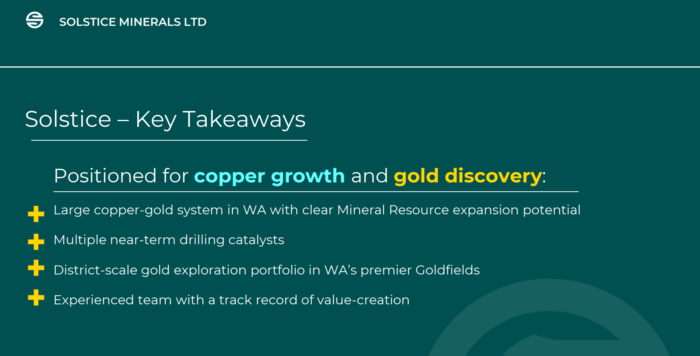
At Diggers this week we got chatting with Solstice (ASX: SLS), a name we first mentioned back in February after a cracking drill hole. They were 93c then. They walked around Kalgoorlie this week at $2.36, with more results due any day now.
We’ll be watching those assays closely.
Mount Ridley Finds its Host Minerals
A machine in a lab just spent its week crawling across a pinch of dirt from north of Esperance, one grain at a time, naming every mineral it met.
The dirt belongs to Mount Ridley Mines (ASX: MRD), one of our portfolio companies, and the machine is called a TIMA (an electron microscope that names the minerals rather than just weighing them).
The grains came back with good news. Grass Patch’s rare earths sit almost entirely in three phosphate minerals, led by one called xenotime, a known carrier of the valuable heavies that end up in EV and wind turbine magnets.
Better still, phosphates can be floated, skimmed off into a rich concentrate before any of the expensive chemistry starts, so MRD could end up with a smaller, cheaper plant.
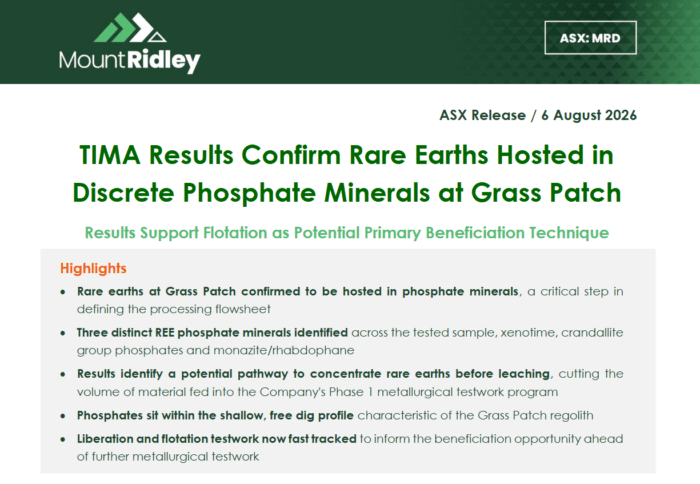
MD Allister Caird pointed to peers getting strong results from flotation on comparable deposits, and MRD has fast-tracked its own testwork to find out. Bench-scale results land next, feeding into the Phase 1 metallurgical program already underway.
The Pentagon Goes Shopping for Scandium
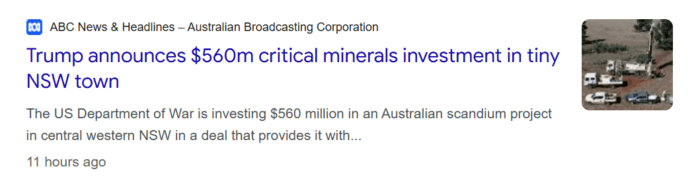
America last mined scandium the same year it put a man on the moon. On Friday, Donald Trump, who coincidentally signed the executive order sending America back to the moon, announced the Pentagon is lending US$400 million to a scandium mine in country NSW.
Sunrise Energy Metals gets the money to expand its Syerston project near Fifield, billed as the world’s first primary scandium mine. Lockheed Martin signed on last year to buy up to 15 tonnes of scandium oxide from it over five years.
Scandium strengthens the aluminium in fighter jets and spacecraft, and nearly all of it comes out of China, Russia and Ukraine, with close to 100 per cent of the processing in foreign hands.
NSW holds the highest concentration of scandium in the world. The Albanese-Trump critical minerals deal signed in October promised at least US$1 billion for projects in each country, and Syerston just became the biggest name on the list.
The Week Ahead
Short and sweet this week, because the main event is tomorrow morning.
Our newest portfolio addition hits the boards at 10am WST, and the full write-up will be in your inbox before the open. We’ve been sitting on this one for a while, and after the week gold just had, we’re glad the ASX finally let it out.
See you in the morning.
General advice, disclosure and confidentiality
General advice warning
The contents of this document are intended to provide general securities advice only and have been prepared without taking account of your objectives, financial situation or needs. Because of that you should, before taking any action to acquire or deal in, or follow a recommendation (if any) in respect of any of the financial products or information mentioned in this document, consulting your own investment advisor to consider whether that is appropriate having regard to your own objectives, financial situation and needs. If applicable, you should obtain the Product Disclosure Statement relating to the relevant financial product mentioned in this document (which contains full details of the terms and conditions of the relevant financial product) and consider it before making any decision about whether to acquire the financial product. Whilst the Equities Club Pty Ltd (”Equities Club”) believes information contained in this document is based on information which is believed to be reliable, its accuracy and completeness are not guaranteed and no warranty of accuracy or reliability is given or implied and no responsibility for any loss or damage arising in any way for any representation, act or omission is accepted by Equities Club or any officer, agent or employee of Equities Club or any related company.
Neither Equities Club, nor any of its directors, authorised representatives, employees, or agents, makes any representation or warranty as to the reliability, accuracy, or completeness, of this document or any advice. Nor do they accept any liability or responsibility arising in any way (including negligence) for errors in, or omissions from, this document or advice.
Disclosure
The directors, authorised representatives, employees and associated persons of Equities Club may have an interest in the financial products discussed in this document and they may earn brokerage, commissions, fees and advantages, pecuniary or otherwise, in connection with the making of a recommendation or dealing by a client in such financial products. Equities Club owns 900,000 performance rights, 500,000 KTK shares and 4,500,000 EVG shares at the time of publishing this article. Equities Club has been engaged by AI1, KTK and EVG at the time of writing.
Confidentiality notice
The information contained in and accompanying this communication is strictly confidential and intended solely for the use of the intended recipient/s. The copyright in this communication belongs to Equities Club. If you are not the intended recipient of this communication please delete and destroy all copies immediately.
Equities Club Ltd (CAR No. 001308139) is a corporate authorised representative of ShareX Pty Ltd, Australian Financial Services License (AFSL) No 519872.