
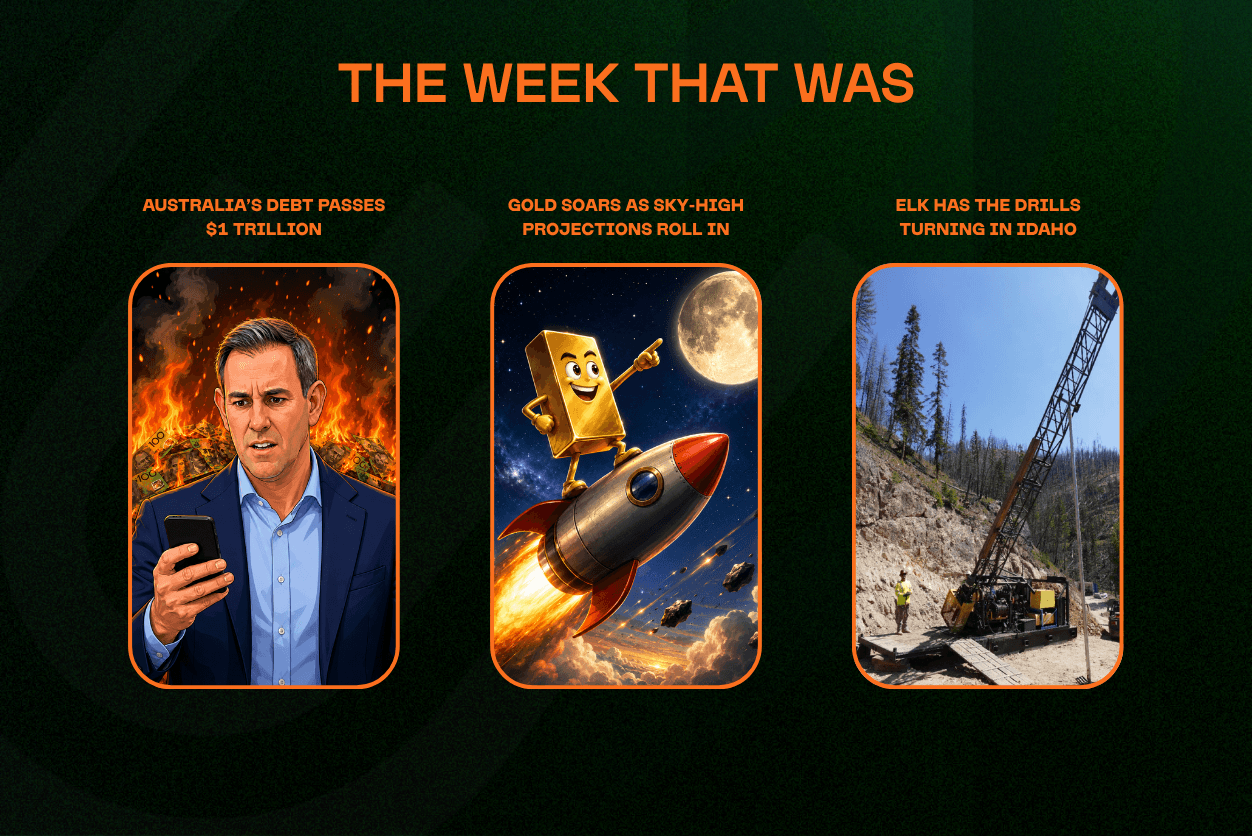
If your shoulders felt a little more tense this week, it might have been the $1 trillion you’re now on the hook for.
On Thursday, Australia reached a debt level with an eye-watering 12 zeros on the end, marking a speed-run of IOUs handed out since April 21, 2006.
That was the day perennial PM bridesmaid Peter Costello declared Australia debt-free, calling it “the day we pay off the mortgage”.
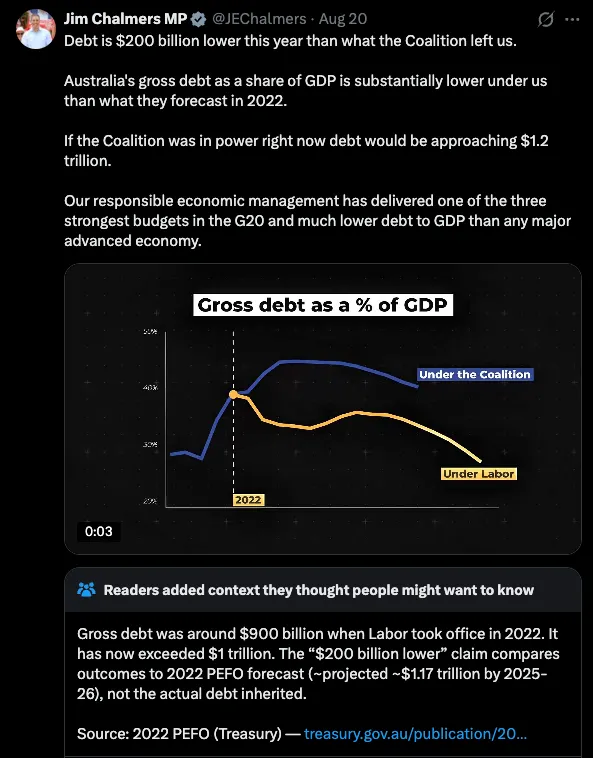
It seems almost quaint now, and in stark contrast to our current treasurer being ‘community-noted’ on X in response to his claims of austere fiscal management.
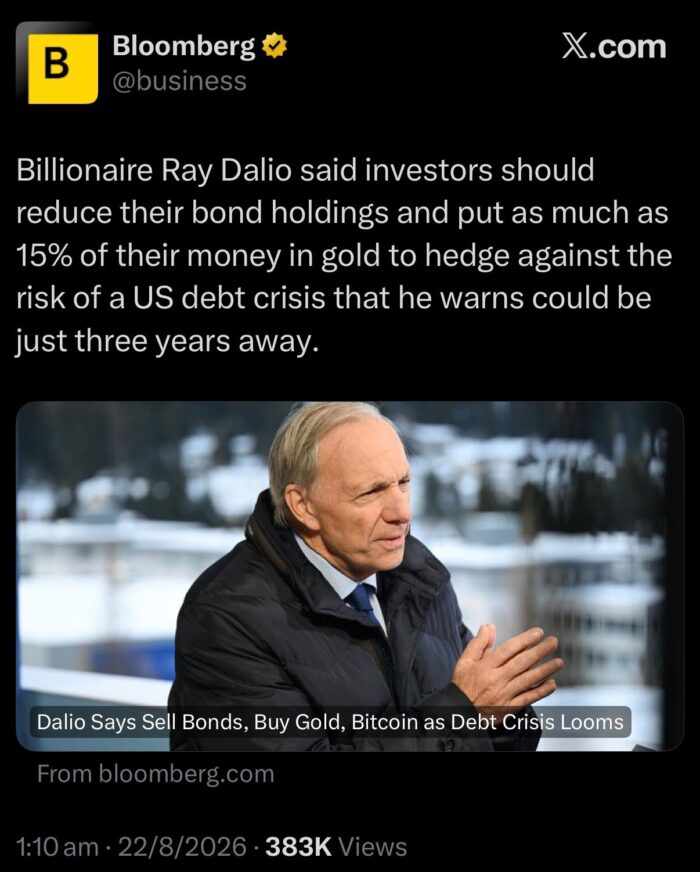
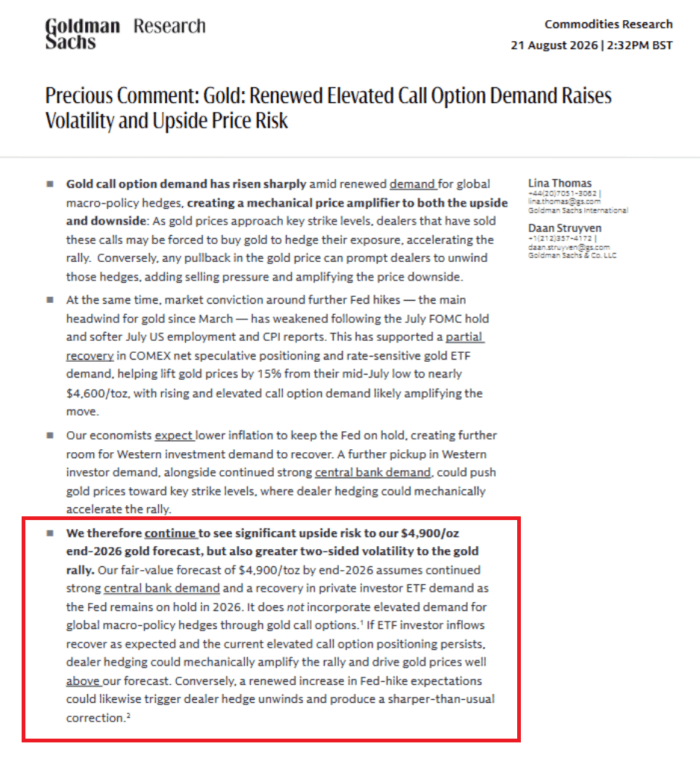
We enter the mire of politics only to re-emphasise what it usually means for gold, which ripped this week to be back above US$4,600. Australia is now paying roughly $18 billion a year in interest, and the US just crossed US$40 trillion in debt (and climbing, adding about $90,000 every second).
It has plenty of investors sprinting to gold as a safe haven, which may become a stampede if the rate of borrowing continues.
Outside the shiny stuff, here’s what caught our eye this week:
- ELK turns the rig at Friday with the gold price surging
- MRD patents Selectro, and ZMI chases the same metal out of smelter waste
- Unitree’s 460% IPO, and why the robots need rutile
- Uranium’s term price says utilities are worried about supply
- Copper overtakes iron ore at BHP for the first time in history
- Moderna’s 177% day and the ASX biotechs catching a bid
- CSL loses US$2.6 billion and has its best day in 20 years
- DroneShield now the most shorted stock on the ASX
Let’s look at gold first, as Washington leans on its own bond market.
Gold Price Back Above US$4,600 as US Debt Tops US$40 Trillion
Gold clocked its third straight week of gains and its highest price since early June this week, as the US intervened in bond markets to help put downward pressure on the US dollar.
As mentioned, the US is carrying a mountain of debt, and the rate it’s paying to borrow hit its highest level since ’07 this week. To put in context, the interest payments are second only to Social Security on the US government’s budget line items.
In response, the Treasury said it was doubling the rate at which it was buying its own bonds back.
The US borrows money by selling bonds to investors. Now it is buying some of those bonds back, and because it doesn’t have a spare pile of cash sitting around, it is issuing more bonds to help fund it.
Put simply, the US is taking on new debt to buy back old debt.
Why? Buying bonds creates more demand for them, which pushes their price up and their yields down. And lower yields mean cheaper borrowing costs for the US government.
It’s a convoluted way of trying to make America’s enormous debt pile cheaper to service without spending less or taxing more, neither of which politicians particularly like.
Many in the market read it as a government struggling with its own borrowing costs and putting its thumb on the scales instead (i.e. panicking).
Gold ripped in response, while the US dollar and bond yields fell.
In our portfolio we’ve focused on historical mines drilling proven ground that some old-timers never quite finished digging.
We’re bullish on Elk Range Mining (ASX: ELK), which has its rig turning at its Friday mine in Idaho as we type (more on that below).
The other one some have forgotten is Black Horse Mining (ASX: BHL), which starts drilling in late September beneath Mt Egerton in Victoria, a mine that produced 1.29 million ounces at around 12 grams per tonne before water shut it in 1906.
With borrowing looking like a runaway train and gold responding in kind, any hits at the above projects could be well rewarded.
Elk Range Mining (ASX: ELK) Starts Drilling at Friday Gold Mine
Our new addition, Elk Range Mining now has the rods spinning in the Gem State (Idaho), so called due to its abundance of precious and semi-precious minerals.
One historical drill hole from beneath its Friday mine ran at more than five grams of gold a tonne over 110 metres, with that hole ending in 133g/t before the drillers called it a day.
Nobody has been back to find out how much deeper it goes, with Elk now picking up right where they left off.
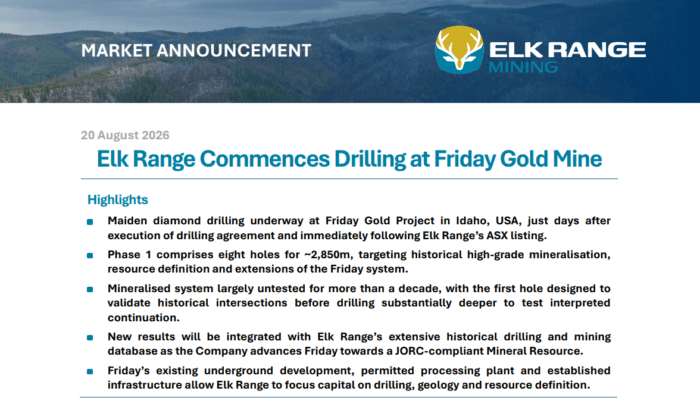
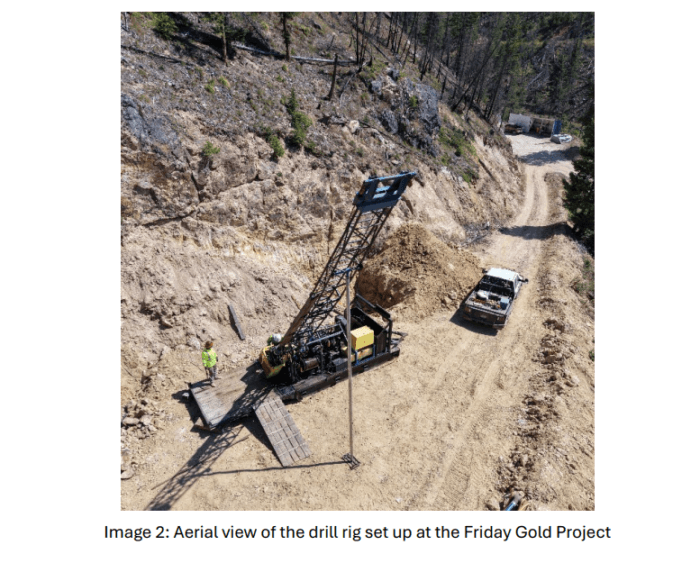
Phase 1 is eight diamond drill holes for nearly 3,000m of drilling with two more on standby if early results warrant it. ELK will be able to see the veins up close from the solid core it pulls out of the ground, helping it work out which way the gold-bearing structures are heading.
The info gleaned from that then helps decide where Phase 2 drills go later this year, when the rig shuffles underground into tunnels the last owner cut.
Every hit confirming the old numbers also gets Friday closer to its first JORC resource, the ASX standard for how much gold a company can claim is in the ground.
The previous owners spent US$40m on the site before offloading it to ELK for a fraction of that when their ramp-up to production stalled, and the owners before them tallied up the resource under an overseas code.
CEO Edward Keys is on the ground in Idaho, or rather on the mill floor where he’s set up a sleeping bag, and his excitement emanates from his pores in every conversation, such is his confidence after leaving Brightstar Resources to run this new endeavour.
The IPO selling we flagged last week looks to be flushed out with the stock finishing back at 20c on Friday and the screen looking strong.
It’s now a $25 million company with $10 million in cash, drilling a historically producing high-grade system with gold worth more than twice what it was the day the last truck left.
You can read our full drilling write-up here.
Mount Ridley Mines (ASX: MRD) Files Patent for Selectro Rare Earths Process
We wrote last week of Selectro passing its first test at Mount Ridley Mines’ Grass Patch project, and now the company has lodged a patent application over the leach process its CTO spent more than a decade developing.
For those who missed it, Selectro pulled 83% of the heavy rare earths, 80% of the scandium, 72.5% of the light rare earths and 56% of the gallium out of raw dirt from Mount Ridley Mines’ (ASX: MRD) project just north of Esperance.
This sits in contrast to the standard hydrochloric acid method, which was run on the same material under the same conditions, and recovered no gallium at all.
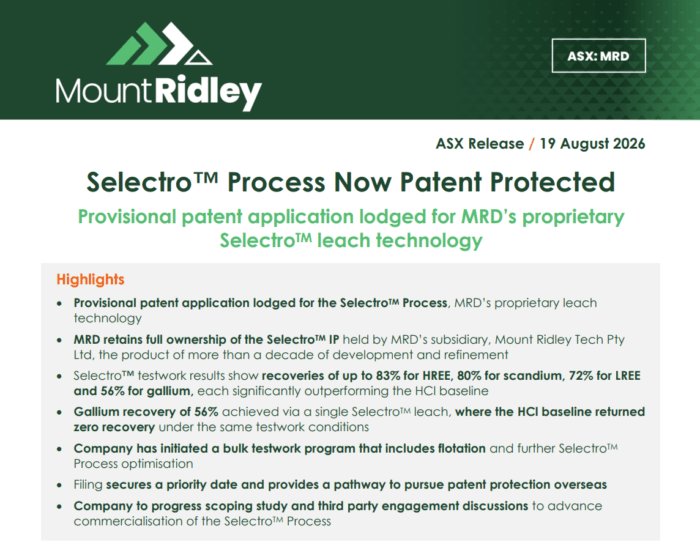
MRD owns the technology through its subsidiary Mount Ridley Tech, and the patent filing gives them 12 months to extend protection around the world.
Selectro can be considered a company asset in its own right, pulling four critical minerals out of one feed stream. It also runs on cheaper chemicals than acid leaching and recycles them in a closed loop, so the potential is boundless.
MRD can run the process on Grass Patch or license it to another company’s deposit. Either way, it’s a path to revenue.
Conversations with third parties about test work and collaboration have started, according to managing director Allister Caird, and with the patent lodged MRD can have those conversations without any risk of losing the recipe.
A year ago this was a rare earths explorer with a big deposit near Esperance. Now it has a deposit and a process other people might want to pay for.
Uranium Term Price Hits US$97 as Utilities Lock in Supply
The rate at which uranium mines are being built is lagging the rate of nuclear reactors by some margin, and is why many are already paying big to lock in fuel for the coming decade.
While uranium spot sits around US$87.75 a pound, almost nobody buys uranium at spot. Power companies buy their fuel in deals that are signed years in advance and lock in deliveries five to ten years before they’re needed.
The price they’re paying for that necessity right now is US$97 a pound, a 10.5% premium.
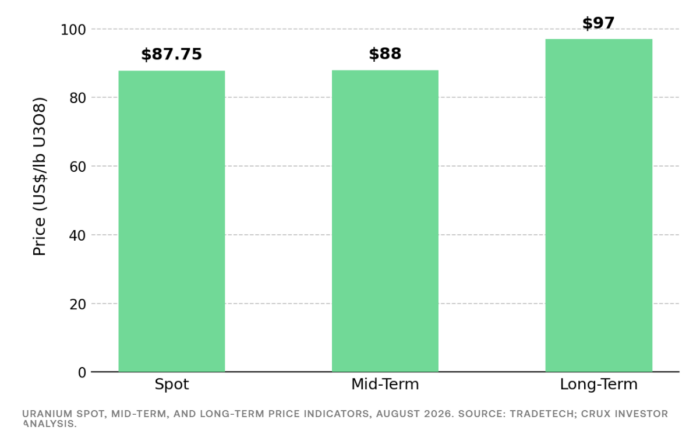
It shows that utilities don’t think enough uranium will exist in the coming years. Bank of America sees US$130 a pound by 2027 and RBC has lifted its long-term target to US$110.
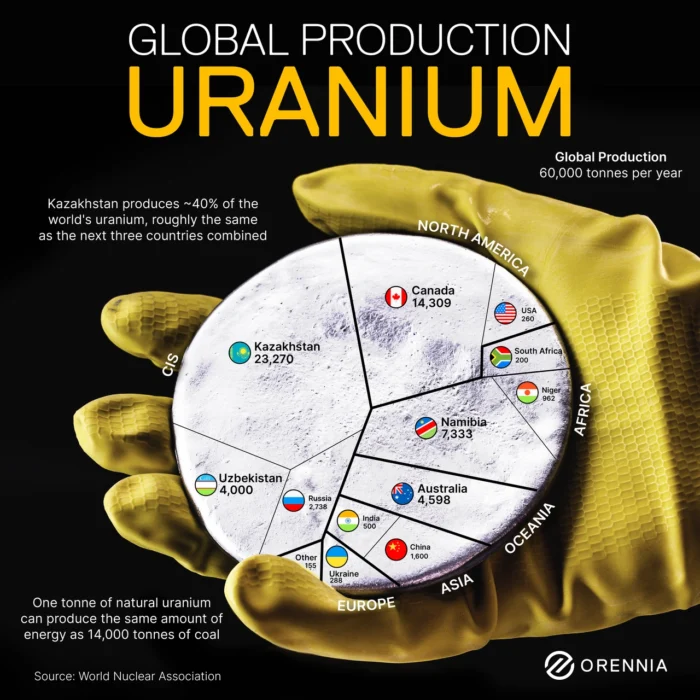
Supply will stay tight as Kazakhstan produces around 40% of the world’s uranium and is keeping production at current levels, while Cigar Lake in Canada lost output to a sulphuric acid shortage in July.
It comes as the World Nuclear Association says global nuclear capacity will double by 2040, taking annual uranium requirements from about 69,000 tonnes now to more than 150,000.
The US, Canada and China are all deep in the reactor arms race, with the Americans committing US$17.5 billion to 10 new reactors, Canada planning for the same number by 2040, and China recently approving another eight.
Anyone who makes a uranium discovery in a stable jurisdiction over the next few years will have utilities and financiers lining up, and the market is already rewarding the juniors that look like they might.
We’re actively looking for companies to add to our portfolio.
Unitree IPO Jumps 460% and Why Humanoid Robots Need Rutile
China’s biggest humanoid robot maker made a lazy 460% gain on day one of trading on the Chinese stock exchange on Wednesday.
Opening at US$22 a share, the company finished the day a tick under US$125, and propelled its founder Wang Xingxing to a US$16 billion net worth.
Unitree sells robot dogs from US$2,700, its G1 humanoid for US$13,500 and shipped more than 5,500 humanoids last year.
The cheap humanoids on the market today are built from aluminium and steel, but makers are looking for better options.
Engineers who pulled apart a G1 this year suggested its steel joint parts be swapped for titanium to shed 35% of the weight.
Unitree’s bigger, higher-performance robot (the GD01), is already built with titanium alloy in the parts that carry the load.
Titanium is preferred for use in robots’ load-bearing joints because nothing else matches its strength for its weight.
Forbes recently cited a forecast of global humanoid shipments that expected them to climb from 20,000 last year to 1.2 million by 2030.
Say each of those carries 2kg of titanium. Making that 2kg takes close to 4kg of natural rutile, the mineral titanium comes from, so 1.2 million robots would need about 4,800 tonnes of it a year.
The whole world digs up around 450,000 tonnes of natural rutile a year, down 44% from 2017. The gap has been filled with processed, lower-grade alternatives, and buyers in aerospace and welding, who need the purest titanium, only use natural rutile.
Robot makers chasing the lightest, strongest parts will want the same high-grade material, and the US produces none of its own titanium metal.
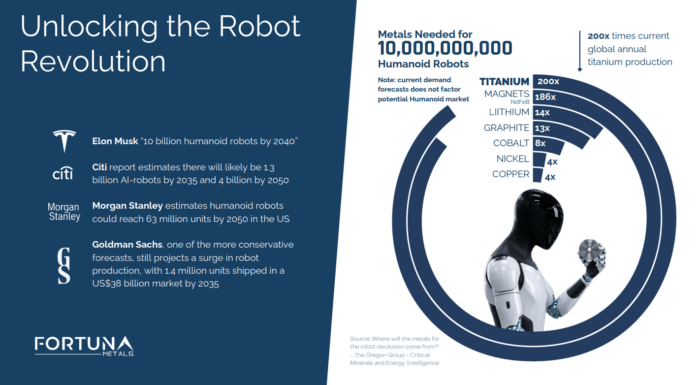
We’re backing Fortuna Metals (ASX: FUN), which now sits on one of the six biggest natural rutile deposits in the world at its Mkanda project in Malawi. US investor WNDRCO has already put $8.6 million into the company to get that rutile into American supply chains.
A top-six global rutile deposit with American money on the register and assays due this quarter, all for a $39 million market cap, is the sort of mismatch we spend our time looking for.
Copper Overtakes Iron Ore as BHP’s Biggest Earner
For the first time in history, copper has made BHP more money than iron ore.
It delivered 54% of the group’s earnings (US$18 billion) for the year to June, with BHP clearing roughly 70 cents of every dollar of copper it sold before the taxman and the accountants took their cut. Iron ore had a record year in the Pilbara and still came second.
It’s all downstream of a ripping copper market, which now sits above US$14,000 a tonne after its seventh straight week of gains. It hit record highs earlier this month, up 45% year-on-year, and could keep going.
Chile, the world’s biggest producer, expects output to fall 2.6% this year because of problems at its mines, and China’s smelters are cutting production because they can’t get enough raw ore to feed them.
BHP is now putting more than half of its future spending into copper, with projects in Chile, Argentina and South Australia lined up to lift production by around half by the mid-2030s.
Rio announced similar in February, leaning on its Mongolian copper mine as Pilbara costs crept up.
For all the copper bulls out there (and us writing this wrap), your argument just got stronger. The two biggest miners on the ASX are steering their money into the same metal and, by all reports, shopping for more because they can’t find enough of their own.
Juniors with drills turning on real copper targets are the cheapest way into that shortfall, and we expect the majors to keep paying for discoveries.
CSL Posts US$2.6 Billion Loss and Shares Jump 17%
CSL reported a US$2.6 billion annual loss this week, the biggest in its history, and the stock responded by jumping 17% before lunch and clocking its best single day move in more than two decades.
It makes no sense on the face of it, but let us explain.
CSL collects blood plasma and turns it into medicines, with a vaccine arm on the side, and is Australia’s biggest healthcare company. It started the week valued at around $65 billion.
This week it wrote US$7.1 billion off the books (most of it against a Swiss kidney business it paid close to US$12 billion for and has regretted ever since), which is where the loss comes from. No money left the company.
The day-to-day business made US$3.1 billion in profit, a touch less than last year but more than analysts expected.
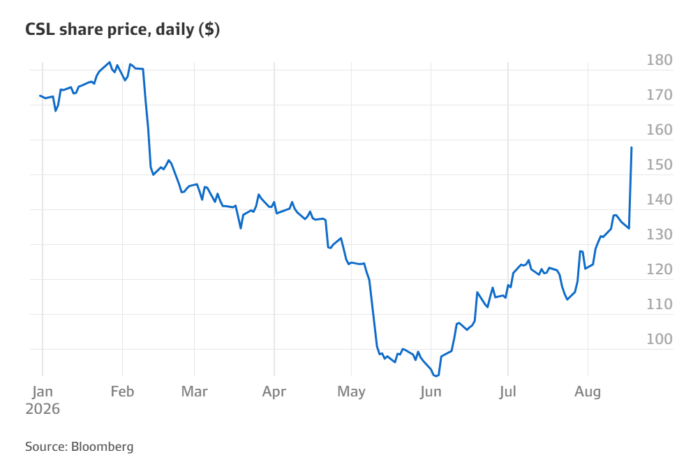
CSL also told investors to expect profit to grow around 5% next year when the market had pencilled in 2%, and said its core plasma business grew 7% in the second half.
After two years of bad news and a share price halved, it was the first sign the bleeding may have stopped.
The write-downs were flagged in CSL’s May update so didn’t shock anyone and share prices are usually forward looking, moving on what is expected to come next.
The same thing happens at our end of the market when a stock sells off on a decent drill result because everyone saw it coming.
CSL is still down around 21% for the year, so one good day hasn’t fixed two bad years.
The biggest healthcare name on the ASX turning up is good news for every biotech below it though.
Moderna Shares Rise 177% on Melanoma Vaccine Trial Result
Moderna earned worldwide brand recognition during Covid so you’d be forgiven for thinking it had peaked.
On Wednesday, it defied the deniers and put on 177% in a single session, behaving more like a micro-cap who hit it big than a US$25 billion company that skyrocketed to almost US$70 billion by the end of the day.
It was off the back of one groundbreaking trial result.

The trial followed more than 1,100 people who’d had a melanoma removed. Half got the standard drug and half got the standard drug plus Moderna’s vaccine, and the vaccine group stayed cancer-free for meaningfully longer.
It runs on the same technology as Moderna’s Covid shot, and it’s the first time the tech has passed the final stage of testing against cancer.
Doctors take a patient’s tumour and work out what makes it unique, then Moderna builds a vaccine that teaches that person’s immune system to hunt those cells down.
Basically, they may have found a way to stop melanoma coming back once it’s been cut out. A remarkable result for all us sunburnt Aussies.
Traders took profits on Thursday and the stock gave back 18%, normal after a move like that. Moderna’s closest rival, BioNTech, rose 22% on the day and the Nasdaq biotech index hit a record high.
Biotech on the ASX has been a hard place to make money this year, with the sector still down about 19% despite rallying 22% off its June low.
A result like Moderna’s brings investors back to biotech, and on the ASX the small caps with good trial results and cash in the bank are the first ones that will get looked at.
One to Watch: DroneShield (ASX: DRO) Half-Year Results
DroneShield (ASX: DRO) opens its books on Wednesday and shows the market what it earned in the first six months of the year.
The sales number is already out, $125.8 million, up 74% on the same period last year. What investors will find out Wednesday is how much profit was left after costs.
The company has $206 million of orders already signed for this calendar year, which is close to everything it sold in all of 2025, and it’s telling the market to expect $250 million to $270 million by December.
Even so, more investors are betting against DroneShield than any other stock on the ASX. Short sellers borrow shares and sell them hoping to buy them back cheaper, and right now more of DroneShield’s shares are sold that way than any other company in Australia.
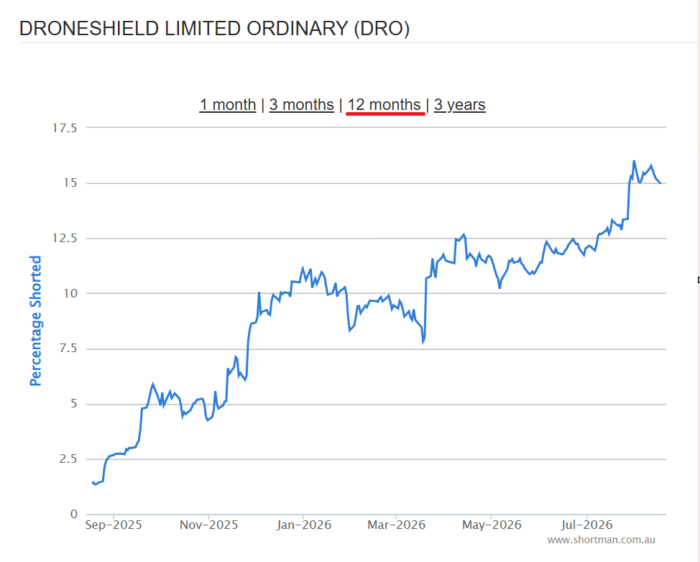
Every NATO country is spending at least 2% of its economy on defence and heading for 5%, but DroneShield’s share price has almost halved this year while its sales went up 74%, because its profit guidance came in well short of what the market had pencilled in.
We’ve backed our own defence play in KTEK Aerosystems (ASX: KTK), which is setting up to build drone components in the US, where Washington is paying to create a manufacturing base it doesn’t yet have.
Wednesday will show us how much of that defence spend is reaching the companies that make the kit.
The Week Ahead: Gold, Chips and Three ASX IPOs
Gold is the one we’ll be glued to. It’s done most of the heavy lifting for small-cap explorers this year, and with ELK drilling at Friday Gold Mine and BHL weeks away from its own program, we think both could move.
We’ll also be watching the chip space, where the big US names have been setting the tone for every AI play and supplier.
Three IPOs hit the boards this week, one for each of the commodities we’ve been banging on about:
- White Rock brings a big lithium story to market with the price climbing off its lows and EV demand picking back up.
- Powerhaus Uranium lists with uranium running and utilities scrambling to lock in long-term supply.
- Axiant comes to market chasing gold, with the metal near record highs and central banks still buying.
We’ll be paying close attention to all of them.
Till next week.
General advice, disclosure and confidentiality
General advice warning
The contents of this document are intended to provide general securities advice only and have been prepared without taking account of your objectives, financial situation or needs. Because of that you should, before taking any action to acquire or deal in, or follow a recommendation (if any) in respect of any of the financial products or information mentioned in this document, consulting your own investment advisor to consider whether that is appropriate having regard to your own objectives, financial situation and needs. If applicable, you should obtain the Product Disclosure Statement relating to the relevant financial product mentioned in this document (which contains full details of the terms and conditions of the relevant financial product) and consider it before making any decision about whether to acquire the financial product. Whilst the Equities Club Pty Ltd (”Equities Club”) believes information contained in this document is based on information which is believed to be reliable, its accuracy and completeness are not guaranteed and no warranty of accuracy or reliability is given or implied and no responsibility for any loss or damage arising in any way for any representation, act or omission is accepted by Equities Club or any officer, agent or employee of Equities Club or any related company.
Neither Equities Club, nor any of its directors, authorised representatives, employees, or agents, makes any representation or warranty as to the reliability, accuracy, or completeness, of this document or any advice. Nor do they accept any liability or responsibility arising in any way (including negligence) for errors in, or omissions from, this document or advice.
Disclosure
The directors, authorised representatives, employees and associated persons of Equities Club may have an interest in the financial products discussed in this document and they may earn brokerage, commissions, fees and advantages, pecuniary or otherwise, in connection with the making of a recommendation or dealing by a client in such financial products. Equities Club owns 900,000 performance rights, 500,000 KTK shares and 4,500,000 EVG shares at the time of publishing this article. Equities Club has been engaged by AI1, KTK and EVG at the time of writing.
Confidentiality notice
The information contained in and accompanying this communication is strictly confidential and intended solely for the use of the intended recipient/s. The copyright in this communication belongs to Equities Club. If you are not the intended recipient of this communication please delete and destroy all copies immediately.
Equities Club Ltd (CAR No. 001308139) is a corporate authorised representative of ShareX Pty Ltd, Australian Financial Services License (AFSL) No 519872.