
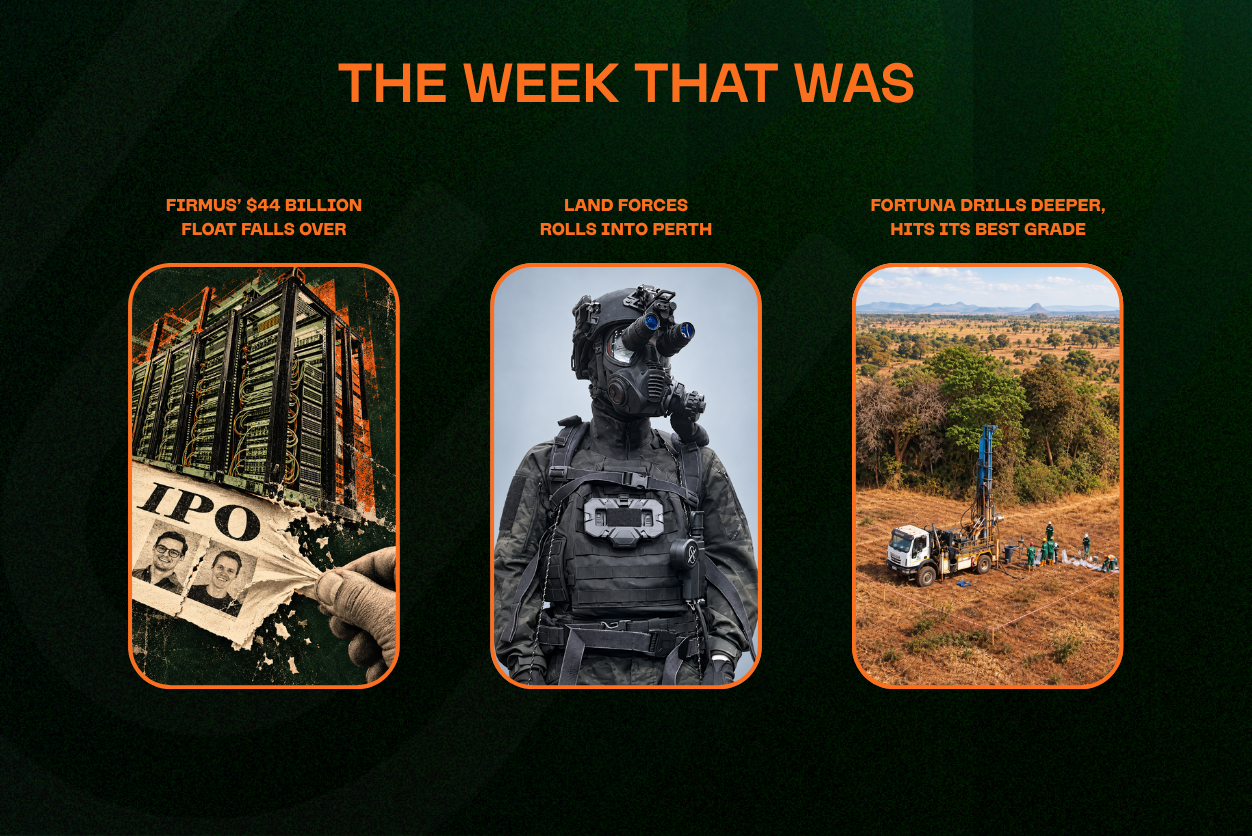
Firmus was supposed to be the biggest float on the ASX since Telstra, and on Friday it was pulled.
The AI data centre builder was asking $11 a share, and last Sunday we said it’s out of our usual wheelhouse but we’d lean towards shorting it once it listed.
It turns out no one will get the chance.
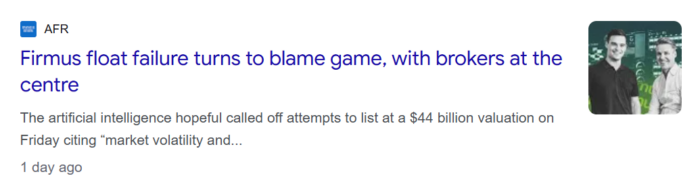
The AFR ran a bit of a campaign against the float this week, and people close to Firmus are reportedly already blaming the media for killing it.
But when you aim to list a $44 billion company that has never made a profit in a new frontier, you’ve got to expect a few bruises and hard questions on the way to market.
Cynical News Corp journos love to grumble about the company’s all-knowing Verity score, which was brought in to rank their stories on the clicks and subscriptions they drive.
Write about topics that produce a good Verity score (think Dan Andrews, bikie wars, private school rankings…) and you get a gold star next to your name from the higher-ups. It’s why the same topics get run again and again.
We’re going to guess The AFR has a similar ranking system, and Firmus sent it off the chart this week. As we type this there are 28 mentions of the company on The AFR’s homepage.
Away from Firmus it was a quiet week at the small end of the ASX, although a 2c rare earths explorer still managed to triple.
Here’s what else caught our eye:
- How Firmus lost its $44 billion float
- Why a quiet market suits busy companies
- Powerhaus puts crews on the ground in Argentina
- Drones take over Land Forces in Perth
- Fortuna’s first deep holes deliver the goods at Mkanda
- Elk Range sees gold at five depths as core is off to the labs
- Black Horse starts deeper drilling under Mt Egerton
- ASX small-cap of the week, a 2c rare earths explorer triples
Let’s get to it.
Firmus Pulls Its $44 Billion ASX IPO
Firmus would have landed among the 20 biggest companies on the ASX.
The AI data centre builder set out to raise $7.9 billion at $11 a share, which put a $44 billion price tag on a company that made about US$50 million in revenue last financial year.
Backers including Nvidia and Blackstone put money into Firmus in July at a valuation of $15.5 billion, roughly a third of what the bankers were asking three months later.
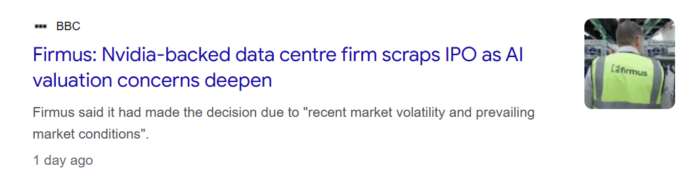
The crazy part is last week Firmus’ term sheet (the sheet brokers send out to investors) said it already had more orders than shares to sell.
Firmus opened its books to the super funds and fund managers on Monday, and Australia’s fourth-biggest super fund UniSuper said the float was “priced to perfection”, meaning everything had to go right to justify the valuation.
In the end UniSuper kept its money in its pocket.
The bankers had been counting on big orders from American funds, and the orders never came.
By Wednesday night the bankers were talking about $9 a share, and by Thursday the number being reported was $8.25.
The Australian then reported they were testing whether anyone would pay $5.50, which is half the price Firmus started the week at.
On Friday it became clear a discounted price would be a horrible look, and Firmus pulled the IPO.
Construction company Maas Group (ASX: MGH) owns 3.2% of Firmus and has $1.1 billion of contracts to do the electrical work on Firmus’ data centres. Maas shares fell 32% this week.
The banks running the deal had been in line for about $215 million in fees. There’s going to be a few smaller Christmas parties than the bankers expected.
Firmus still needs billions to build its data centres and plans to borrow up to US$35 billion to do it. It says it will go back to private investors for the money and look at listing on the Nasdaq, and we’d be surprised if this is the last we hear of it.
US data centre company CoreWeave looked in trouble last year when it had to cut its float price and nearly halve its raise. The investors who backed it at the discounted price more than quadrupled their money within three months.
And we say all this not to put the boot in. We like big stories and we like the great unknown. Firmus had a swing at both, and the ASX needs more companies willing to have a go.
A good float would have given the ASX a lift, although we do wonder how much of the $7.9 billion would have come out of other shares to pay for it.
We thought the price was the problem (as plenty of others did). At the right price we’d look at it differently.
A Quiet ASX Small-Cap Market and the Companies Still Working
The small end of the ASX has gone quiet. It might be school holidays, it might be interest rates, or a government policy lag effect. Either way, trading volumes have dried up.
We caught up with a number of brokers this week and each of them talked about how thin the trading has been. One of them described it as the worst he has seen in years.
We own shares in the companies we back, so we feel a market like this in our own pockets.
We turn down a lot more companies than we back, and we only back the ones that stay active. A company that sits on its hands waiting for the market to turn will have nothing to show when it does.
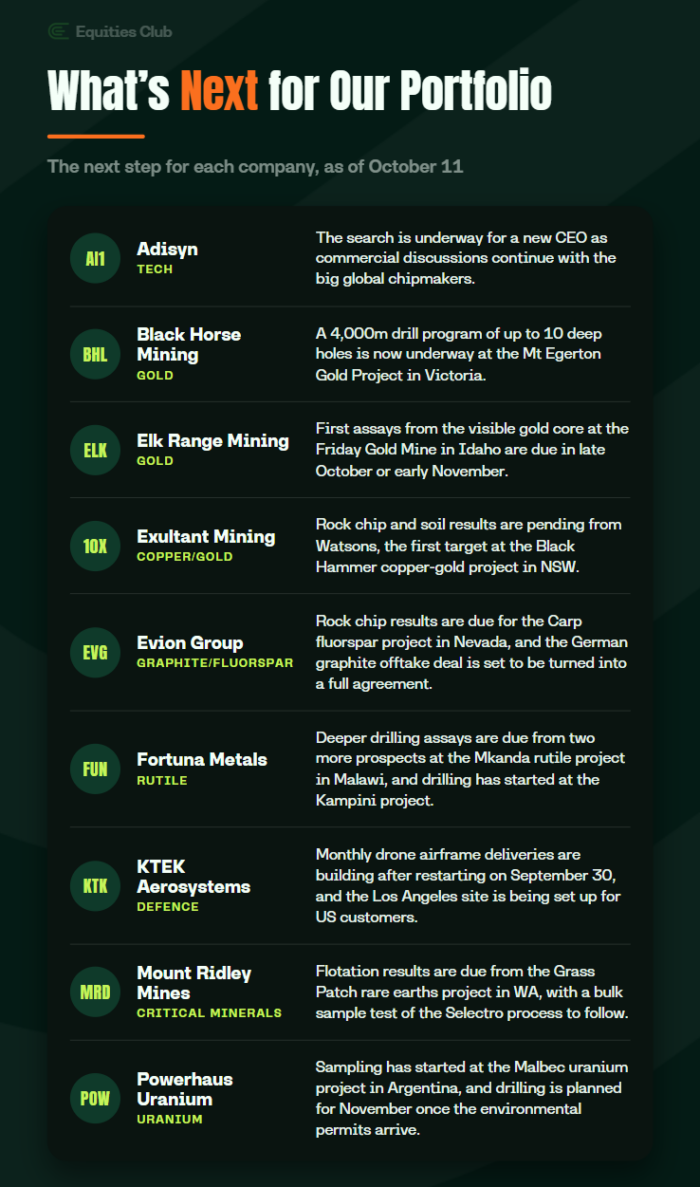
Right now we’ve got a gold explorer in Idaho and a rutile explorer in Malawi waiting on assays from the lab.
Another gold explorer has a rig turning under an old Victorian goldfield and a uranium explorer has crews lining up drill targets in Argentina.
Others in the portfolio are working on commercial deals, and the drone parts maker is shipping to its customers again.
For punters a quiet market is a chance to get behind hard-working companies while their share prices are out of favour.
We’ve been through quiet markets before and each one turned. When this one does we want to be holding the companies with results in hand.
Powerhaus Uranium (ASX: POW) Starts Fieldwork in Argentina
The uranium price has tripled in six years, from about US$30 a pound to around US$90, and this week our uranium explorer Powerhaus Uranium (ASX: POW) started fieldwork at Malbec, its main project in Argentina.
Power companies buy most of their uranium on long-term contracts, and the contract price went past US$90 in January for the first time since 2008.
POW holds a large land package of about 2,000 square kilometres. This week crews started surveying nine square kilometres of shallow uranium ground with radiation detectors and taking samples, with results due before the end of the year.
The nine square kilometres are part of a 17 square kilometre terrace, the biggest stretch of shallow uranium ground POW has found at Malbec so far.
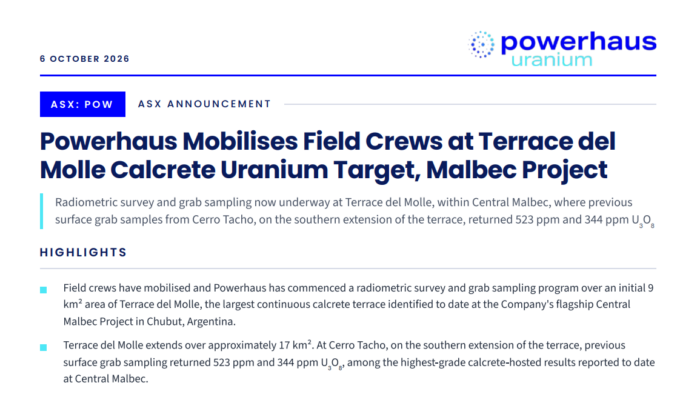
The uranium here sits within a few metres of the surface, and in places the crews can see it as a yellow mineral in the rock.
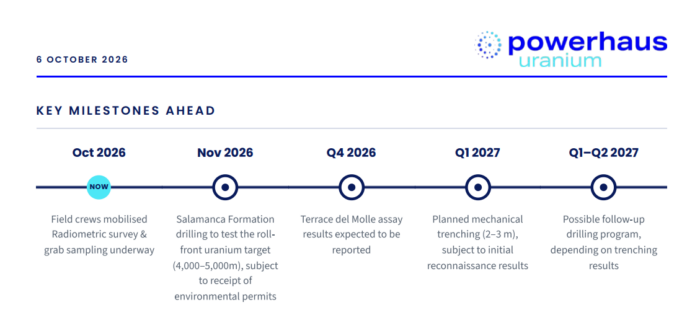
Earlier samples from the southern end ran 523 and 344 parts per million uranium oxide. If the new samples stack up, POW plans to dig trenches early next year and follow with drilling.
The bigger target is deeper in the sandstone, where POW is looking for the same style of uranium deposit Kazakhstan mines. Kazakhstan produces around 40% of the world’s uranium.
It’s some of the cheapest uranium in the world to mine because the miners pump a solution down wells and draw the uranium back up.
Drilling is slated for November once the environmental permits arrive. It will be POW’s first drill program at Malbec.
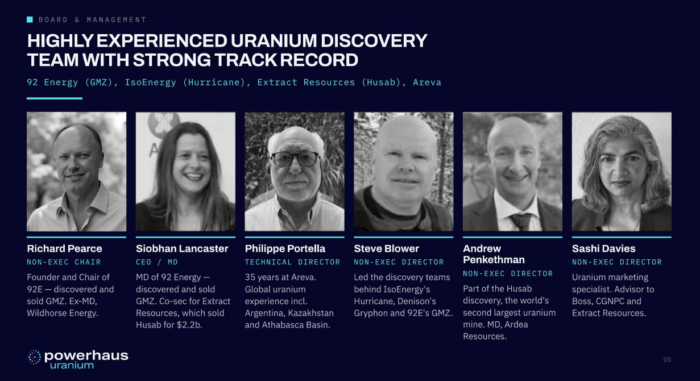
We went to POW’s investor lunch this week and nearly the whole board was there.
Steve Blower sat on the discovery teams for three uranium finds in Canada, and Andrew Penkethman drilled out the resource at Husab in Namibia.
Sashi Davies ran marketing at Extract Resources, which owned Husab and sold for $2.2 billion.
They could sit on nearly any uranium board in the world, and hearing them explain why they like the geology in Argentina gave our confidence in POW a lift.
Managing director Siobhan Lancaster worked on the Husab sale too. She then ran 92 Energy, which found uranium on its fourth drill hole and was taken over inside three years of listing.
She walked the room through the plan for Malbec, and we rate the team she has put together.
And last but not least, chairman Richard Pearce was present. Pearce co-founded 92 Energy and was chairman at the sale.
POW finished the week at 19c and we’re looking forward to the next few months.
Drone Stocks in Focus at Land Forces 2026 in Perth
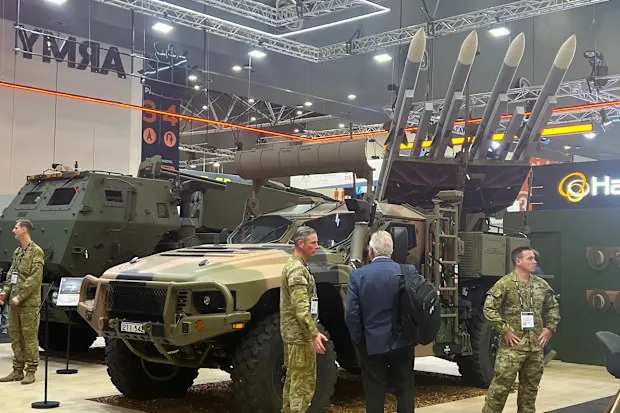
Australia’s biggest land defence trade show came to Perth for the first time this week, and drone makers were out in force.
Land Forces ran for three days at the convention centre with 964 exhibitors from 60 countries, including Boeing and BAE Systems.
The army has drones “in the low thousands” and is getting ready to buy a lot more, a brigadier told defence news site Janes at the show.
Defence Industry Minister Pat Conroy said at the show the government has added $5 billion to its drone budget. He said it has also doubled what it spends on defences against drones.
The money is promised over 10 years and the army is still trialling much of the equipment, so the orders are slow to arrive. We think they’ll come once the trials finish.
ASX-listed weapons maker EOS said at the show demand for its counter-drone systems is the strongest it has seen, and on Friday it signed a $700 million counter-drone deal with a Gulf government. It’s the biggest contract in EOS’ history.
EOS found its buyer overseas, and it’s why we like defence companies with customers outside Australia.
We’ve backed drone parts maker KTEK Aerosystems (ASX: KTK), which listed on the ASX in May.
KTK builds the wings and body sections of military drones out of lightweight composites in Europe, assembles them for US customers in Los Angeles, and sells them to the companies that make the drones.
The Iran war shut the shipping route to KTK’s biggest customer in March. Deliveries started again last week, so the parts are going out and revenue is flowing again.
It has also won its first order from a major Israeli defence company. While the small suppliers at Land Forces wait on orders, KTK is busy delivering the ones it has.
Governments have announced far more defence spending than they’ve handed out, and we think a lot of it still has to reach the smaller companies selling into a global market. We’re always looking for new defence stocks to cover.
Fortuna Metals (ASX: FUN) Drills Deeper Rutile at Mkanda
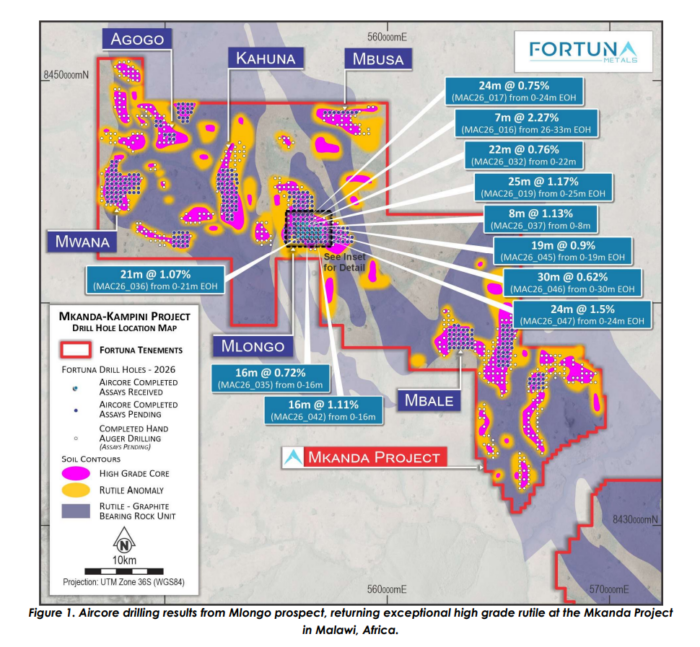
Rutile explorer Fortuna Metals (ASX: FUN) drilled below eight metres at its Mkanda project in Malawi for the first time this week.
The best hole ran 24 metres at 1.5% rutile from surface and was still in rutile when the rig stopped.
Another returned 3.43% rutile from about 30 metres down, which is the highest grade Fortuna has recorded at Mkanda.
Fortuna’s July resource of 298 million tonnes at 0.87% rutile only counts the top eight metres, because hand augers can’t drill any deeper.
It already ranks as one of the six biggest rutile deposits in the world.
Rutile is the cleanest starting point for the titanium that goes into jet engines and the joints of humanoid robots.
Fortuna has done all of it in the year since we backed it at 4c, and SpaceX investor WndrCo paid 11c a share for 18.57% of the company in June.
Mlongo is the first prospect back from the lab. Kahuna and Agogo are next, and Fortuna expects the rest of the results over the next four to six months.
FUN closed the week at 9c, which is more than double our entry and still below the 11c WndrCo paid.
Sovereign Metals (ASX: SVM) owns the world’s biggest rutile deposit 20km north of Mkanda, and its resource nearly tripled after aircore rigs drilled it to 20 metres.
Sovereign is worth about $325 million with Rio Tinto on its register, and Fortuna is worth about $39 million.
If the other prospects carry their grade as deep as Mlongo, we think the next resource could be a good deal bigger than 298 million tonnes.
Elk Range Mining (ASX: ELK) Sees More Visible Gold in Idaho
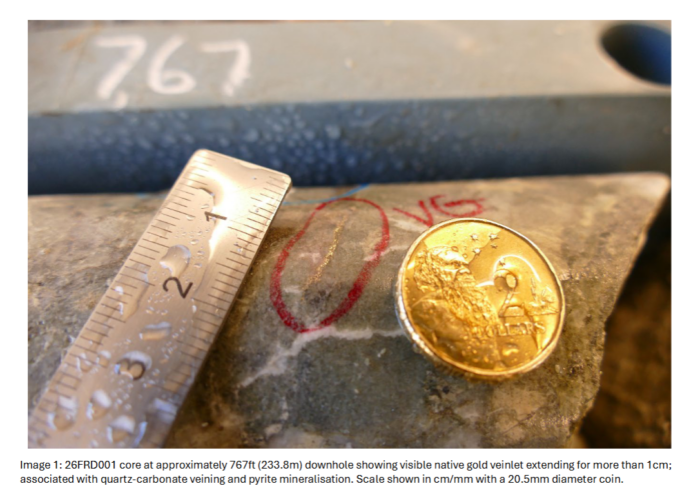
Gold explorer Elk Range Mining (ASX: ELK) has finished its first hole at the Friday Gold Mine in Idaho, and the geologists saw gold in the core at five depths.
Friday is a built and permitted underground gold mine the last owner parked during Covid.
The deepest was a thread of gold more than a centimetre long from 234 metres down.
The best of the old holes at Friday ran 112 metres at 5.22 grams of gold a tonne in 2014, and it stopped where the drilling plan ended at 137 metres.
What sits past the end of the old hole is the reason we bought ELK shares, and the geologists have now seen gold in three places past it.
“For a geologist, it doesn’t get much better than opening a core tray and seeing visible gold,” CEO Edward Keys said.
We’ve written three pieces about gold the geologists have seen and we’re as keen as anyone for a grade. Our latest article is here.
The assays are the next big news for ELK. The core is at the lab on a rush order and Elk expects the numbers in late October or early November.
Elk has also sent 113 metres of the 2014 core back to the lab, and those results are due at the same time.
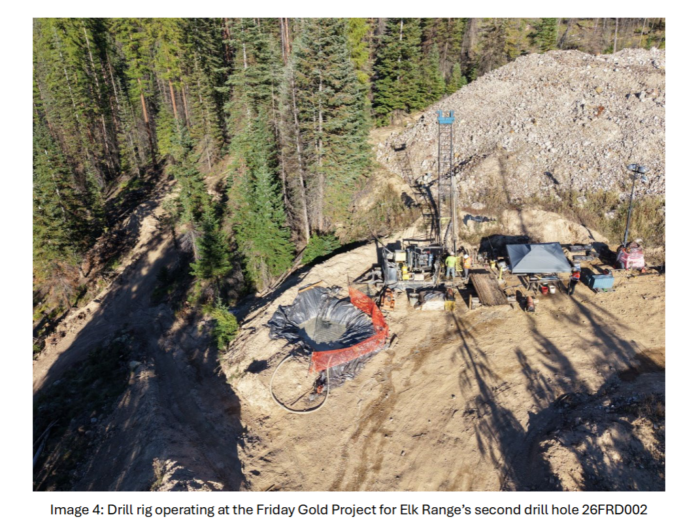
The drillers are already on the second of eight holes and working around the clock. We like what the geologists are seeing and we’re happy to wait.
Black Horse Mining (ASX: BHL) Starts Drilling at Mt Egerton
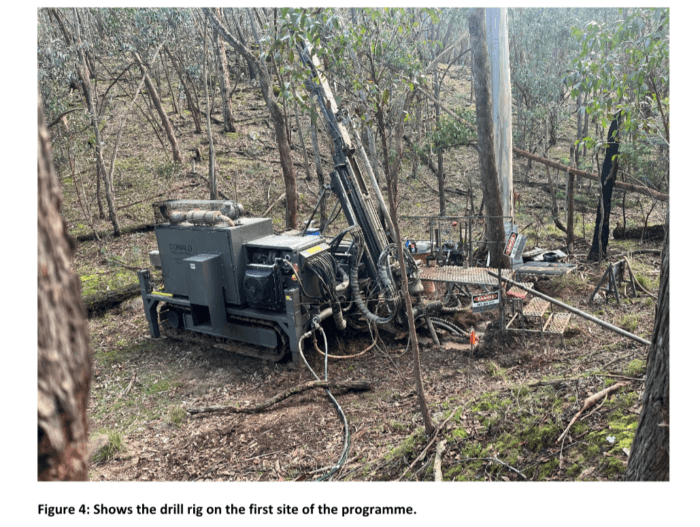
A drill rig is turning again at Mt Egerton, the central Victorian goldfield that produced 1.29 million ounces of gold before water flooded the workings in 1906.
Gold explorer Black Horse Mining (ASX: BHL) has started the first of up to 10 holes in a program of about 4,000 metres. You can find the article we wrote about this week’s announcement here.
Managing director David Frances told us in December it was a simple story.
“We’re looking for gold in Victoria where there’s plenty of gold and we hope to find some more,” he said.
We named BHL our 2025 Small-Cap of the Year and we’ve waited since March for this drilling.
Heavy winter rain cut off the drill sites within weeks of the rig arriving in June, and BHL has since rebuilt the tracks for all weather.
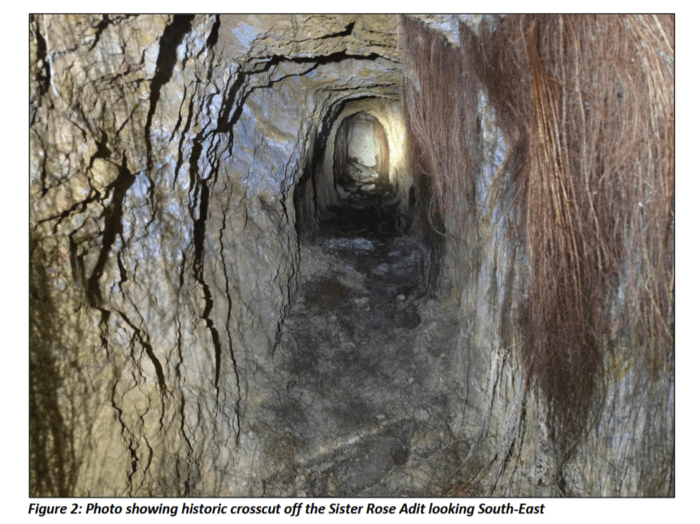
While it waited BHL reopened a tunnel sealed for more than a century and sampled 1.3 metres at 10.79 grams of gold a tonne inside.
More than 90% of the drilling at Mt Egerton since the mine shut stopped above 150 metres, and BHL’s rig can reach 1,000 metres.
The Fosterville gold mine sits in the same corridor of Victorian goldfields, and its richest zone only turned up after drilling pushed past 800 metres.
BHL finished the week at 22c, and we think one good hole at depth could move the company a long way.
Alvo Minerals (ASX: ALV) Triples on Brazilian Rare Earths
The best small-cap on the ASX this week was a rare earths explorer in Brazil that was worth about $5 million last Friday.
Alvo Minerals (ASX: ALV) started the week at 2c and finished it at 7c.
On Thursday Alvo reported drill results from its Bluebush project, where it found dysprosium and terbium in clay close to the surface.
They’re the two heavy rare earths that go into high-powered magnets, and China restricts who gets to buy them.
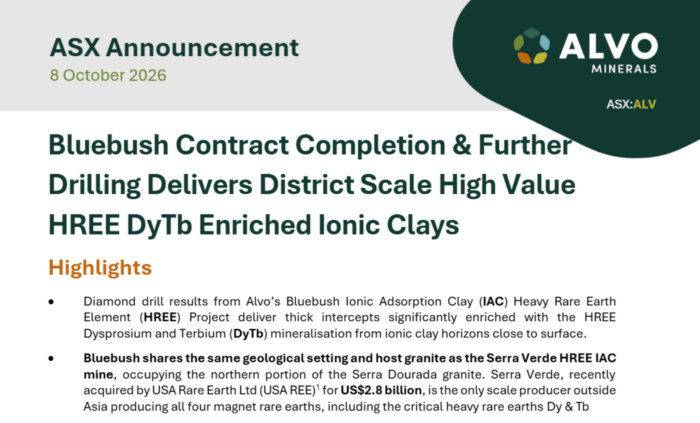
The best hole ran 19.5 metres at 1,324 parts per million rare earths from one metre down, and Alvo said many of its holes were still in the clay when they stopped.
Bluebush sits in the same granite as the Serra Verde rare earths mine USA Rare Earth bought this year for US$2.8 billion.
Alvo also raised $1 million on Thursday at 2c a share, and the investors who took it have more than tripled their money on paper in two days.
Alvo has no resource at Bluebush yet and is drilling towards its first one.
It was a quiet week for small-caps and a $5 million explorer still tripled on one set of drill results.
The Week Ahead: Glencore Lists on the ASX
The ASX lost its biggest float since Telstra on Friday, and on Wednesday it gets one of the biggest miners in the world.
Glencore is due to start trading here under the ticker GLC without raising a dollar.
CEO Gary Nagle said Australian super funds asked for the listing because they wanted to buy more Glencore shares than their rules let them buy in London.
Australians know how to value a mine, and it’s why most of our portfolio is explorers.
Glencore plans to almost double its copper production by 2035, and copper finished the week within about 2% of the record it set in September.
Gold finished the week just under US$4,200 an ounce, and the small explorers hunting for it are still out of favour. We like the odds of them catching up.
US inflation numbers are out on Wednesday and Australian jobs numbers on Thursday. Both feed into where interest rates go next, and lower rates usually help small-caps.
We’re meeting a large number of companies at the moment as we hunt for the next one to back.
Till next week.
General advice, disclosure and confidentiality
General advice warning
The contents of this document are intended to provide general securities advice only and have been prepared without taking account of your objectives, financial situation or needs. Because of that you should, before taking any action to acquire or deal in, or follow a recommendation (if any) in respect of any of the financial products or information mentioned in this document, consult your own investment advisor to consider whether that is appropriate having regard to your own objectives, financial situation and needs. If applicable, you should obtain the Product Disclosure Statement relating to the relevant financial product mentioned in this document (which contains full details of the terms and conditions of the relevant financial product) and consider it before making any decision about whether to acquire the financial product. Whilst Equities Club Pty Ltd (”Equities Club”) believes information contained in this document is based on information which is believed to be reliable, its accuracy and completeness are not guaranteed and no warranty of accuracy or reliability is given or implied and no responsibility for any loss or damage arising in any way for any representation, act or omission is accepted by Equities Club or any officer, agent or employee of Equities Club or any related company.
Neither Equities Club, nor any of its directors, authorised representatives, employees, or agents, makes any representation or warranty as to the reliability, accuracy, or completeness, of this document or any advice. Nor do they accept any liability or responsibility arising in any way (including negligence) for errors in, or omissions from, this document or advice.
Disclosure
The directors, authorised representatives, employees and associated persons of Equities Club may have an interest in the financial products discussed in this document and they may earn brokerage, commissions, fees and advantages, pecuniary or otherwise, in connection with the making of a recommendation or dealing by a client in such financial products. Equities Club owns 500,000 KTK shares, 625,000 POW shares, 187,500 BHL shares, 1,554,000 FUN shares, and 625,000 ELK shares at the time of publishing this article. Equities Club has been engaged by KTK, POW, BHL, FUN and ELK at the time of writing.
Confidentiality notice
The information contained in and accompanying this communication is strictly confidential and intended solely for the use of the intended recipient/s. The copyright in this communication belongs to Equities Club. If you are not the intended recipient of this communication please delete and destroy all copies immediately.
Equities Club Ltd (CAR No. 001308139) is a corporate authorised representative of ShareX Pty Ltd, Australian Financial Services Licence (AFSL) No 519872.